AI image
How bubbles can throw off the sound Alaska uses to count its fish
Scientists don't just net Alaska's fish to count them — they listen for them. Research ships map the seafloor and estimate fish stocks by pinging the water with sound and reading the echoes that bounce back. A new federal grant takes aim at something that can distort that picture: bubbles.
The problem is called bubble sweep.
In rough or ice-strewn seas, wave action forces air beneath a ship's hull, and the trapped bubbles scatter the acoustic beams the vessel depends on — blurring its read of both the seafloor and the fish below.
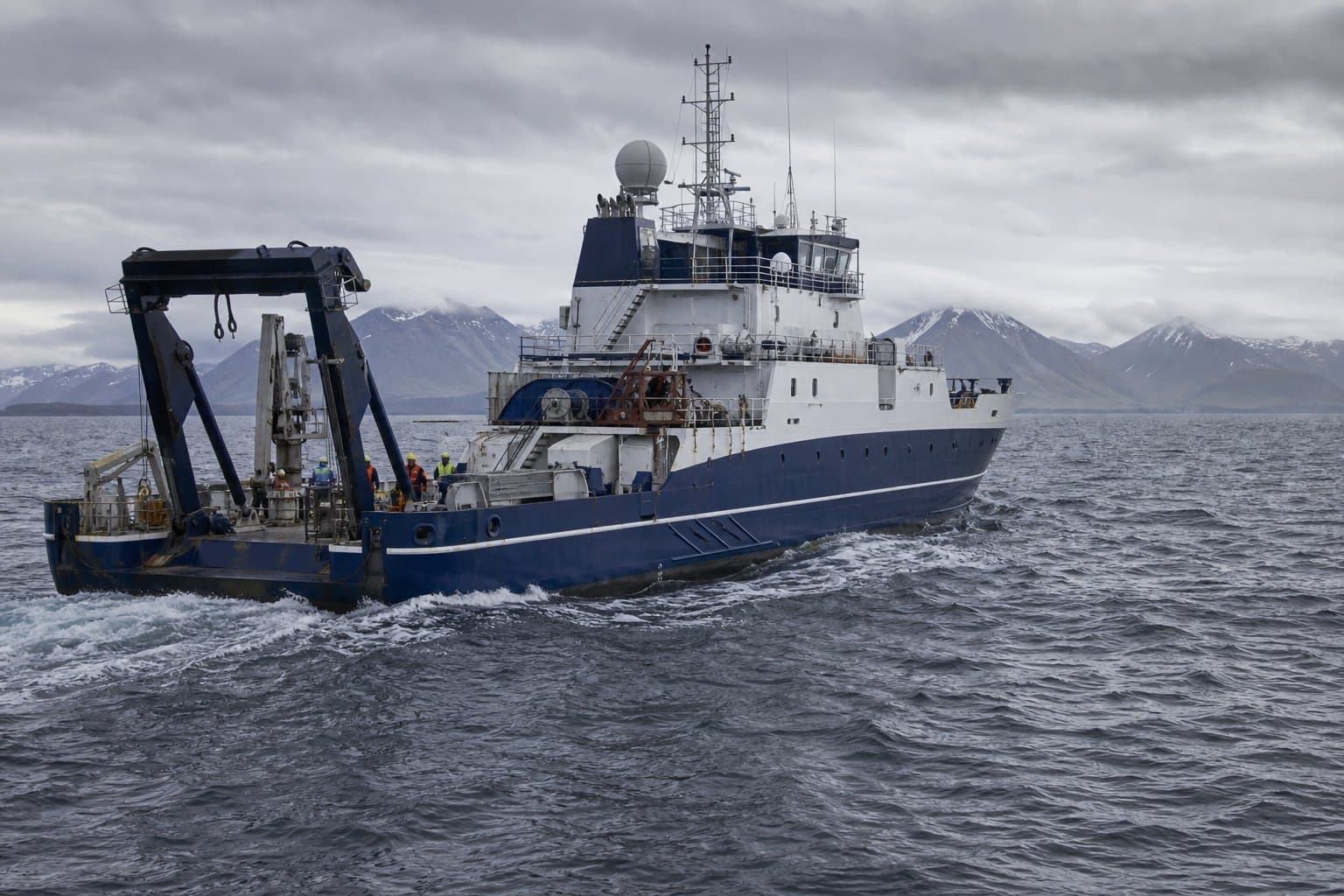
In Alaska, where sound-based surveys help underpin the management of the nation's largest fisheries. The $400,926 grant from the National Science Foundation will fund an engineering evaluation of how badly bubble sweep affects the acoustic systems aboard the R/V Sikuliaq, the 261-foot ice-capable research ship UAF operates, along with a range of other instrument upgrades.
The evaluation is diagnostic — it will measure the extent of the problem rather than fix it — and runs through mid-2027. Cleaner data is something the fishing industry has pushed for, too; as commercial fishing representative Dustin Delano told a congressional hearing last year, "we can always do better, and we need to do better before it's too late."
Source: National Science Foundation, National Science Foundation: NSF Award [OCEANOGRAPHIC INSTRUMENTATION] → University of Alaska Fairbanks Campus: Oceanographic Instrumentation Enhancements Supporting Scientific Operations aboard the Research Vessel Sikuliaq (PI:.
Made by our human newsroom with AI. How humans and AI work here · Grow with our newsroom
Stay informed. Support what matters.
Free, permanent access to local news you can verify. Subscribe to support Melinda Communities.News and go ad-free.
Related Coverage
NOAA maps out how new tools enter Alaska's fish surveys
Alaska News · 1mo ago
UAF grant aims to read what a volcano is doing while it does it
Alaska News · 2mo ago
New bill from Murkowski would let NOAA identify fish from the DNA they leave in the water
Alaska News · 2mo ago
A federal minerals program is funding science on the seafloor mining wants to dig
Alaska News · 2mo ago
Cordova science center gets NOAA grant to rebuild Prince William Sound ocean profiler
Alaska News · 1w ago
Comments
Sign in to leave a comment.
No comments yet. Be the first to share your thoughts.