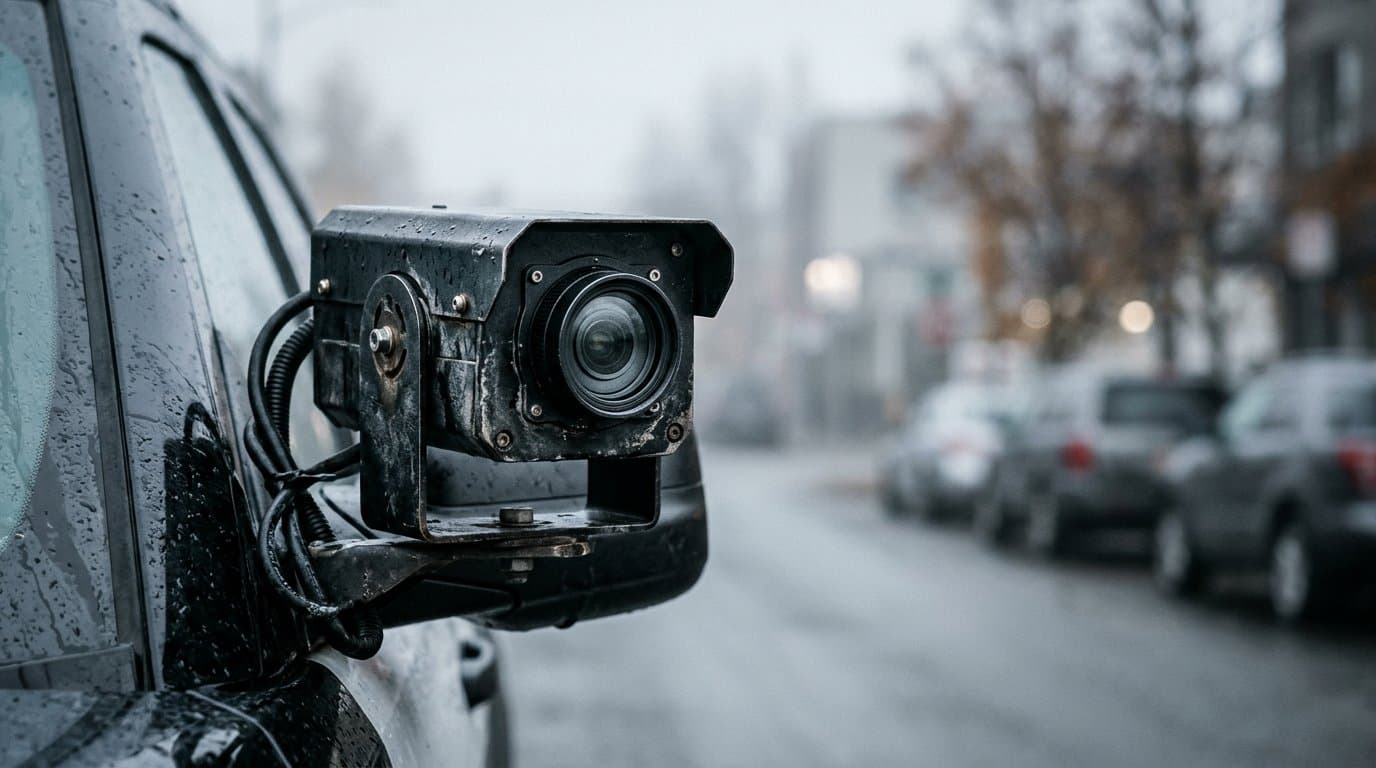
AI image
Rabbit Creek council asks Anchorage Assembly to cover AI police data in surveillance rules
The Rabbit Creek Community Council voted 17-0 on Oct. 8 to tell the Anchorage Assembly that its proposed surveillance ordinance leaves out how artificial intelligence processes police license plate data and what happens if that data reaches federal immigration agents. The council also listed 17 questions it recommended including, as appropriate, in a vendor question-and-answer session with Axon.
The letter concerns rules the Assembly is still writing for police license plate readers and the Real-Time Crime Center. Assembly Member Keith McCormick placed it before the body for its Oct. 20 meeting.
Council Chair Tim Alderson signed the letter, which says the city's focus on restricting staff access to the Axon system misses half the public concern. That focus "sidesteps the concern that the data gathered will be automatically processed by an AI and 'predictive analytics' data model in a manner that is opaque to the public, with no probable cause for the vast majority of vehicle information captured," the letter said.
The council said a Sept. 25 Assembly work session did not address testimony from a Sept. 15 meeting about similar data sets that the council says U.S. Immigration and Customs Enforcement has used to detect and deport community members elsewhere in the country. The letter also warns about data leaving city hands. "Once it is shared (even under a valid warrant), the municipality loses control of how long it is retained, who it gets shared with in the future and whether it later gets sold," the letter said.
The council's first recommendation says current Axon documentation shows the license plate system uses automated recognition and AI-based classification, not just transcription of plate characters. It asks the city to identify precisely which Axon AI and machine-learning capabilities the Anchorage Police Department has licensed, enabled, disabled or intends to use.
The council also wants quarterly bias testing for any AI tools police use, with tuning when tests show bias, plus quarterly officer training.
The ordinance, as amended Oct. 20, defines surveillance data as data collected by surveillance technology. It already bars police action based solely on predictive analytics. It also bars police from sharing data to help enforce another jurisdiction's law against conduct legal in Alaska, unless law, a judicial warrant or a court order requires it. The council wants the definition widened to cover data "collected, generated, inferred, derived, classified, associated with, or produced through analysis of surveillance data," so that the same sharing limits apply to it.
A separate proposed change from Assembly members Daniel Volland and Sydney Scout would require that captured license plate data be permanently deleted no later than 14 days after capture, with exceptions for evidence, legal holds, warrants and pending public records requests.
The council's questions ask how Axon's predictive crime model works, whether data could be processed only when there is probable cause, and whether Axon or its subcontractors may use Anchorage data to train its models. Ordinance sponsors have said the Axon contract lets the company keep police metadata indefinitely, Alaska News reported Oct. 13. The questions also ask whether police will publish false-positive rates, verified matches and arrests.
The Assembly approved a five-year Axon contract worth about $11.8 million on Sept. 23, 2025. It supports a crime center designed to take in up to 750 camera feeds. At its Oct. 20 session, the Assembly amended the proposed rules, then ran out of time.
Source: Anchorage Municipal Assembly.
Made by our human newsroom with AI. How humans and AI work here · Grow with our newsroom
Stay informed. Support what matters.
Free local news you can verify. Support Walter AlaskaNews and go ad-free.










Comments
Sign in to leave a comment.
No comments yet. Be the first to share your thoughts.