
Editorial map (Gemini + Google Maps)
Ouzinkie runs village grid on battery alone for 45 minutes in solar test
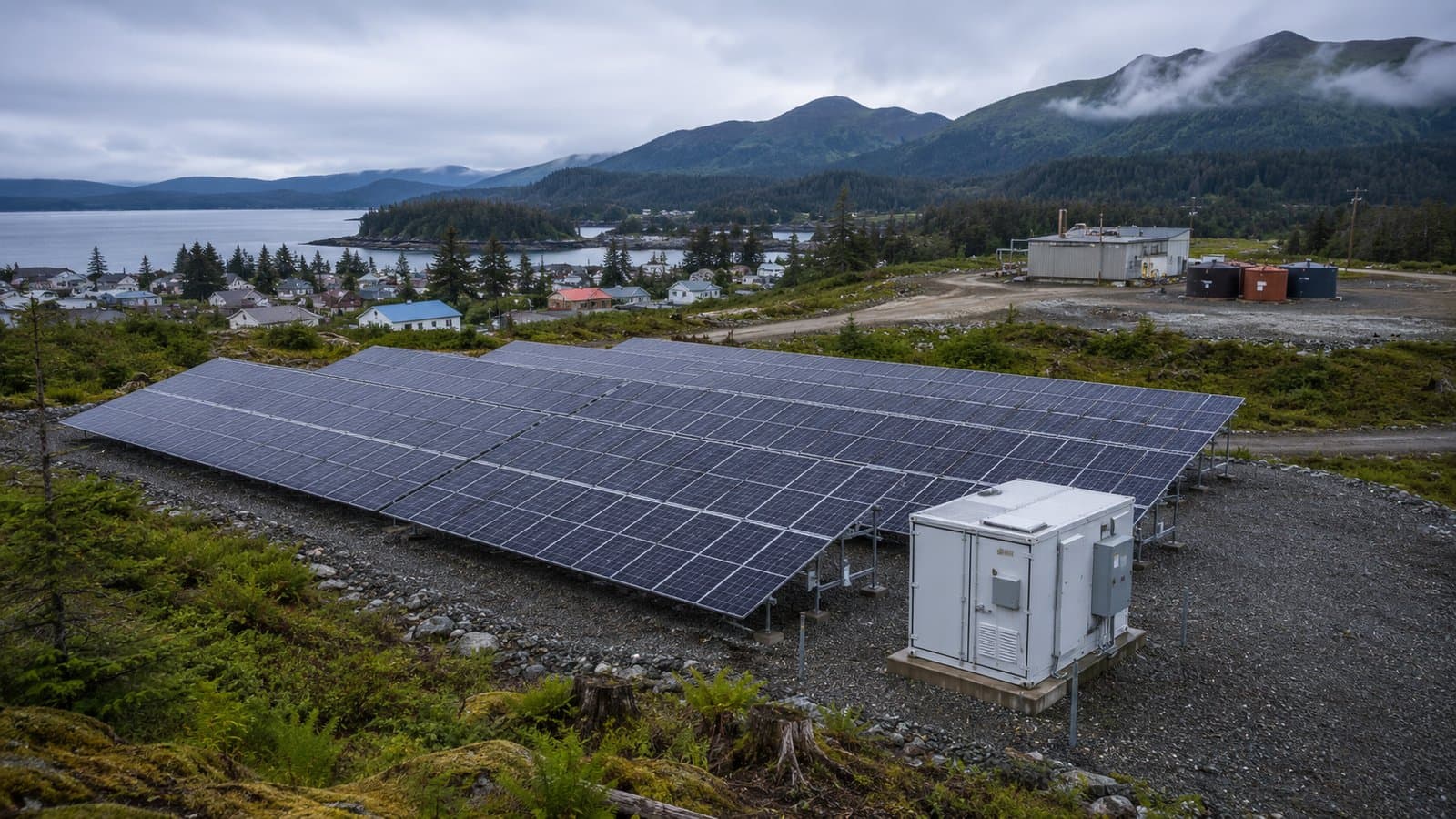
Ouzinkie ran its electrical grid on battery power alone for 45 minutes on Sunday, Nov. 15, in the first diesel-off test of its tribal-owned solar and battery system, the Alaska Native Tribal Health Consortium said.
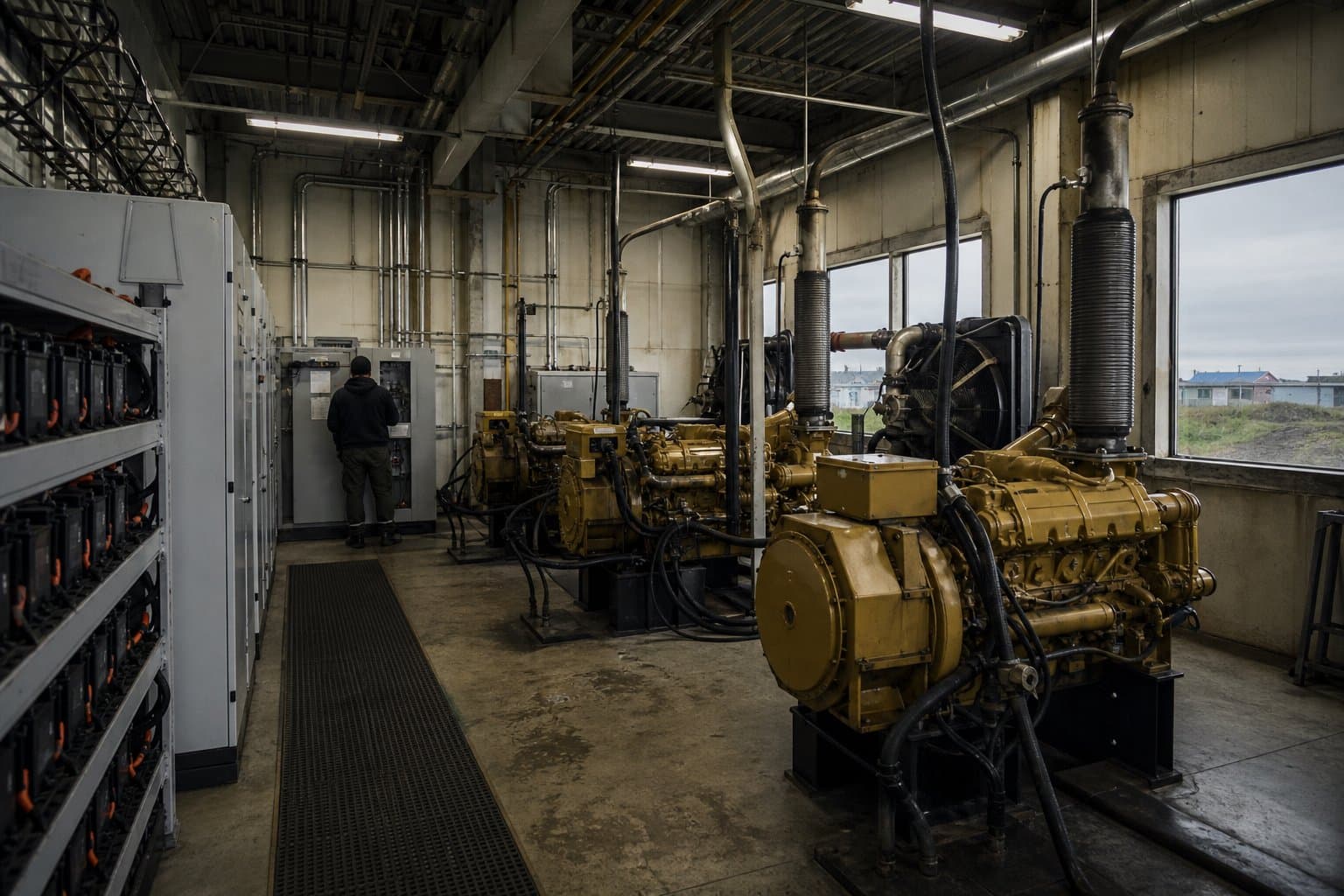
The village on Spruce Island, near Kodiak, has one working diesel generator, and servicing it has meant shutting off power to the community, according to the consortium, known as ANTHC. The battery is designed to let crews do routine generator maintenance without a community-wide outage, reducing the risk of freeze-ups and service interruptions, ANTHC said. Commissioning is still underway, and ANTHC gave no date for finishing it.
Over the year ending in September, diesel generators made about 72% of the village's electricity and burned 42,991 gallons of fuel, according to figures the Regulatory Commission of Alaska reviewed. The rest came from hydropower, and ANTHC says the hydro system's reservoir also supplies the community's drinking water.
At $5.68 a gallon, the price on the city's latest fuel invoice, that fuel comes to about $244,000. ANTHC projects the system will avoid more than $100,000 a year in diesel costs once fully commissioned, about 41% of that figure.
The City of Ouzinkie runs the electric utility, with 112 customers. Residents pay 50 cents a kilowatt-hour plus a 1.61-cent surcharge. The state's Power Cost Equalization program pays 29.76 cents of that for up to 750 kilowatt-hours, under the commission's Nov. 25 order. That leaves residents paying 21.85 cents a kilowatt-hour for those first 750.
The Native Village of Ouzinkie will own the solar system and plans to sell its power to the city. When the village broke ground in August, ANTHC said the revenue would go to water and sanitation and reduce residents' household bills. Tribal Administrator Kerry Ivory said becoming an independent power producer "gives the Tribe additional energy sovereignty." Thirteen local residents, including Mayor Elijah Jackson, received hands-on training to install and maintain the panels.
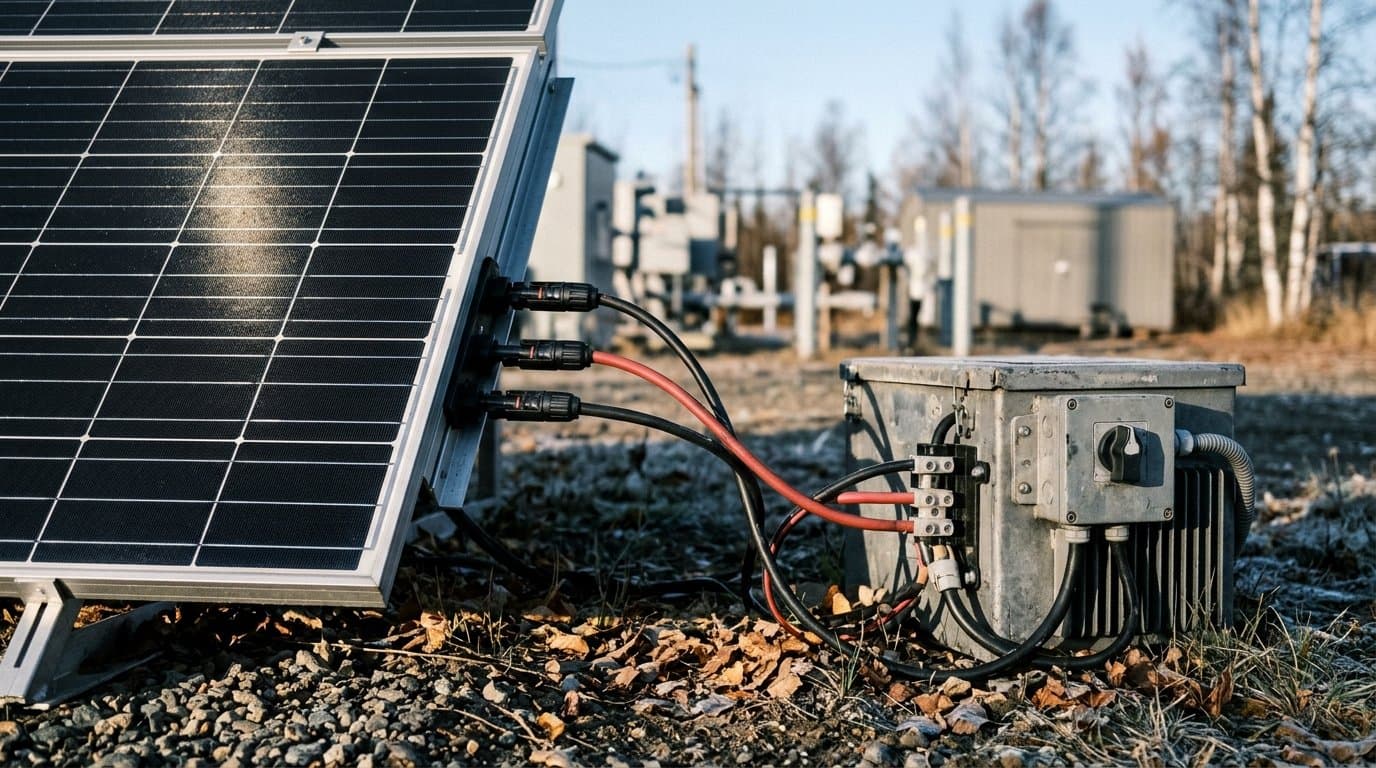
The system, on the village's former airstrip, pairs 480 solar panels capable of producing 297 kilowatts with a one-megawatt-hour battery. Once fully commissioned, it is projected to provide more than 17 hours of backup power for critical infrastructure under specified conditions, ANTHC said.
ANTHC said total project investment has been reported at approximately $3.6 million and did not break it down by funder. The largest documented share is a $2,285,774 Department of Energy award signed in August 2024.
That award describes a smaller system, a 160-kilowatt solar array and a 210-kilowatt-hour battery, and says the project expects to reduce electricity costs by an estimated 10%. Neither the federal records nor ANTHC says how the project grew or who paid for the added capacity.
The price the tribe will charge the city for power has not been made public, and neither has any change to residents' power, water or sewer bills.
What did you make of this story? (no account needed)
Made by our human newsroom with AI. How humans and AI work here · Grow with our newsroom ·
Keep Alaska News free for everyone.
No paywall, ever. Members pay so everyone can read the meetings and records Alaska News covers.
Get Alaska News in your inbox
Create your free account and get the day’s top stories around 6 each morning, in a few minutes’ read.
Top stories, around 6 each morning.
Stories on what you follow, on Sundays.
Source: Alaska Native Tribal Health Consortium, Ouzinkie runs its grid on battery power alone for 45 minutes in the first diesel-off test of its Tribal-owned solar system.







Comments
Sign in to leave a comment.
No comments yet. Be the first to share your thoughts.