NOAA pays $1.57 million for samples from subsistence-harvested seals
Federal assessments of Alaska's ice seals rely on the hunters who take them for food. NOAA is paying $1.57 million over three years for that cooperation.
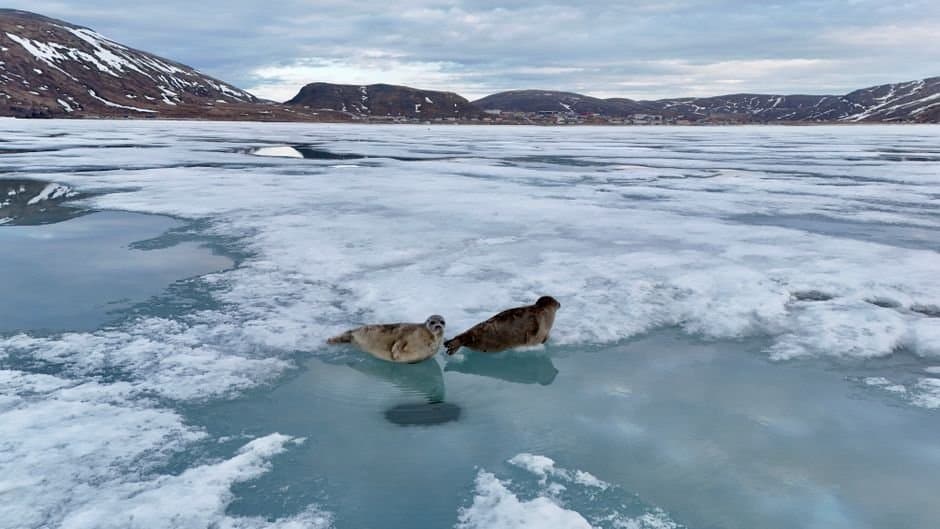
The money goes to the Alaska Department of Fish and Game's Pinniped Data and Monitoring Program, which collects samples from seals harvested for subsistence in the Bering, Chukchi and Beaufort seas. Those samples track population status and health, with a focus on ringed and bearded seals.
The arrangement depends on hunters volunteering both the samples and information about what they took. A 2019 Fish and Game report to the Ice Seal Committee noted that "Alaska Natives fear that reporting their subsistence harvests could get them in trouble," and are reluctant to share it.
Congress built the structure for this in 1994, adding a section to the Marine Mammal Protection Act that lets NOAA enter co-management agreements with Alaska Native organizations, including tribes and tribally authorized bodies. The Ice Seal Committee, which represents five Alaska Native regions, formed in 2004 and signed its agreement with NOAA Fisheries in October 2006, covering ringed, bearded, ribbon and spotted seals.
A companion award in the same cluster gives the Aleut Community of St. George Island $99,451 to keep co-managing northern fur seals and Steller sea lions with the National Marine Fisheries Service, work that began under an agreement first signed in 2001.
The Fish and Game agreement also pays for Steller sea lion counts, surveying haulouts and rookeries by aircraft, drone and remote camera. Steller sea lions were listed under the Endangered Species Act in 1990. The western population declined roughly 77 to 81 percent between the 1970s and the early 2000s and remains endangered. The eastern population was delisted in 2013.
The agreement runs from September 2026 through August 2029.
Source: Department of Commerce.
Made by our human newsroom with AI. How humans and AI work here · Grow with our newsroom
Stay informed. Support what matters.
Free, permanent access to local news you can verify. Subscribe to support Maggie AlaskaNews and go ad-free.
Related Coverage
NOAA funds Alaska work on what stranded marine mammals ate
Alaska News · 2w ago
North Slope bearded seal hunters asked to save jaws for 2026 study
Alaska News · 2mo ago
Mercury in Western Aleutian sea lion pups exceeds safety thresholds, prompting $1.5M NSF study
Alaska News · 2mo ago
A toxic bloom killed fur seals off St. George with the highest saxitoxin level ever recorded in the species
Alaska News · 1mo ago
NOAA is still testing groundwater in the Pribilofs, decades after it left
Alaska News · 1mo ago
Comments
Sign in to leave a comment.
No comments yet. Be the first to share your thoughts.