AI image
Mercury in Western Aleutian sea lion pups exceeds safety thresholds, prompting $1.5M NSF study
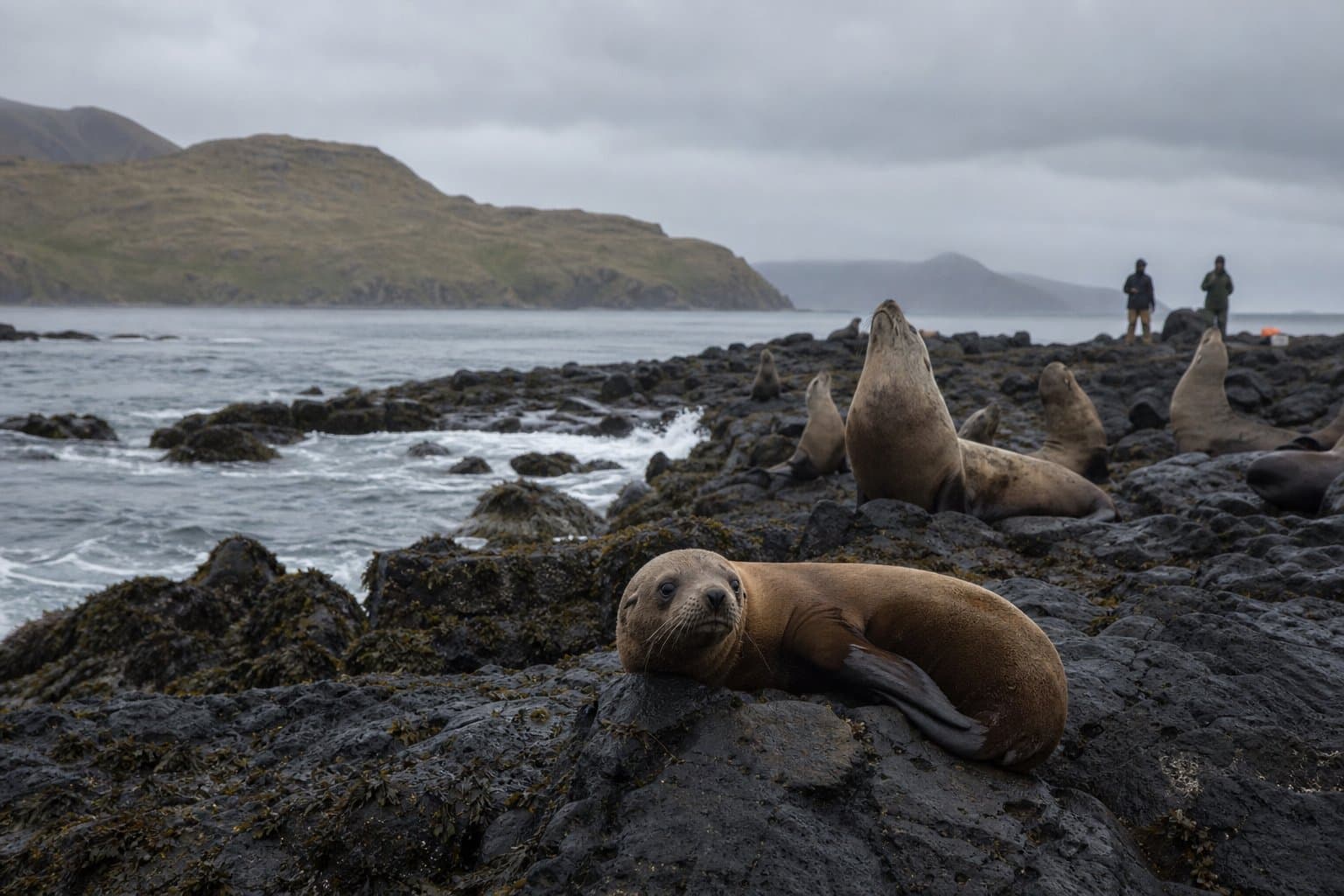
Mercury in the endangered Western Aleutian population of Steller sea lions has doubled over the past decade, and in some places the pups now carry more than the level considered safe for mammals. A new $1.5 million federal study will try to find out why.
The leading suspect is a surprise: the gut microbes of zooplankton, the tiny animals near the base of the food web. Researchers suspect those microbes are producing methylmercury, the toxic form that builds up as it moves through prey into top predators. If that holds up, it would rewrite where scientists thought the toxin enters the ocean. To test it, University of Alaska teams will sample seawater, sediment, and plankton across the Aleutians, where mercury levels vary from island to island.
The stakes reach past the sea lions. The same food web feeds the fish and marine mammals that Unangan and other Aleutian communities harvest for subsistence. If mercury is entering low and concentrating upward, it is moving toward the same table people eat from. The three-year study runs through 2029.
Source: National Science Foundation.
Made by our human newsroom with AI. How humans and AI work here · Grow with our newsroom
Stay informed. Support what matters.
Free, permanent access to local news you can verify. Subscribe to support Melinda Communities.News and go ad-free.
Related Coverage
NOAA pays $1.57 million for samples from subsistence-harvested seals
Alaska News · 2mo ago
A toxic bloom killed fur seals off St. George with the highest saxitoxin level ever recorded in the species
Alaska News · 2mo ago
NOAA funds Alaska work on what stranded marine mammals ate
Alaska News · 1mo ago
Researchers get $812,016 to study Glacier Bay's iceberg seal habitat
Alaska News · 1mo ago
How bubbles can throw off the sound Alaska uses to count its fish
Alaska News · 3mo ago
Comments
Sign in to leave a comment.
No comments yet. Be the first to share your thoughts.