AI image
NOAA funds Alaska work on what stranded marine mammals ate
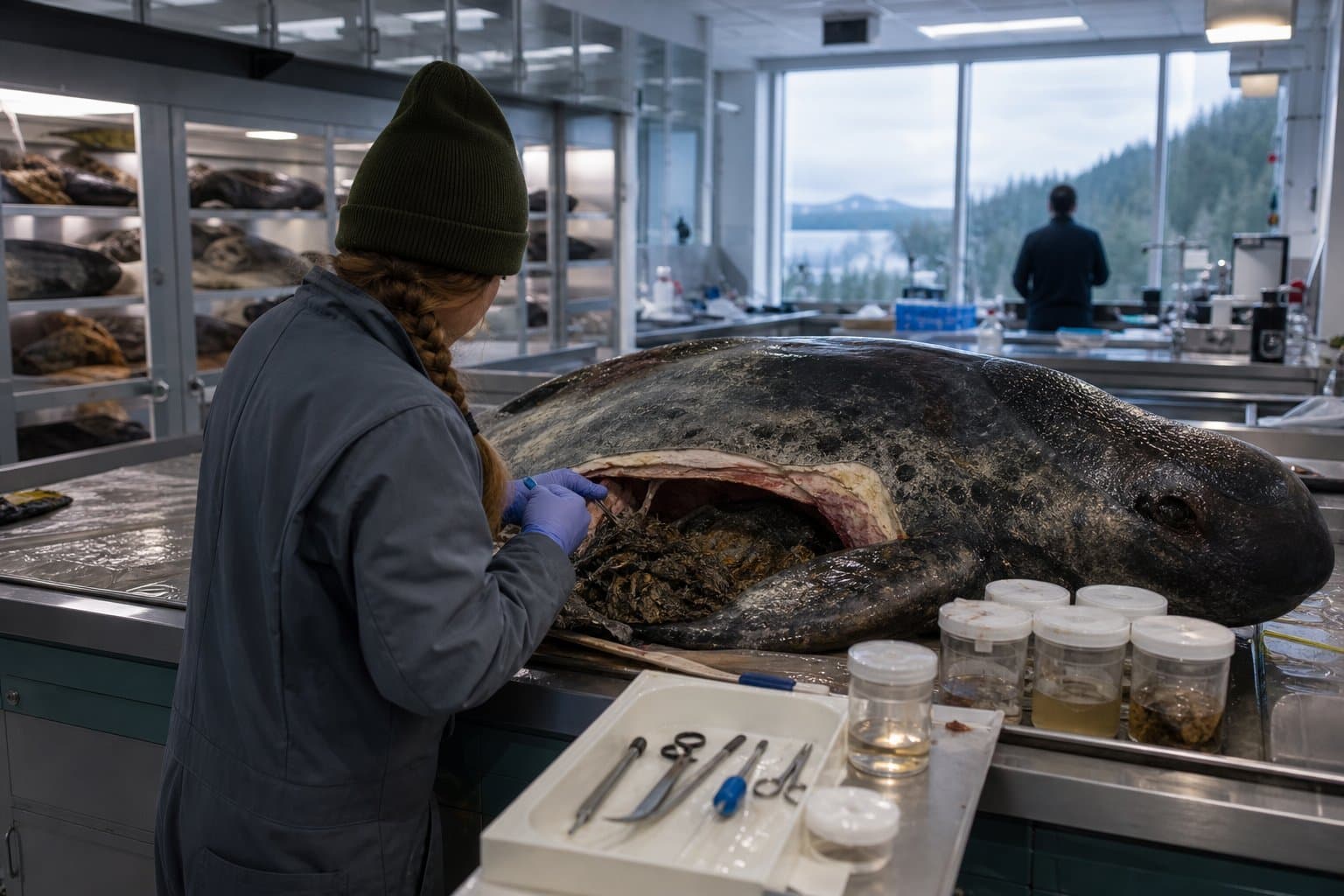
A killer whale that washed up in Alaska died of sepsis after swallowing fishing gear, including three different types of hooks. Researchers found it by cutting the animal open and going through its stomach.
That kind of work now has federal money behind it. NOAA has awarded the Alaska Department of Fish and Game $51,900 to analyze the stomach contents and diets of marine mammals that strand on Alaska shores, a two-year contract that could reach $105,357 if the agency extends it through 2030.
The whale with the hooks was one of 13 killer whales stranded between 2005 and 2021 that Fish and Game biologist Anna Bryan and six colleagues examined for a paper published in Marine Mammal Science in June. Six were residents, the fish-eating type. Six were transients, which hunt other marine mammals. One was an offshore whale.
The stomachs told them things nobody had documented before. One transient had eaten an elephant seal — the first record of that prey anywhere in Alaska. The offshore whale had eaten a salmon shark.
The gear findings are not isolated. NOAA says that "every year many seals and sea lions in Alaska unnecessarily suffer or die from ingesting fishing gear or getting caught in marine debris," and lists salmon fishery hooks and flashers, longline gear, spinners and bait hooks among what turns up inside them. An earlier agency compilation estimated longline gear directly killed about 154 marine mammals in Alaska groundfish fisheries between 1990 and 2001.
The damage runs both directions. NOAA has also identified gear lost or wrecked in marine mammal entanglements as a real cost to Alaska's longline and salmon fleets — the same industry whose hooks keep showing up in stranded animals' stomachs.
The analyses feed the Alaska Marine Mammal Stranding Network database, which tracks live and dead reports statewide. Strandings, entanglements and dead animals can
Source: Department of Commerce ().
Drafted with AI. Edited by Cale Green (1 revision). Reviewed by Cale Green. Who is accountable.
Stay informed. Support what matters.
Free, permanent access to local news you can verify. Subscribe to support Maggie AlaskaNews and go ad-free.
Related Coverage
NOAA pays $1.57 million for samples from subsistence-harvested seals
Alaska News · 3w ago
NOAA says dead fin whale brought to Seward showed trauma consistent with vessel strike
Alaska News · 2mo ago
Mercury in Western Aleutian sea lion pups exceeds safety thresholds, prompting $1.5M NSF study
Alaska News · 1mo ago
A permit to study 14 Alaska marine mammal species is up for comment
Alaska News · 1mo ago
A toxic bloom killed fur seals off St. George with the highest saxitoxin level ever recorded in the species
Alaska News · 3w ago
Comments
Sign in to leave a comment.
No comments yet. Be the first to share your thoughts.