House committee advances bill treating hatchery fish as wild under Endangered Species Act
About a third of Alaska's commercial salmon harvest last year was hatchery-produced. Congress is now weighing whether hatchery populations should have to be considered alongside wild ones when federal agencies assess projects under the Endangered Species Act.
The House Natural Resources Committee voted 21-17 Tuesday to advance the bill to the full House. It would require the U.S. Fish and Wildlife Service and National Marine Fisheries Service to consider both artificially and naturally propagated populations in Endangered Species Act Section 7 consultations, and require the use of artificial propagation to be authorized as mitigation when a federal agency or permit applicant proposes it.
The distinction carries unusually large economic stakes in Alaska. In 2025, Alaska hatcheries contributed about 65.7 million salmon to the commercial harvest, including cost-recovery fisheries — 34 percent of the statewide harvest and 26 percent of its exvessel value. Of those, the common-property commercial fleet caught 50.6 million hatchery-produced salmon worth about $99.6 million at the dock, according to the Alaska Department of Fish and Game.
The bill's sponsor, Rep. Tom McClintock of California, put the argument in blunt terms. "A fish born in a hatchery is no more different than a fish in the wild than a baby born at a hospital is different from a baby born at home," he said.
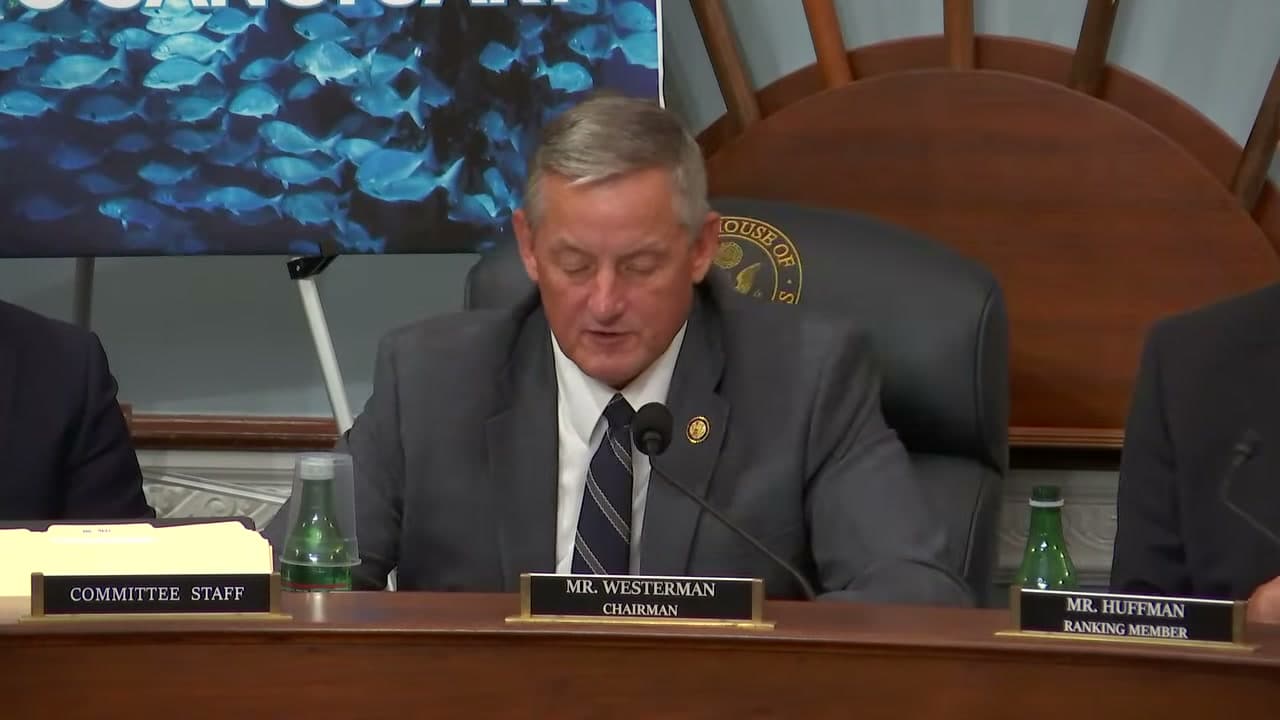
Committee Chairman Bruce Westerman framed it as a question of who pays. "In many cases, water or power users who get their supplies from federal infrastructure projects are asked to foot the bill for these hatcheries," Westerman said. "It seems to me that if we continue to spend millions of dollars annually to try to save these species through artificial propagation, those who foot the bill should also get credit for it."
Opponents said the biology doesn't support the equivalence. Rep. Dexter of Oregon called McClintock's comparison "factually false," saying hatchery fish are predisposed to disease and limited genetic diversity. Ranking Member Jared Huffman said the bill forces a single tool on the agencies "regardless of what the science says," and warned it "allows more habitat destruction without proper safeguards, plus it would lead to genetic bottlenecks, disease outbreaks, and a lot of wasted money."
An amendment from Rep. Adelita Grijalva of Arizona would have barred hatchery production from substituting for habitat protection where the science showed jeopardy or a loss of genetic fitness. It failed 18-20. McClintock's substitute was then adopted by voice vote.
Federal policy has long distinguished among hatchery populations. Since 2005, NMFS policy for Pacific salmon and steelhead has included hatchery stocks in an ESA-listed population only when they are sufficiently related to the natural population to be considered part of the same distinct population. That policy governs listing decisions; the bill advanced Tuesday would instead change how hatchery populations are considered during Section 7 consultations.
The bill has cleared committee only, and has not been scheduled for a floor vote.
This article is based on a public meeting of House Natural Resources — House Natural Resources: • ().
Drafted with AI. Edited by Cale Green (1 revision). Reviewed by Cale Green. Who is accountable. Transcript byLucas Brown
Stay informed. Support what matters.
Free, permanent access to local news you can verify. Subscribe to support Maggie AlaskaNews and go ad-free.
Related Coverage
Hatchery groups cite NOAA Chinook decision as validation
Alaska News · 3mo ago
The sea lions in Congress's salmon bill breed in Southeast Alaska
Alaska News · 1mo ago
Alaska Board Rejects 25% Hatchery Production Cut After Heated Debate
Alaska News · 5mo ago
House Resources Committee Rejects Wildlife Refuge Amendments
Alaska News · 5mo ago
Begich bill to expand commerce in Alaska sea otter handicrafts gets first congressional hearing
Alaska News · 3mo ago
Comments
Sign in to leave a comment.
No comments yet. Be the first to share your thoughts.