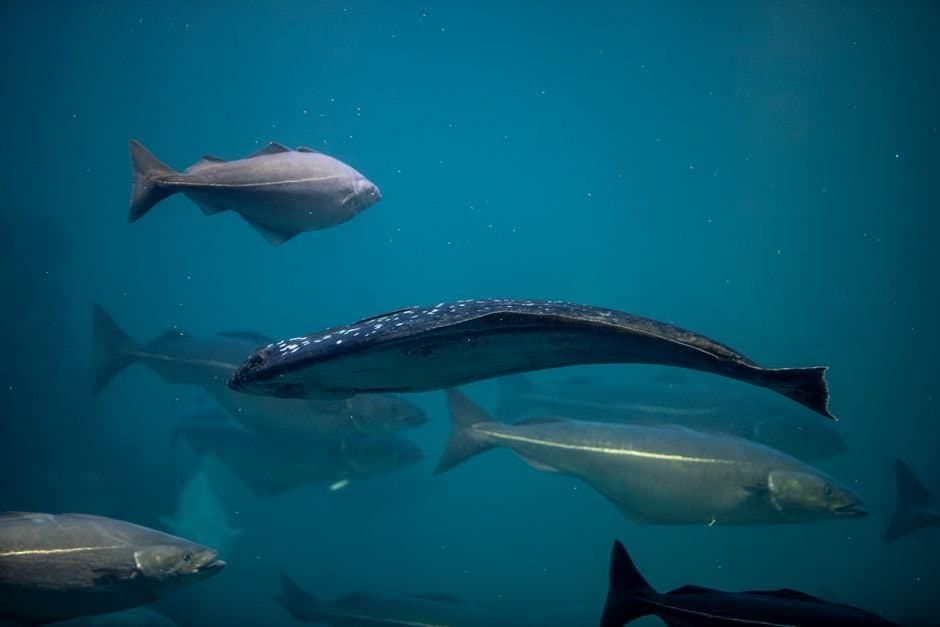
Halibut commission staff propose letting AI read half of the fish earbones behind catch limits
A Pacific halibut's age is written in its earbone. The otolith adds a ring each year, and for a century scientists have read those rings the same way — break the bone, bake it, count under a microscope. Those ages feed the stock assessment that sets Alaska's halibut catch limits.
The International Pacific Halibut Commission has 1.6 million otoliths in its archive, collected since 1925. Reading one by hand costs $3 to $6. On Wednesday, commission staff asked its Scientific Review Board to let a computer read half of them.
The model, a ConvNeXt-Small neural network, comes within a year of a human reader on more than 80 percent of the images it was tested on. Staff trained it on about 9,000 otolith images and held back 2,000 to check it against. Imaging an otolith costs 40 to 50 cents, and building the model ran about $300.
Staff were direct about the limits. They described the mixed approach as slightly less precise than hand reading and slightly biased against it, based on fewer than 1,600 paired reads. Older fish come out younger than they are. How the model holds up across multiple years is unproven. The proposal keeps a 10 percent quality-control re-read by hand.
The board has watched this develop since a 2024 report on the image database and an update last year on the mixed workflow. One member asked Wednesday whether the split could go further, to 90 percent machine and 10 percent human. Another, calling aging error "more insidious than people give them credit for," pressed staff on what the change would do to the stock assessment. Staff said any test would have to match the assessment's timeline and data sources.
A day earlier, Annemarie Hoang had put it plainly: "That AI work needs to be verified."
This article is based on a public meeting of International Pacific Halibut Commission Youtube — 29th Session of the IPHC Scientific Review Board SRB029, Day 2 Part 2 ().
Drafted with AI. Edited by Cale Green (1 revision). Reviewed by Cale Green. Who is accountable. Transcript byLucas Brown
Watch key moments from the source meeting. Click to expand.
Stay informed. Support what matters.
Free, permanent access to local news you can verify. Subscribe to support Bill AlaskaNews and go ad-free.
Related Coverage
Halibut scientists report whale losses and a shift in when females mature
Alaska News · 1d ago
NOAA maps out how new tools enter Alaska's fish surveys
Alaska News · 2w ago
Managers want to double a halibut cap. Their own analysis warns against it.
Alaska News · 1w ago
The panels that shape Alaska's pollock and cod catch limits meet next month
Alaska News · 1mo ago
Bering Sea halibut boats would get a catch cap double the rest of Alaska
Alaska News · 2w ago
Comments
Sign in to leave a comment.
No comments yet. Be the first to share your thoughts.