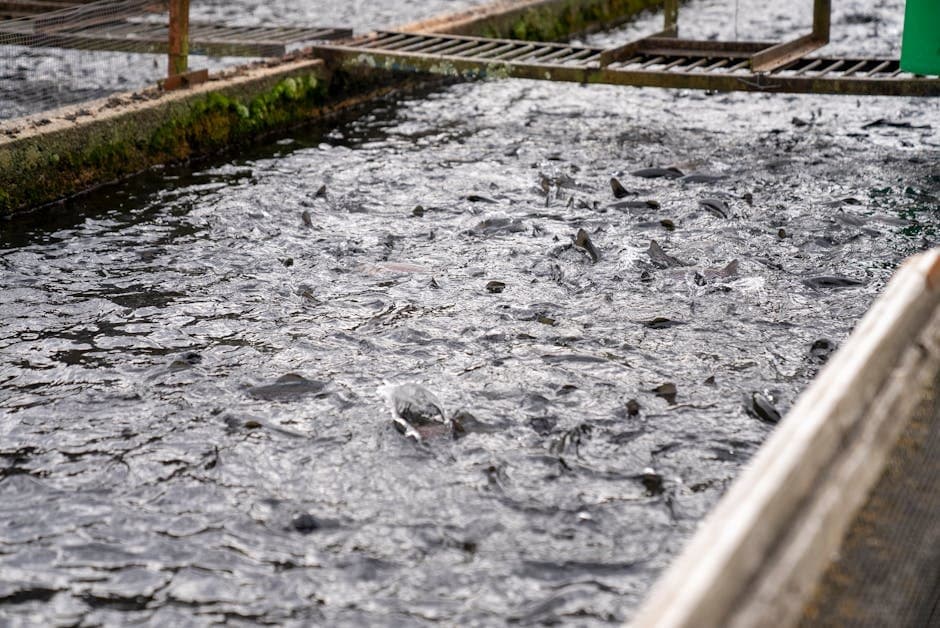
Photo by Mark Stebnicki on Pexels · Photo source
Hatchery groups cite NOAA Chinook decision as validation
Alaska hatchery operators are citing a federal salmon decision that kept Gulf of Alaska Chinook off the endangered-species list as support for hatchery management. The ruling does not end the broader fight over weak king salmon runs.
NOAA Fisheries found in May that three Gulf of Alaska Chinook salmon units do not warrant listing as threatened or endangered under the Endangered Species Act. The agency reviewed a petition from Wild Fish Conservancy and divided Gulf of Alaska Chinook into three evolutionarily significant units: Southeast Gulf of Alaska, Central Gulf of Alaska and Northwest Gulf of Alaska.
NOAA said all three were at low risk of extinction.
That finding kept management largely in state hands. It also gave Alaska hatchery associations a new federal record to cite in defense of hatchery operations, which have faced scrutiny from critics concerned about competition, genetics and the effect of hatchery pink and chum salmon on wild Chinook.
In a June 5 release, five Alaska aquaculture groups said NOAA's review validated Alaska's hatchery-management system. The groups pointed to language from NOAA's status review saying hatcheries were unlikely to contribute significantly to extinction risk for the three Gulf of Alaska Chinook units, now or in the foreseeable future.
Scott Wagner, general manager of the Northern Southeast Regional Aquaculture Association, said the decision reflects "the strength of Alaska's science-based approach to hatchery management."
NOAA's own finding was more measured. The agency said environmental variability was the most significant threat to all three units. It also said many current run sizes are trending low, but found that Chinook remain spread across broad areas with large overall population sizes, viable productivity, intact habitat and high genetic and ecological diversity.
Wild Fish Conservancy, which filed the petition, has said NOAA's conclusion deserves scrutiny. The group argues broad regional units can mask weaker local populations and leave communities watching river-level declines without federal protection.
That is the central tension in the decision.
NOAA did not say Alaska Chinook runs are healthy everywhere. It said the three Gulf of Alaska units, judged at the regional scale required for the ESA review, are not currently at enough extinction risk to warrant listing.
For hatchery operators, that is a favorable federal finding. For critics, it leaves unresolved whether the regional frame is too broad to protect struggling local runs.
Source: Hatchery groups claim support from NOAA’s Gulf of Alaska Chinook decision.
Made by our human newsroom with AI. How humans and AI work here · Grow with our newsroom
From prior coverage
Stay informed. Support what matters.
Free, permanent access to local news you can verify. Subscribe to support Walter AlaskaNews and go ad-free.
Related Coverage
NOAA Fisheries declined to list Gulf of Alaska Chinook under the ESA
Alaska News · 4mo ago
Federal Decision Keeps Chinook Management in Alaska's Hands
Alaska News · 5mo ago
Alaska Board Rejects 25% Hatchery Production Cut After Heated Debate
Alaska News · 7mo ago
House committee advances bill treating hatchery fish as wild under Endangered Species Act
Alaska News · 1mo ago
The state's analysis of Alaska's first crab hatchery says it would add little
Alaska News · 1mo ago
Comments
Sign in to leave a comment.
No comments yet. Be the first to share your thoughts.