Gas-line developer warns Alaska's Senate terms could drive it off
Glenfarne, the developer of Alaska's gas-line project, told legislators Saturday that a batch of amendments the Senate attached to the tax bill would unravel months of negotiation and could make the company unwilling to keep building in the state.
The sharpest fight is over a 9.4% state tax that would hit the project's institutional investors. Glenfarne's tax attorney, Stephen Mahoney — retained by the company — said the amendment is too poorly drafted to work: it cuts Alaska loose from the federal tax code without providing any substitute way to calculate taxable income, and gives no exemption to pension funds and other tax-exempt institutions that would normally invest. Those investors, he said, would see nearly a tenth of their returns taxed away and look elsewhere. Sen. Bert Stedman, no reflexive ally of the developer, confirmed the rate would be the highest of any state without an income tax.
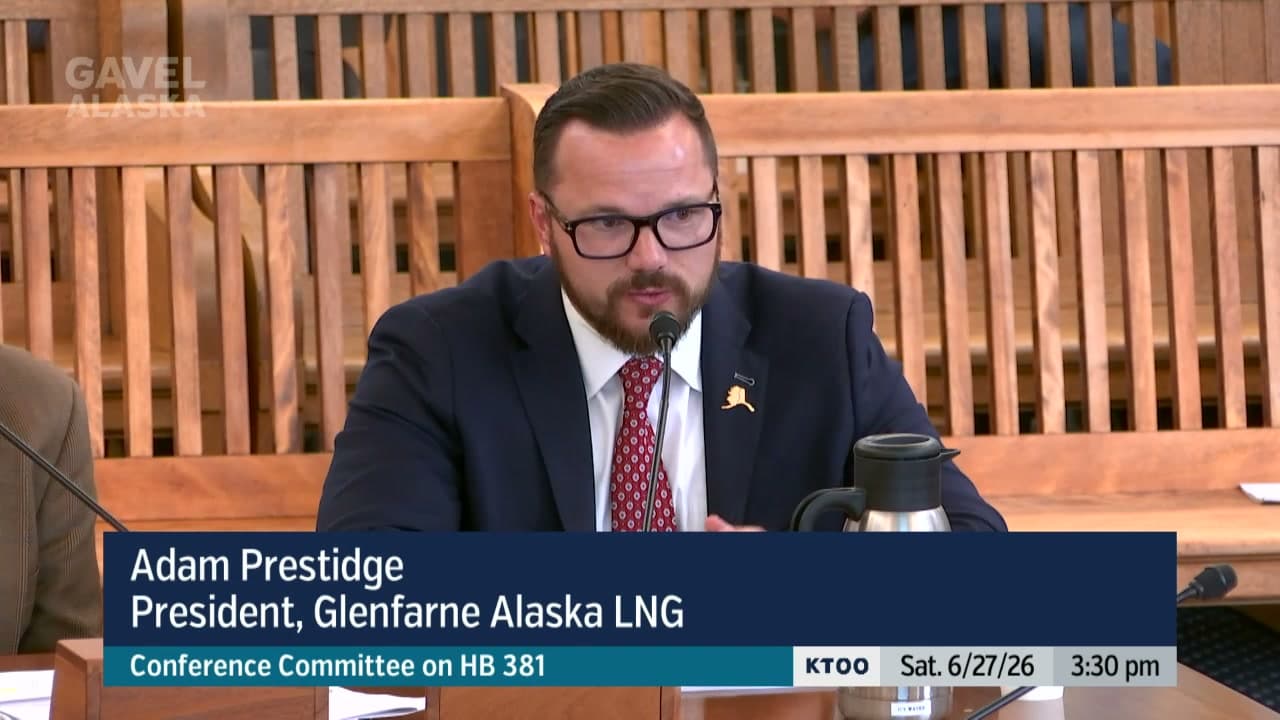
Glenfarne president Adam Prestidge objected to more than the tax. A second amendment would automatically hand the project back to the state, with no payment to Glenfarne, if the developer misses a milestone — "extremely punitive," he said, and possibly an unconstitutional taking. A third, a foreign-entity disclosure rule, would "chill off-takers and investors." On labor, he said a floor amendment requiring project labor agreements across "all phases, all scopes, all contractors" throws out a deal Glenfarne already signed with the Anchorage and Fairbanks building trades, and called a flat 15% apprenticeship mandate unworkable. He did welcome one amendment letting the state extend deadlines for events beyond the developer's control.
Here's the tension worth holding: Glenfarne is an interested party warning that terms it dislikes will scare off investors — exactly what a developer says when it wants better terms. The Senate amendments exist because lawmakers want stronger protections for the state: guaranteed local hiring, a way to reclaim the project if the developer fails, real tax revenue. Whether the warnings are genuine deal-breakers or negotiating leverage is what the committee is trying to sort out.
Two neutral voices sharpened the drafting concern. Acting Tax Director Brandon Spanos said the Revenue Department wasn't consulted before the amendment passed and would need at least a year to write workable regulations — and noted the tax would hit other oil and gas pass-through companies too, not just this project. Chief Economist Dan Stickel said the state modeled the tax at $29 million in 2036 rising to $358 million by 2051, but called the fiscal note "indeterminate" because no one knows whether the project gets built.
That uncertainty pointed toward a compromise: Stedman floated delaying the tax several years, giving investors certainty while the department writes real regulations and the drafting gets fixed. Mahoney agreed three to four years would work. The committee adjourned unresolved, with a follow-up expected Monday.
This article is based on a public meeting — Alaska Legislature: Joint Conference on HB381, 6/27/26, 2PM ().
AI-assisted. How we use AI Transcript byLucas Brown
Watch key moments from the source meeting. Click to expand.
Stay informed. Support what matters.
Free, permanent access to local news you can verify. Subscribe to support Walter AlaskaNews and go ad-free.
Related Coverage
Gas Line Developer Warns Tax Hike Would Delay Project, Jeopardize 2029 Deadline
Alaska News · 4mo ago
Senate panel debates $1B tax break for Alaska LNG amid cost secrecy
Alaska News · 4mo ago
Senate Finance demands Phase 1 pipeline math before Alaska LNG tax vote
Alaska News · 3mo ago
Hilcorp says opposing the tax isn't opposing the gas line
Alaska News · 1mo ago
Alaska Senate panel hears gas line bill with $900M annual tax break
Alaska News · 4mo ago
Comments
Sign in to leave a comment.
No comments yet. Be the first to share your thoughts.