Senate Finance demands Phase 1 pipeline math before Alaska LNG tax vote
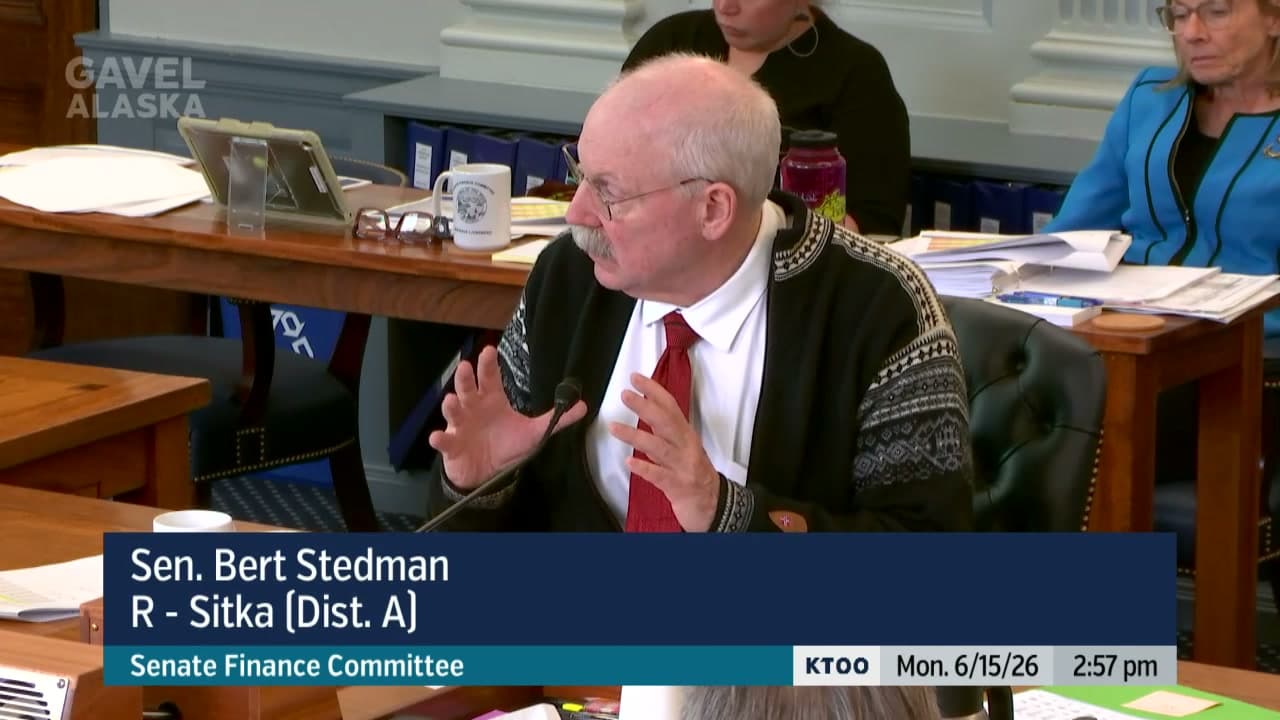
Senator Bert Stedman pressed the Department of Revenue on Monday to show its work — specifically, the standalone economics of the Alaska LNG pipeline — before the Senate Finance Committee signs off on a property tax break worth as much as $750 million a year to the project's developer.
The break, part of Gov. Dunleavy's framework now before a four-day special session, would spare Glenfarne the standard 20-mill property tax during construction and replace it, after a five-year abatement, with a far lighter 2-mill-equivalent volumetric tax. In exchange, the developer must put $40 million into a municipal impact fund, commit to a project labor agreement and a Fairbanks spur line, and move toward a final investment decision.
Stedman's objection is that the department keeps presenting blended, whole-project numbers that fold in Phase 2 — the LNG export terminal that may never get built — and so obscure the only question that matters right now: how much of a tax concession does the standalone Phase 1 pipeline actually need to pencil out? "Maybe it's zero tax, for all I know," he said, asking for cash-flow analysis at varying debt levels and interest costs, "just like we do when we get into the oil stuff." His sharper worry was that a break given "with our left hand" could be quietly clawed back "with some mechanism on the right hand."
Glenfarne President Adam Prestidge defended the 2-mill figure as load-bearing, not arbitrary — the assumption, he said, that made the company's $16 gas price cap possible in the first place: "I don't see that there was a commitment to $16 at any time before we had an assumption that was based on 2 mils."
Chief Economist Dan Stickel said the department had run a Phase 1 analysis and would supply it for the House-passed version, but that the compressed session left its baseline assumptions unchanged. Each additional mill, he noted, equates to about 5 cents of volumetric tax revenue on the full project.
This article is based on a public meeting — Alaska Legislature: Senate Finance - June 15, 2026 1:30pm ().
AI-assisted. No editor review is on record for this article. Who is accountable. Transcript byLucas Brown
Watch key moments from the source meeting. Click to expand.
Stay informed. Support what matters.
Free, permanent access to local news you can verify. Subscribe to support Walter AlaskaNews and go ad-free.
Related Coverage
Alaska Senate Majority says gasline tax break waits on Glenfarne financial numbers
Alaska News · 1mo ago
Alaska LNG Tax Bill Stalls as Lawmakers Demand Project Cost Data
Alaska News · 4mo ago
Senate panel debates $1B tax break for Alaska LNG amid cost secrecy
Alaska News · 4mo ago
Senate Finance hears $18 billion revenue trade-off for Alaska LNG tax break
Alaska News · 3mo ago
Senate Finance Committee: how do you analyze a $46.2 billion pipeline without the numbers?
Alaska News · 3mo ago
Comments
Sign in to leave a comment.
No comments yet. Be the first to share your thoughts.