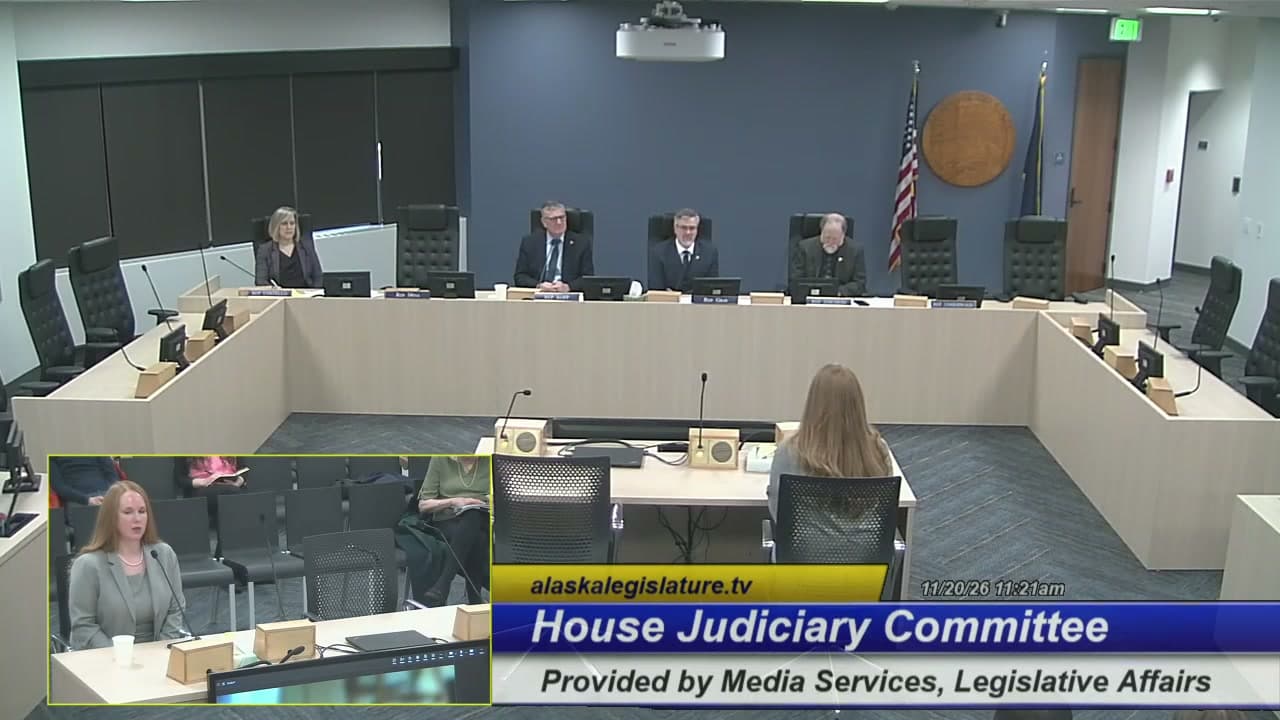
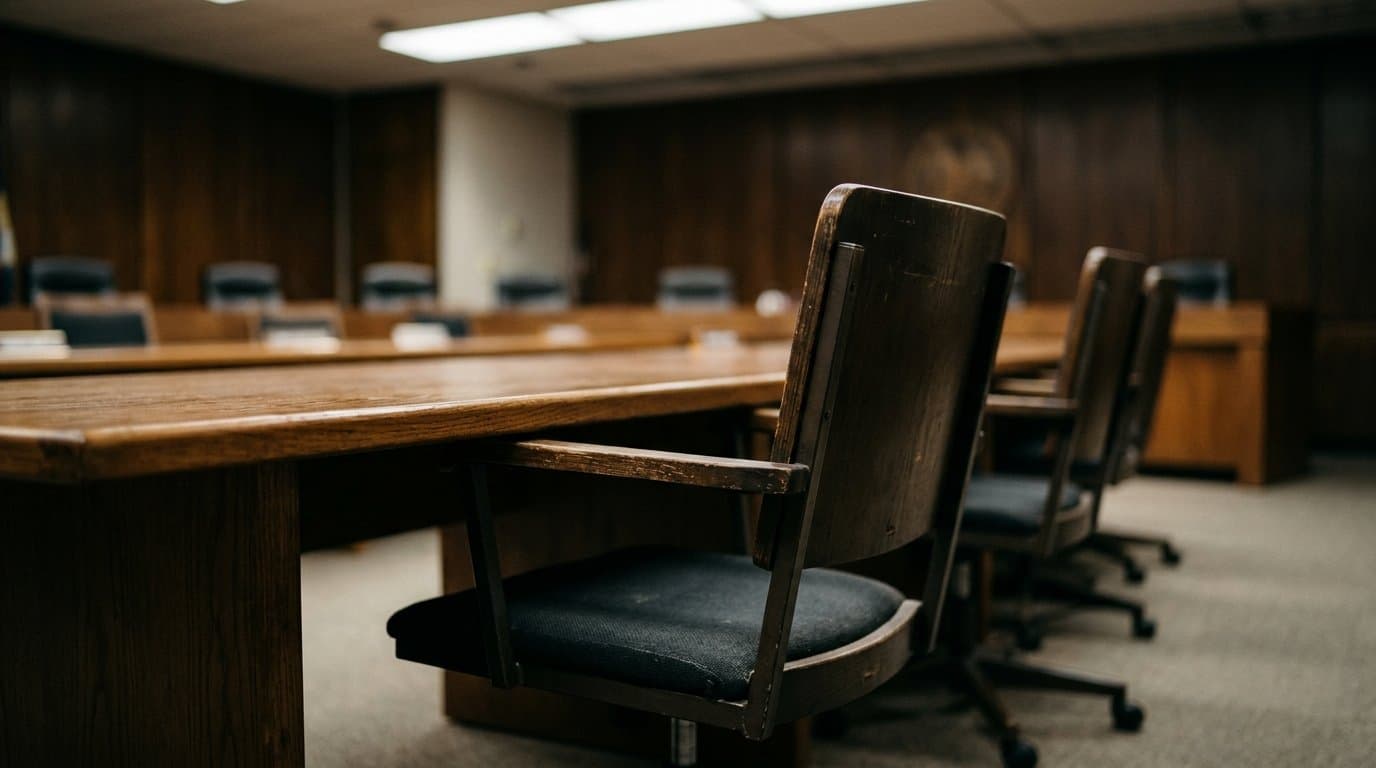
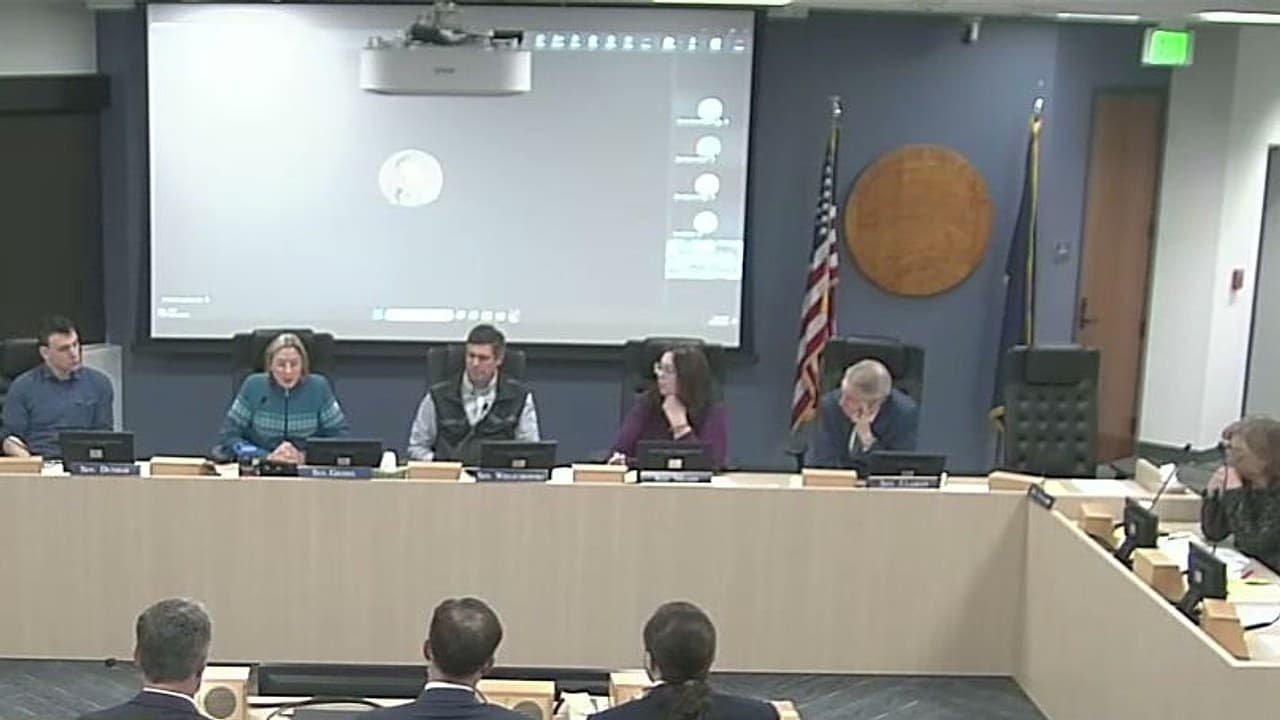
Frame from "Alaska Legislature: House Judiciary - November 20, 2026 10:00am" · Photo source
Former ICE detainee tells Alaska House panel of 117 days in solitary at Anchorage jail
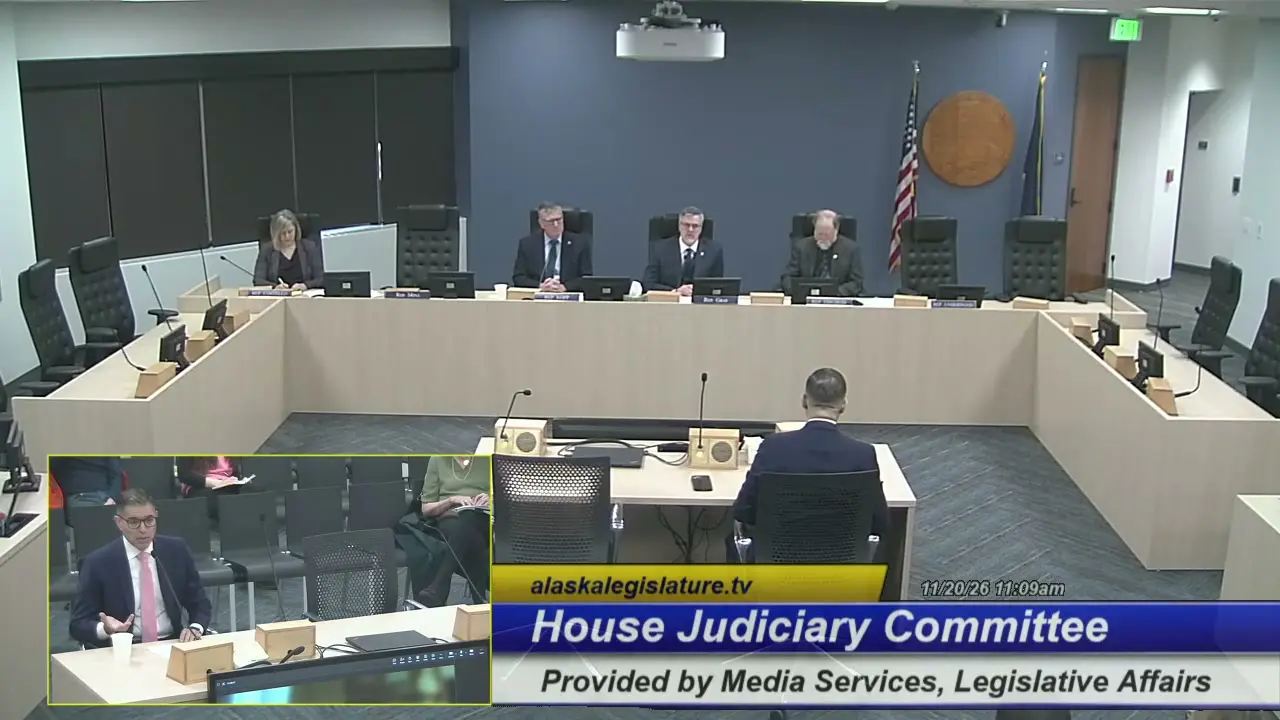
Honorio Latyr Pereira Barreto told the Alaska House Judiciary Committee on Friday that he spent 117 days in solitary confinement at the Anchorage Correctional Complex while held as a civil immigration detainee. He said staff also strip-searched him after attorney visits, in a room with the door left open.
"I was alone in my cell approximately 23 hours a day," Barreto said.
Committee Chair Andrew Gray said lockdowns, strip searches, missing medication and lawyers unable to reach their clients were documented at a June 2025 hearing, after 41 men were flown to Anchorage from an ICE detention center in Tacoma, Washington. Lawmakers were assured then that the Department of Corrections would do better. Seventeen months later, Gray said, "it appears that little has changed." The department did not testify. Gray said it agreed to answer the committee's questions in writing.
Barreto is a certified nursing assistant who came to the United States in 2020 after marrying a U.S. citizen. ICE detained him June 11 as he left an Anchorage Wellness Court hearing. A federal judge ordered his release in October, ruling that his immigration bond hearing used the wrong legal standard.
Barreto said that while in the general population he shared a cell with two other ICE detainees. There were only two bunks, and he slept on the floor beside the toilet. On June 21, after staff refused to bring a supervisor, he knocked on his cell door. He said he received a disciplinary write-up and was moved to administrative segregation the next day. He stayed there through Oct. 16. He also described lockdowns that cut off showers, recreation, the law library and phone calls.
He described about a dozen strip searches after in-person visits with his attorney. "Every one of those strip-searches took place in a room where a camera was pointed directly at me," Barreto said. He said passing staff and detainees could see him and that his repeated requests for privacy were never honored. He said he did not file a formal grievance on the searches. He also said it took nearly two months and multiple grievances for the jail to add his attorney to its phone system for free legal calls.
Immigration attorney Nicholas Olano told the committee that detainees in federal detention facilities are not strip-searched after attorney visits unless there is a particular reason to suspect something. Gray pointed to the federal standards for civil immigration detention. "There's nothing in the document that justifies the treatment that Mr. Barreto received," he said.
Vice Chair Chuck Kopp asked Barreto's attorney what justified the long segregation. She said no one ever explained it to her office. Her understanding was that the jail used segregation to keep him apart from criminal inmates.
Rep. Genevieve Mina read from the standards in the state's agreement with the federal government, which describe administrative segregation as non-punitive, with living conditions approximating those of the general population. She urged members to review the standards, saying the state is not complying with them.
The state is paid about $243 a day per ICE detainee. Rep. Ted Eischeid said that if the state keeps the work, the rate "should be much higher so they can build a facility or build a mod in the ACC that treats civil detainees with dignity."
Gray said the department held 13 people for ICE in 2024 and 99 in 2025, not counting the 41 men from Washington, and 130 this year as of Oct. 19. He said the corrections commissioner reported by email Friday that no ICE detainees are in state custody now.
Gray closed by listing steps he heard from witnesses: independent oversight of conditions, minimum protections in state law for civil detainees, a ban on accepting civil immigration detainees from other states, bond hearings in Alaska, a possible ban on ICE arrests around courthouses and schools, and a review of the state's 287(g) agreement with ICE. That agreement, signed in 2020, lets trained corrections staff serve federal immigration arrest warrants on people in state custody. No bill is before the committee. The committee will send written questions to the department.
What did you make of this story? (no account needed)
Made by our human newsroom with AI. How humans and AI work here · Grow with our newsroom · Transcript byLucas Brown
Keep Alaska News free for everyone.
No paywall, ever. Members pay so everyone can read the meetings and records Alaska News covers.
Get Alaska News in your inbox
Create your free account and get the day’s top stories around 6 each morning, in a few minutes’ read.
Top stories, around 6 each morning.
Stories on what you follow, on Sundays.
This article is based on a public meeting of Alaska State Legislature — Alaska Legislature: House Judiciary - November 20, 2026 10:00am ().
Watch key moments from the source meeting. Click to expand.






Comments
Sign in to leave a comment.
No comments yet. Be the first to share your thoughts.