
Editorial map (Gemini + Google Maps)
Vendors can buy booths at Alaska's rural health convening as groups vie for $75 million
Vendors can pay $300 for a booth to share their products with the organizations spending, or hoping to spend, Alaska's federal rural health money, at a state convening in Anchorage in January.
The Alaska Department of Health is taking applications from vendors, and from Alaska nonprofits that want a free resource table, through Dec. 4 for its two-day Rural Health Transformation Program gathering, Jan. 6 and 7 at the Dena'ina Civic and Convention Center. Vendors will get a chance to connect with health care partners and community organizations and share their products and services, the application says.
Alaska's federal award for the program's second year is about $272.7 million, roughly $478,000 more than the first, according to a Nov. 17 department release. In the first year, the state awarded just under $249 million to 254 projects.
At an Oct. 2 webinar for applicants, Health Commissioner Heidi Hedberg said many vendors had reached out with products, and that "many of them are great widgets and tools, but healthcare happens in community." The department was steering them toward local partners such as clinics, hospitals and social service groups, she said.
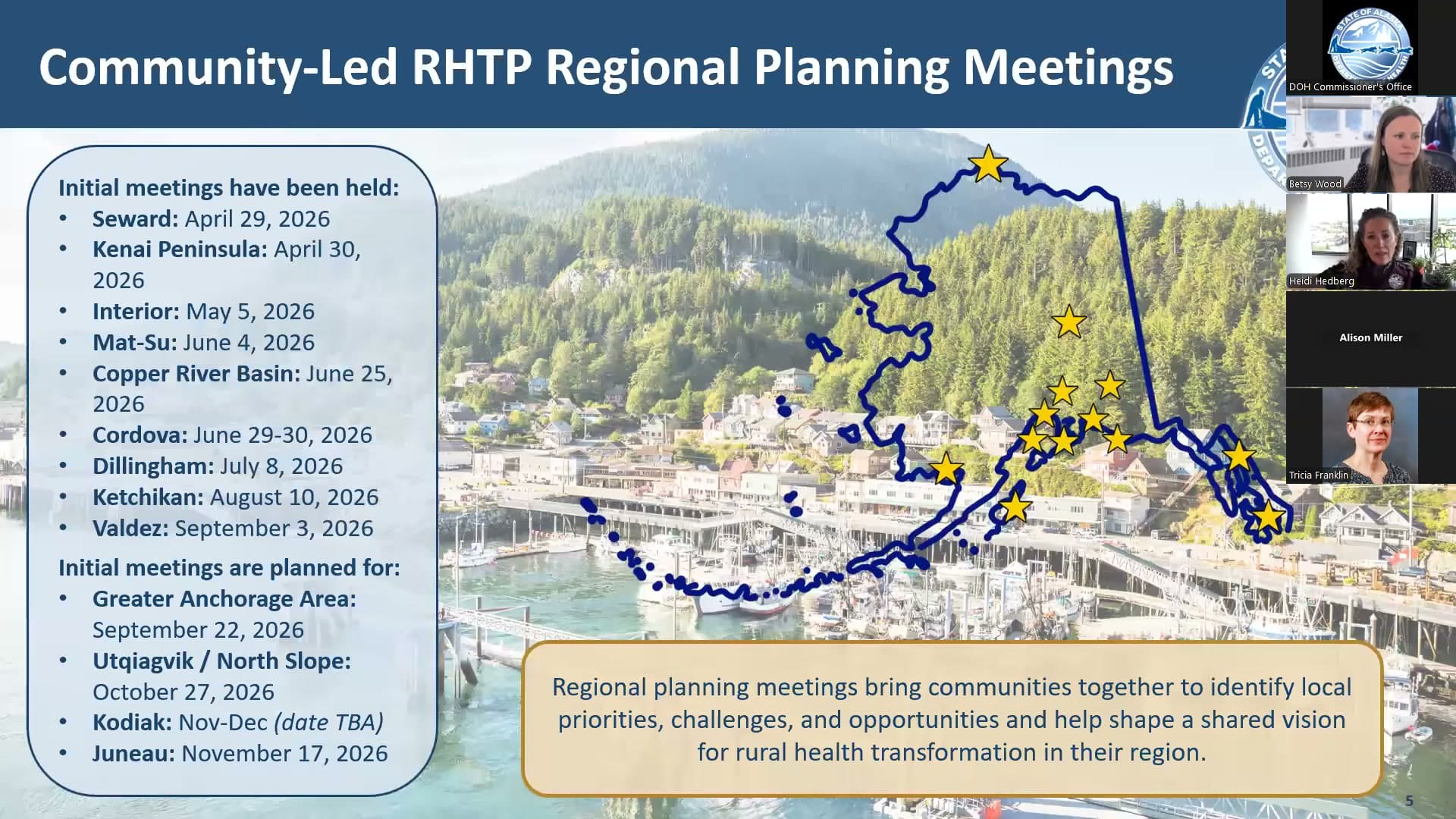
In the first round, organizations floated ideas the department estimated at about $2.5 billion, about nine times what the state had. For the current fall round, which closed Oct. 28, the department received 384 applications from 217 organizations. It plans to award about $75 million, with decisions as early as December and grants starting as early as January. A bigger round is planned for the spring.
The convening is free and open to the public, including current grantees and groups thinking of applying, with a limited virtual option. The department says it will highlight first-year projects and the program's second-year priorities: emergency medical services, care coordination and getting providers ready for pay-for-value models, which tie what providers are paid to how their patients do. Each day ends with a social hour with vendors, nonprofits and department staff.
What did you make of this story? (no account needed)
Made by our human newsroom with AI. Reviewed by Cale Green. How humans and AI work here · Grow with our newsroom ·
Keep Alaska News free for everyone.
No paywall, ever. Members pay so everyone can read the meetings and records Alaska News covers.
Get Alaska News in your inbox
Create your free account and get the day’s top stories around 6 each morning, in a few minutes’ read.
Top stories, around 6 each morning.
Stories on what you follow, on Sundays.
Based on a press release from Alaska Department of Health.












Comments
Sign in to leave a comment.
No comments yet. Be the first to share your thoughts.