Generate an image
Drones are dropping chaff over Nenana to try to stop lightning
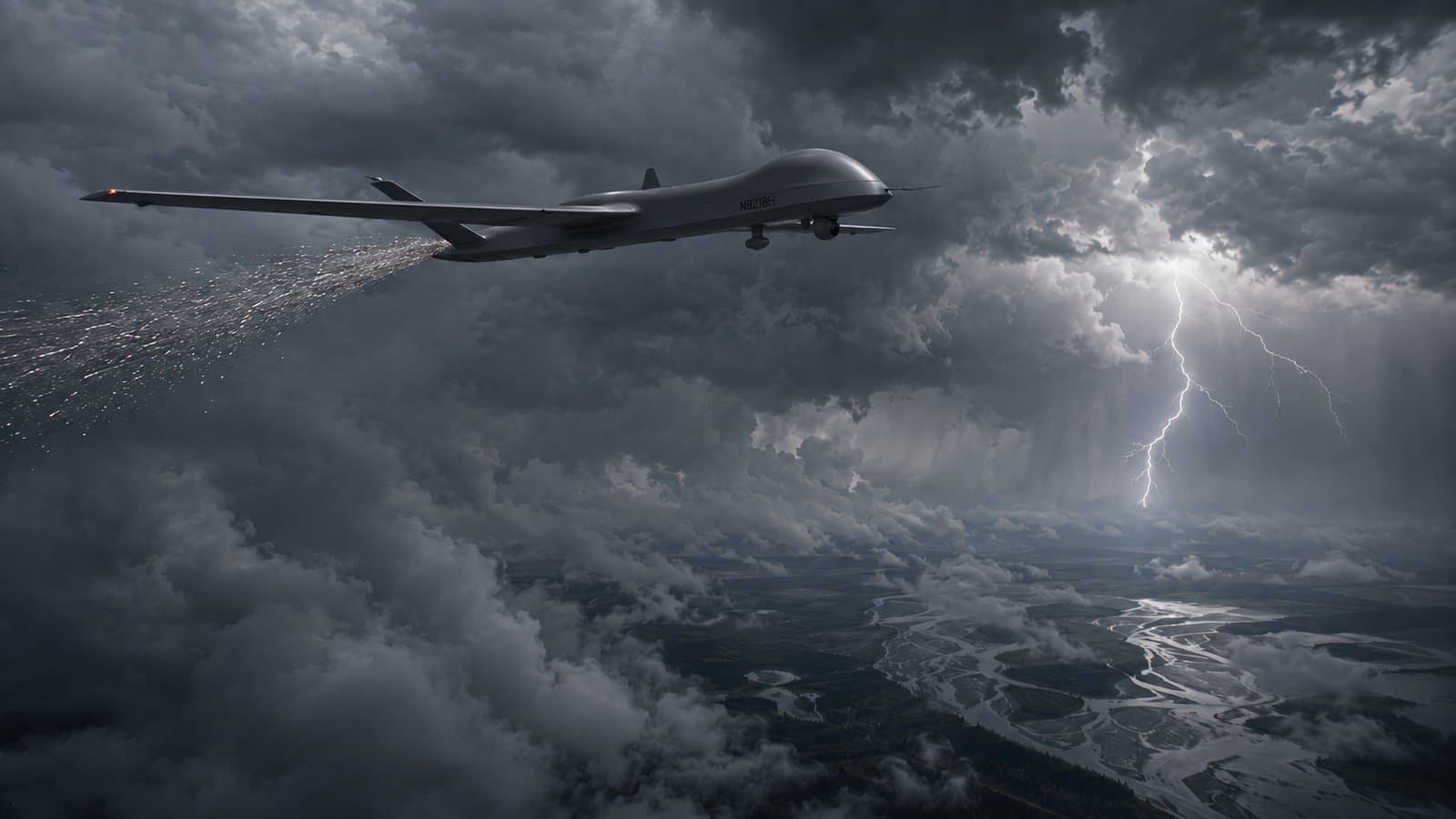
A Vancouver company has filed plans to drop metallic chaff from drones over the Nenana area at altitudes reaching 10,000 feet, testing whether conductive fibers can cut down the lightning that starts wildfires. The window opened July 19 and runs through Sept. 30.
Skyward Wildfire Technologies uses weather modelling to pick out storms likely to throw down fire-starting lightning, then releases aluminum-coated fibers into them. The theory is that the fibers bleed off electrical charge inside the cloud and reduce cloud-to-ground strikes. The company says its material acts only on charge, not on moisture, and that each intervention is scoped to a specific storm on a high-risk day.
U.S. researchers began testing conductive chaff in thunderstorms in the 1960s. NASA and federal researchers took it up during the Apollo era, after Apollo 12 was struck by lightning during launch in 1969, and the work continued into the 1970s before being abandoned, partly over concerns about interference with communications.
Federal rules cap small drones at 400 feet above the ground. Nenana sits inside Alaska's drone test environment, where the University of Alaska Fairbanks operates under FAA authorities that allow flights beyond that limit. The FAA issued Alaska a civil drone waiver in February 2023, and UAF later flew a large uncrewed aircraft between Fairbanks International and Nenana Municipal.
Federal law requires anyone modifying weather to file a report with NOAA 10 days beforehand and again afterward. NOAA collects those reports. It does not approve or license anything, and a filing describes planned activity rather than completed flights.
Skyward's filing describes quad-copter and fixed-wing drones dropping training chaff in 2-kilogram batches. It lists Jason Williams, chief drone pilot for UAF's Alaska Center for Unmanned Aircraft Systems Integration, as the proponent. In a separate filing, the company says it does not intend to modify weather, though chaff released into a storm could reduce lightning.
A 1998 Government Accountability Office review found military chaff could interfere with civilian radar and weather observations, though documented incidents were rare and the report characterized the broader safety risks as low.
Skyward has Canadian public money behind it. NorthX, an innovation fund, awarded it about C$643,000 in April as part of a larger follow-on round split among several wildfire-technology companies. British Columbia committed up to C$1 million toward a 2026 field trial, and Canadian federal grant records show additional support.
The underlying concept has a scientific history, but Skyward has not published peer-reviewed results or the field data needed to evaluate its own performance claims. The company has said its 2024 work with Alberta Wildfire produced a 60 to 100 percent reduction in lightning compared with control storm cells. That figure appears in a Skyward presentation hosted by the World Bank, not in scientific literature.
Lightning accounts for the majority of acreage burned in the northern boreal forest, and lightning-caused fire has been increasing in the Arctic as the region warms.
Source: Nenana weather modification project deploys drone chaff through September.
Made by our human newsroom with AI. How humans and AI work here · Grow with our newsroom
Stay informed. Support what matters.
Free, permanent access to local news you can verify. Subscribe to support Melinda Communities.News and go ad-free.
Related Coverage
Robots are fighting Alaska wildfires near Nenana right now — on their own
Alaska News · 3mo ago
Kenai Assembly asks state to ban cloud seeding, on consent agenda
Alaska News · 2w ago
A $1.6 million grant to help Alaska burn on purpose, before wildfire does
Alaska News · 2mo ago
Alaska is about to burn 54,000 acres on purpose, to grow more moose
Alaska News · 2mo ago
A half-acre fire near Golovin tests a new federal firefighting agency
Alaska News · 3mo ago
Comments
Sign in to leave a comment.
No comments yet. Be the first to share your thoughts.