AI image
Robots are fighting Alaska wildfires near Nenana right now — on their own
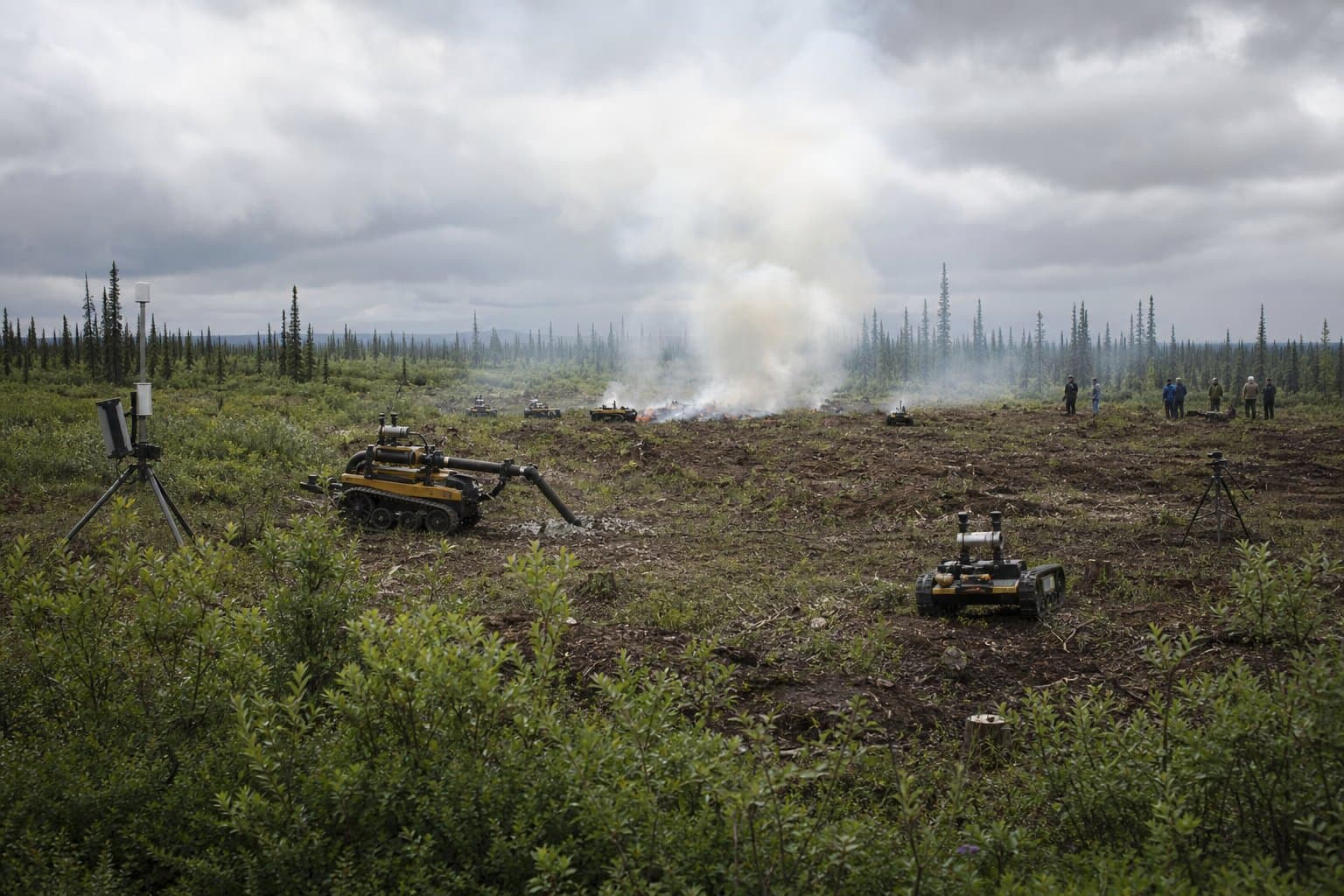
Out near Nenana this week, machines are detecting and putting out fires with no human pulling the trigger. It's not science fiction; it's a competition, and the prize is $11 million.
The finalists in the XPRIZE Wildfire challenge are running live trials through Thursday — in partnership with the University of Alaska Fairbanks — deploying autonomous robotic systems against managed fires in the Interior. The bar is steep: spot a dangerous fire and suppress it within 10 minutes, start to finish, without a person involved — roughly four times faster than crews can respond today. The whole pitch is to flip wildfire from something you react to into something a machine snuffs before it grows.
The timing is almost too on-the-nose. The robots are being tested in the middle of a real Interior fire season — a Red Flag Warning was up during the trial window, and actual wildfires have been burning not far off, near Nenana and Fairbanks. The demonstration and the threat are sharing the same airspace.
That closeness is also where the hard questions live. The fires these systems face are controlled, permitted burns — not the wind-driven, multi-day blowups that menace Interior villages every summer, and the competition's materials don't say how a tidy test fire stacks up against the real thing. XPRIZE's logic is sound enough: prove the technology on tame fires in a remote spot, away from people, before ever turning it loose near a community. But in the documents on the competition, there's no obvious seat at the table for the people who actually live with these fires — local tribal governments, Nenana residents, the rural fire crews who'd have to use any of this someday.
For now, the robots have until Thursday to show what they can do. Results are expected later this year.
Source: Nenana hosts XPRIZE Wildfire autonomous response finals testing ().
Drafted with AI. Edited by Cale Green (1 revision). No full editor review is on record. Who is accountable.
Stay informed. Support what matters.
Free, permanent access to local news you can verify. Subscribe to support Melinda Communities.News and go ad-free.
Related Coverage
Drones are dropping chaff over Nenana to try to stop lightning
Alaska News · 1mo ago
Mastadon Fire reaches full containment after drone-guided mop-up
Alaska News · 3mo ago
A $1.6 million grant to help Alaska burn on purpose, before wildfire does
Alaska News · 1mo ago
Alaska Moves to Keep One of the World's Last Fire Outposts
Alaska News · 2mo ago
A half-acre fire near Golovin tests a new federal firefighting agency
Alaska News · 2mo ago
Comments
Sign in to leave a comment.
No comments yet. Be the first to share your thoughts.