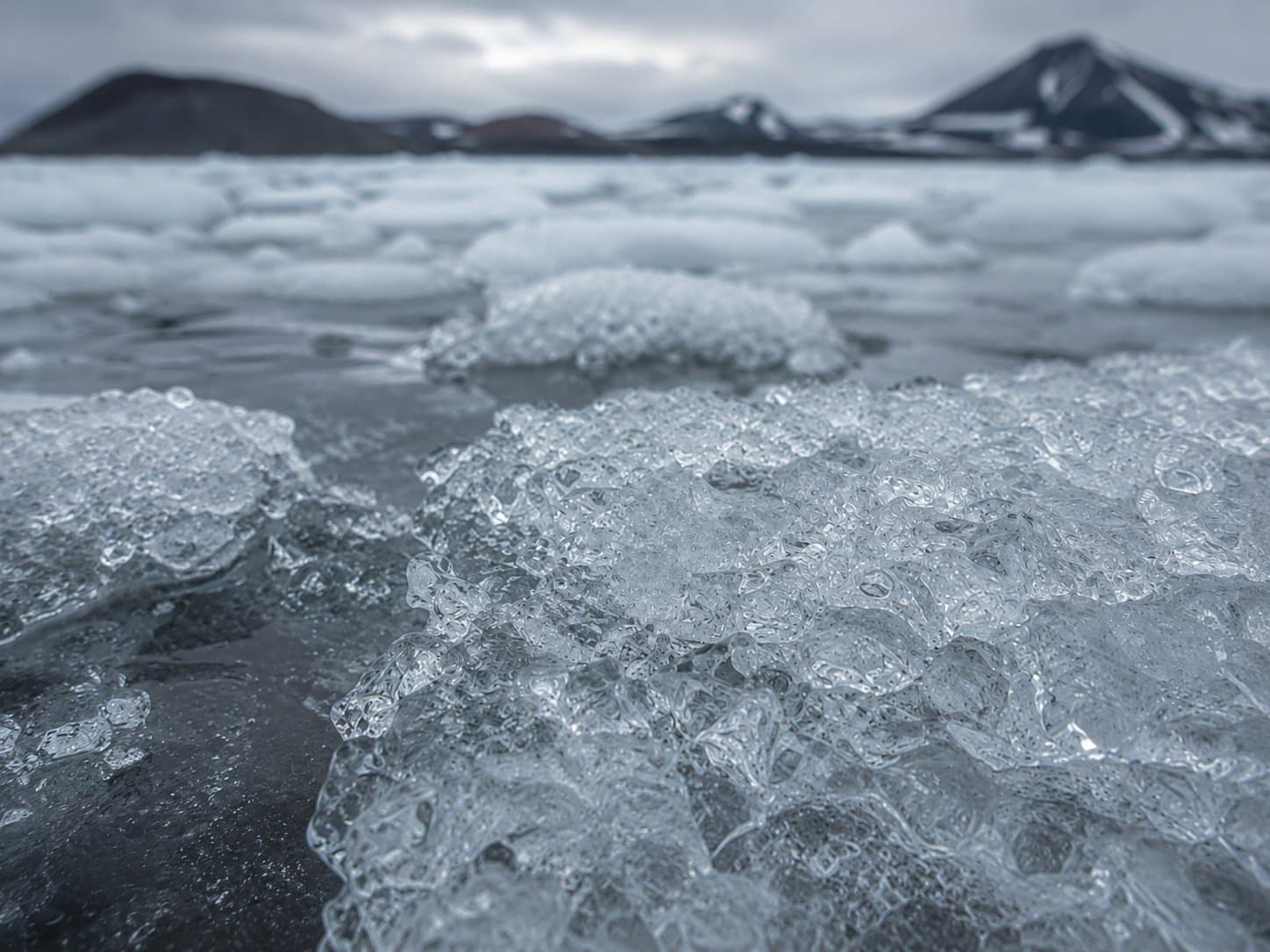
Photo by Cale Green
UAF scientist leads $36K Antarctic sea ice study amid record lows
A University of Alaska Fairbanks sea ice scientist will lead a year-long study of rapid ice decline in Antarctica's Ross Sea, working with New Zealand researchers to understand changes that have broken records across the Southern Ocean.
The National Science Foundation awarded Andrew R. Mahoney $36,000 for the project, which runs from April 15, 2026, through March 31, 2027. Mahoney is a sea ice geophysicist at the UAF Geophysical Institute.
Antarctic sea ice hit record lows in both summer and winter in 2023. The decline began in 2016 and reversed a modest increase that had continued through 2015. International researchers identified the causes and implications of this variability as a key theme for the Antarctica InSync effort.
Testing technology in the Ross Sea
Researchers will test advanced observing technology and combine it with satellite data and computer models to capture key processes across the Ross Sea. The work centers on the McMurdo region and will use existing programs and logistics.
The Ross Sea serves as an area of strategic interest for both the United States and New Zealand. The two countries co-proposed the Ross Sea Marine Protected Area in 2016, creating one of the world's largest marine protected areas.
Arctic and Antarctic research
Mahoney has published research on sea ice in both polar regions. A 2026 Journal of Geophysical Research: Oceans study he led found that from 1996 to 2023 the landfast sea ice season shortened by 57 days in the Chukchi Sea and 39 days in the Beaufort Sea along northern Alaska.
He also leads an NSF-funded project collecting sea ice, weather, and subsistence observations from Sivuqaq on St. Lawrence Island in the Bering Sea. That project documents local environmental conditions and their relationship to subsistence activities.
The National Science Foundation's Office of Polar Programs manages and funds basic research and operational support in both the Arctic and Antarctic.
Source: NSF Award [ANT Ocean & Atmos Sciences] → University of Alaska Fairbanks Campus: Collaborative Research: RAPID: Drivers and implications of recent rapid sea ice decline in the Ross Sea (PI: Andrew Maho.
Made by our human newsroom with AI. How humans and AI work here · Grow with our newsroom
Stay informed. Support what matters.
Free, permanent access to local news you can verify. Subscribe to support Walter AlaskaNews and go ad-free.
Related Coverage
As melting ice opens the Arctic to more ships, a UAA scientist studies how a spill would behave
Alaska News · 2mo ago
Researchers get $812,016 to study Glacier Bay's iceberg seal habitat
Alaska News · 1mo ago
NSF awards UAF $877,501 for mass spectrometer to support fisheries and minerals research
Alaska News · 2mo ago
As Alaska's glaciers retreat, new carbon-storing bogs are forming behind them
Alaska News · 2mo ago
NSF awards UAF $1.77 million to build AI geohazard forecasting tools
Alaska News · 2mo ago
Comments
Sign in to leave a comment.
No comments yet. Be the first to share your thoughts.