
AI image
Alaska House Judiciary chair lists steps the state could take on ICE detention
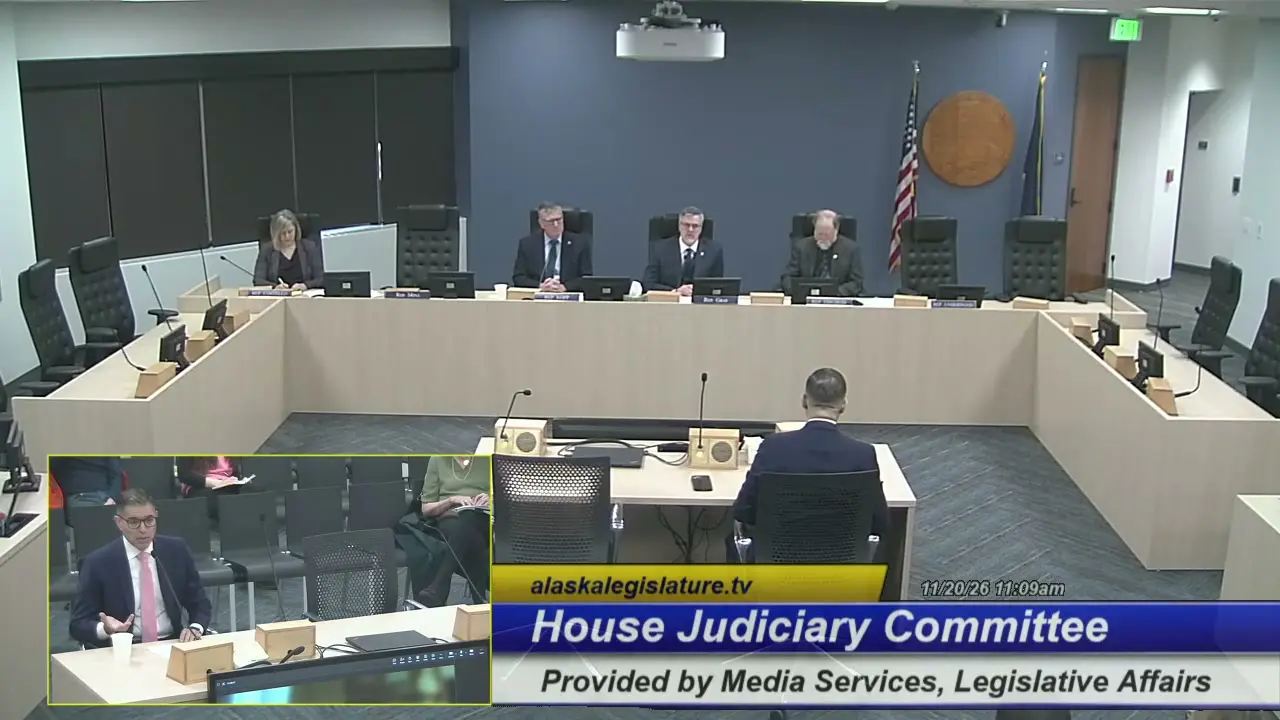
Rep. Andrew Gray, who chairs the Alaska House Judiciary Committee, closed a hearing on ICE detention Friday, Nov. 20, with a list of steps the state could take on how it holds people for federal immigration authorities.
The list would reach people ICE arrests in Alaska, who are held in state jails until they are released or moved, most often to an ICE center in Tacoma, Washington. The Anchorage Correctional Complex held 124 of the 130 people the Department of Corrections held for ICE this year through Oct. 19, according to an ACLU of Alaska memo to the committee. They are civil detainees, held over their immigration cases rather than serving criminal sentences.
"We need minimum protections written into statute for civil immigration detainees, protecting them from things like unnecessary strip searches," Gray said. He also called for independent, routine oversight of conditions for everyone in state custody and a ban on the state accepting civil immigration detainees from other states.
He said bond hearings should be held in Alaska, and the state should decide whether to keep any of its 287(g) agreements with ICE. He also floated banning ICE arrests around courthouses, schools and other facilities. Gray said he was summarizing ideas he heard from the day's witnesses. The ACLU memo had urged the oversight, the protections and the ban.
In a redacted declaration given to the committee, a man held at the Anchorage jail for 38 days this summer says he was strip-searched after his first attorney visit. He says that on June 30 he turned down two in-person attorney visits because he did not want another strip search.
Latyr Pereira Barreto, a hospice nursing assistant who testified in person, described about a dozen strip searches after visits with his attorney. His attorney, Christine Quint, said she has since learned that everyone at the jail is strip-searched after contact visits with attorneys.
The Department of Corrections did not testify but agreed to answer questions in writing. On Nov. 24, Gray sent Commissioner Jen Winkelman the committee's written questions and asked for answers by Dec. 3. They ask whether department procedures require a strip search after every contact visit with a lawyer, and what its policy is on housing three detainees in a two-person cell, with one sleeping on the floor next to the toilet. They also ask whether the $243.24 a day the department receives for each ICE detainee covers its full costs.
ICE flew 41 men from Tacoma to the Anchorage jail in June 2025. The department accepted them without notice to state or local elected officials or the public, according to the ACLU report Sent Away and Silenced.
At a hearing that June, Winkelman offered to follow up on the question of strip searches after contact visits, according to the committee minutes. She said the detainees had elected to share cells three to a room. On Friday, Gray said little appears to have changed in the 17 months since.
Anchorage immigration attorney Nicolas Olano told the committee he once could call the immigration court in Portland, Oregon, for a bond hearing for a client held at the Anchorage jail. That changed in about June 2025, he said, when those cases moved to the immigration court in Tacoma and hearings went to video. In August, he said, two Tacoma judges stopped letting attorneys who were not there in person appear by video, so he suddenly had to fly there.
ICE's list of 287(g) agreements shows two in Alaska, both signed in July 2020: one with the Department of Corrections and one with the Kodiak Police Department. The department's agreement lets trained corrections staff serve ICE administrative arrest warrants on people in its custody before they are released on state charges, the ACLU memo says. The ACLU estimated that 40 of the 130 people held for ICE this year, or 31%, were held that way. David Bier of the Cato Institute said in written testimony to the committee that the agreements are voluntary and can be terminated at any time.
Gray also pointed to the Northwest ICE Processing Center in Tacoma, where he said most people detained in Alaska spend time. The GEO Group told federal regulators it sold the center to the federal government Nov. 17 and has a 10-year ICE contract to provide support services there. Gray said federal ownership will keep Washington state inspectors out.
Gray said the committee will post the department's answers when it receives them.
What did you make of this story? (no account needed)
Made by our human newsroom with AI. How humans and AI work here · Grow with our newsroom ·
Keep Alaska News free for everyone.
No paywall, ever. Members pay so everyone can read the meetings and records Alaska News covers.
Get Alaska News in your inbox
Create your free account and get the day’s top stories around 6 each morning, in a few minutes’ read.
Top stories, around 6 each morning.
Stories on what you follow, on Sundays.
Assembled from public records the newsroom collected.











Comments
Sign in to leave a comment.
No comments yet. Be the first to share your thoughts.