AI image
A NOAA study finds Pacific capelin may spawn more than once
In a NOAA study, 41 percent of the Pacific capelin examined carry the biological capacity to spawn more than once, a finding that could reshape how scientists forecast the health of a species that Steller sea lions and humpback whales depend on for food and that researchers use as an early signal of changing ocean conditions.
The fish were captive and young. The paper — "First Observations of Potential Iteroparity in Pacific Capelin" — reports the 41 percent as a share of mature females among age-1 fish in an experimental study, notable because capelin normally do not reach sexual maturity until age 2.
The finding revises a working assumption — that capelin, like Pacific salmon, are semelparous, spawning once and dying. Iteroparity, the capacity to spawn across multiple years, had not been documented in the Pacific population before.
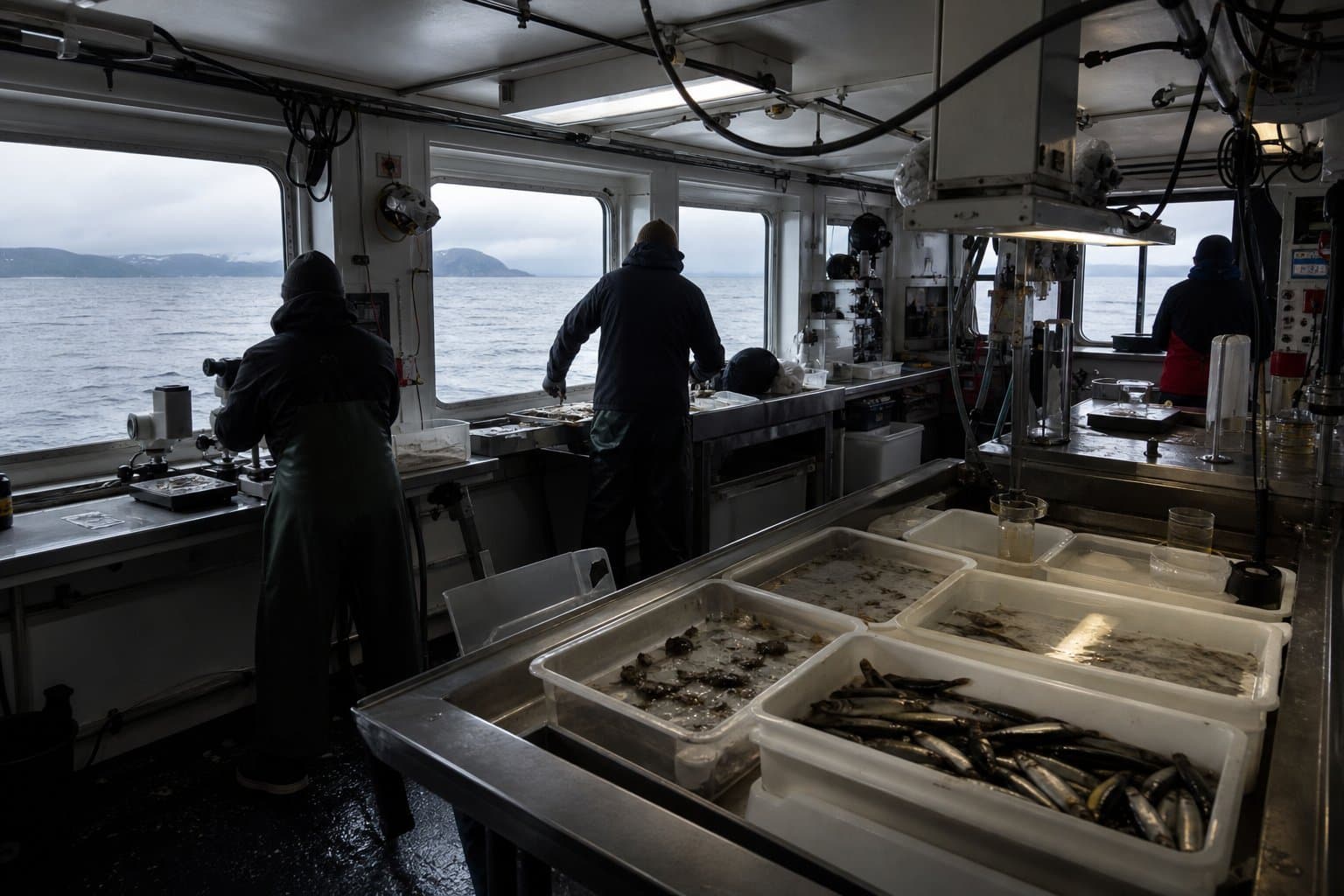
Scientists examined ovarian tissue under a microscope; fish carrying both immature and maturing oocytes retain the capacity for a later spawn, and leftover tissue from a past spawn alongside immature oocytes counts as the same evidence. Nobody watched a capelin spawn in two seasons. Cara Rodgveller, a research fisheries biologist at NOAA's Alaska Fisheries Science Center, was lead author with F. Sewall; their paper appeared in the journal Aquaculture, Fish and Fisheries on March 31, and the center publicized it Aug. 12.
Capelin are not commercially harvested in the northeast Pacific, which makes them an unbiased indicator of environmental change. The center also counts them as a key subsistence resource and a food source for commercially important groundfish. They are short-lived, typically surviving one to four years.
During marine heatwaves, center scientists estimated that the energy available to predators from capelin fell to less than 1 percent of the maximum in the Bering Sea. "We've learned that warmer ocean conditions appear to disrupt the typical capelin life history," the center wrote in an earlier feature, which reports that Gulf of Alaska capelin spawned at one year old instead of two during the 2014 to 2016 heatwave.
The center frames the two strategies as a trade-off. Pouring all available energy into one spawning event gives offspring the best chance when conditions are good and can fail when they are not, while surviving to spawn again lets adults hedge their bets. Populations using a mix of both, it says, are the most resilient.
The 41 percent figure sits between two benchmarks. Beach-spawning Atlantic capelin in northern Norway show rates up to 60 percent, while Atlantic demersal spawners — which lay eggs on the seafloor rather than the beach — are entirely semelparous. Rates among wild Pacific capelin remain unmeasured, and tracking them is on the center's own list of future work.
Getting those numbers will be hard. With no fishery to sample from, and capelin notoriously irregular in when and where they spawn, researchers plan to design field sampling around spawning windows, drawing on observations from Alaskans around the state.
Based on a press release.
AI-assisted. How we use AI
Stay informed. Support what matters.
Free, permanent access to local news you can verify. Subscribe to support Melinda Communities.News and go ad-free.
Related Coverage
Juneau kelp farm study suggests minimal influence on fish and invertebrates
Alaska News · 3d ago
NOAA maps out how new tools enter Alaska's fish surveys
Alaska News · 3w ago
The little Kachemak Bay lab watching Alaska's ocean for 70 years
Alaska News · 1mo ago
Nine new deep-sea sponge species confirmed in Gulf of Alaska and Aleutians
Alaska News · 2w ago
Satellite Tags Track Pacific Cod Shifts in Warming Bering Sea
Alaska News · 3mo ago
Comments
Sign in to leave a comment.
No comments yet. Be the first to share your thoughts.