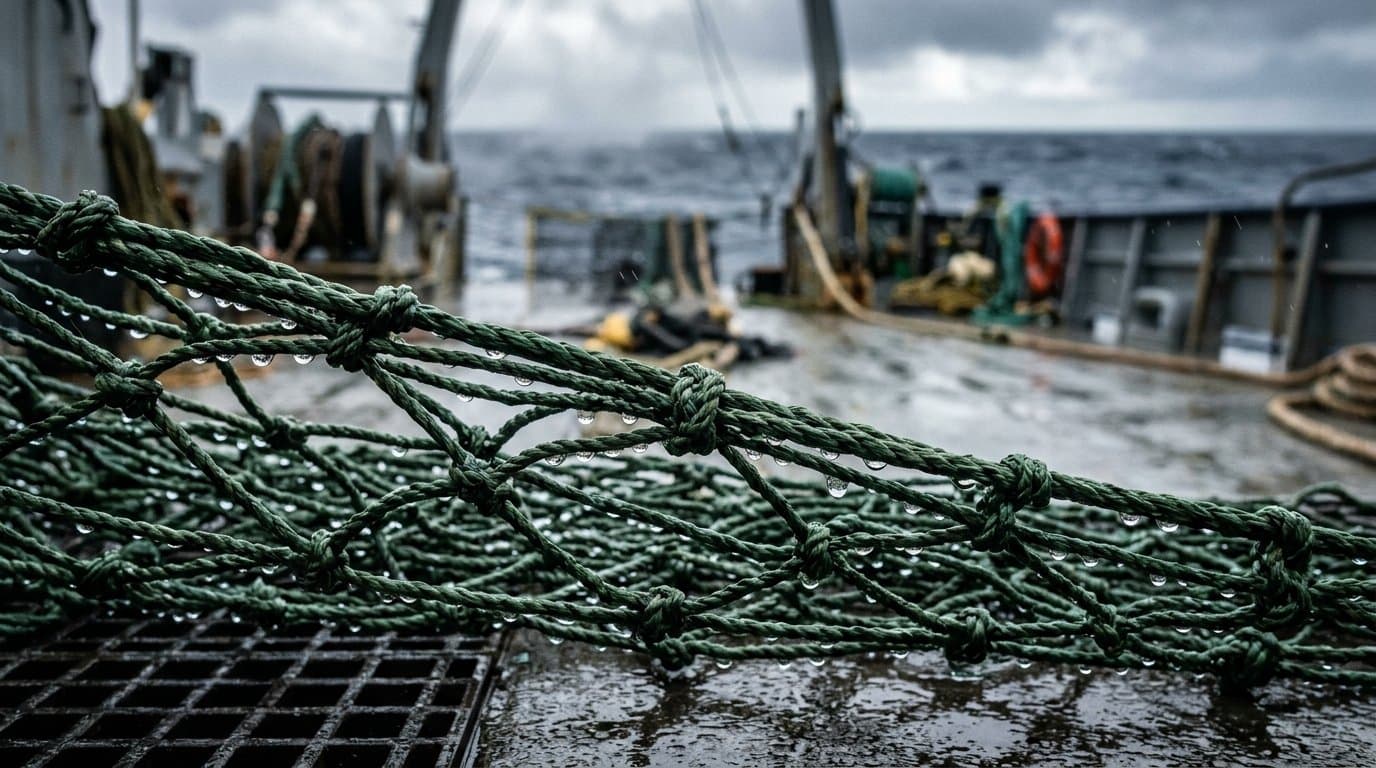
AI image
NOAA maps out how new tools enter Alaska's fish surveys
Marine species in the eastern Bering Sea have shifted north and away from the coast by an average of about 19 miles since the early 1980s, and into deeper water besides. The trawl survey that has run there every year since 1982, and that Alaska's catch limits are built on, still works the same grid it always has.
A NOAA-led team has now published a plan for updating them. Researchers at the Alaska Fisheries Science Center, working with counterparts in New Zealand, Norway, France and Washington state, laid out how to bring new tools into fish surveys without breaking the decades of data that make the old ones useful.
The tools include uncrewed sailboats that count fish by sound, underwater stereo cameras, and DNA that fish shed into seawater, which a lab can read to identify what swam past. Each has already done real work. When COVID grounded research vessels, the Alaska center sent wind-powered Saildrones into the Bering Sea to survey pollock by sound alone, no nets involved. Environmental DNA has been producing Pacific hake abundance estimates on the West Coast since 2019.
Continuity is the hard part. A quota rests on comparing this year to the last forty, and a new instrument that reads the ocean differently can break that chain. The framework's answer is to run the new alongside the old, long enough to calibrate one against the other, before either touches a stock assessment.
"These tools have the potential to alleviate some of the challenges facing our current survey enterprise," said lead author Stan Kotwicki. "And one of the biggest challenges is maintaining data consistency and continuity."
Parts of survey areas have become off limits to energy development or conservation, and the vessels and specialized gear that run these surveys are aging.
NOAA's own roadmap on environmental DNA lists false positives, false negatives and measuring uncertainty as unsolved, along with "overcoming skepticism about new survey methods." DNA in the water tells you a fish was there. It does not tell you how old it was, what it weighed or whether it had spawned.
Sens. Lisa Murkowski and Sheldon Whitehouse introduced a bill Aug. 6 directing NOAA to build an environmental DNA pilot program and national sampling standards.
Based on a press release.
Made by our human newsroom with AI. How humans and AI work here · Grow with our newsroom
Stay informed. Support what matters.
Free, permanent access to local news you can verify. Subscribe to support Bill AlaskaNews and go ad-free.
Related Coverage
Bering Sea pollock assessment moves to near-infrared aging, with microscopes as a check
Alaska News · 1w ago
How bubbles can throw off the sound Alaska uses to count its fish
Alaska News · 3mo ago
New bill from Murkowski would let NOAA identify fish from the DNA they leave in the water
Alaska News · 2mo ago
Halibut commission staff propose letting AI read half of the fish earbones behind catch limits
Alaska News · 3w ago
Outside scientists find NOAA's Alaska fishing observer program sound, recommend no 2027 changes
Alaska News · 1w ago
Comments
Sign in to leave a comment.
No comments yet. Be the first to share your thoughts.