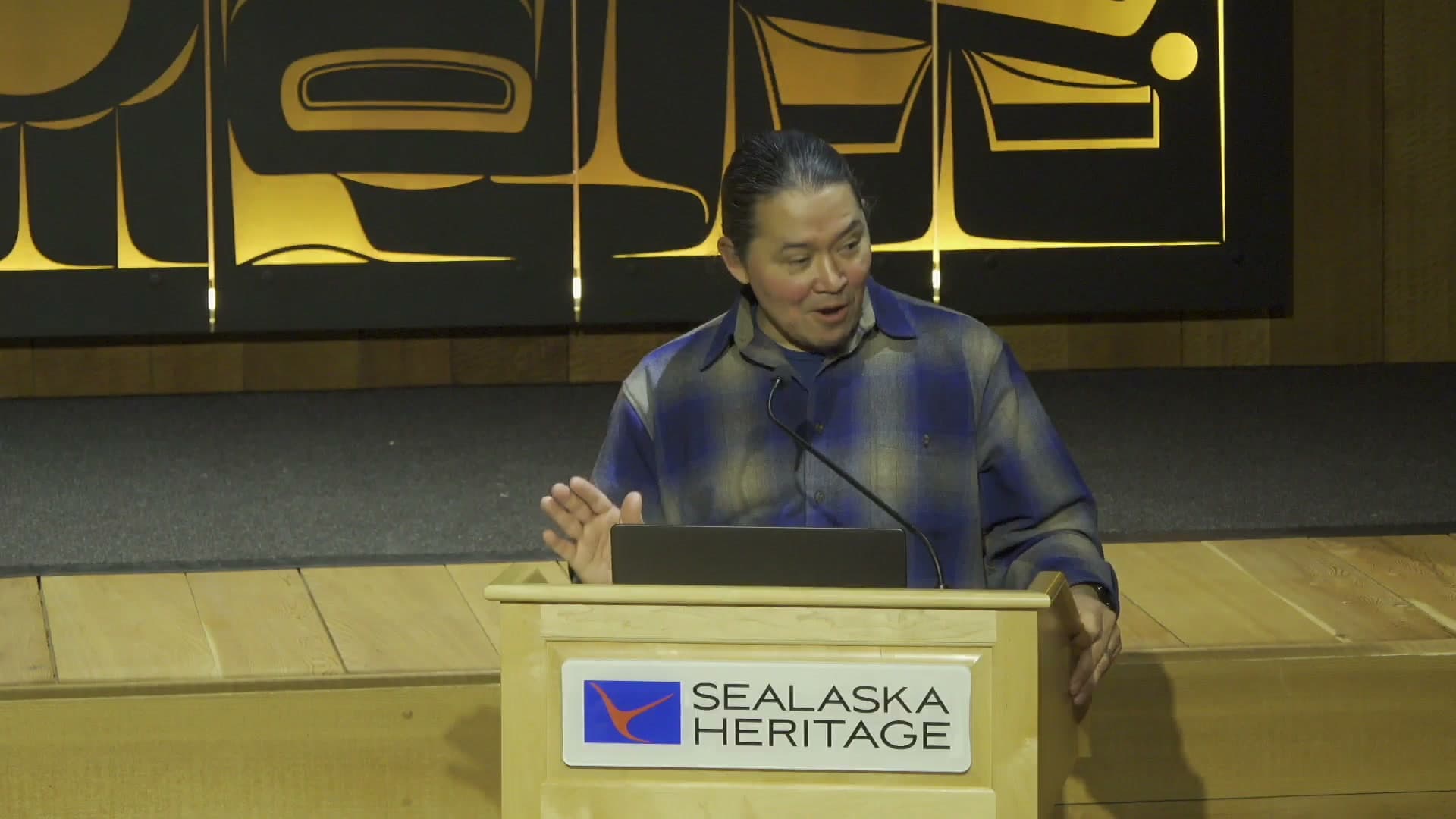
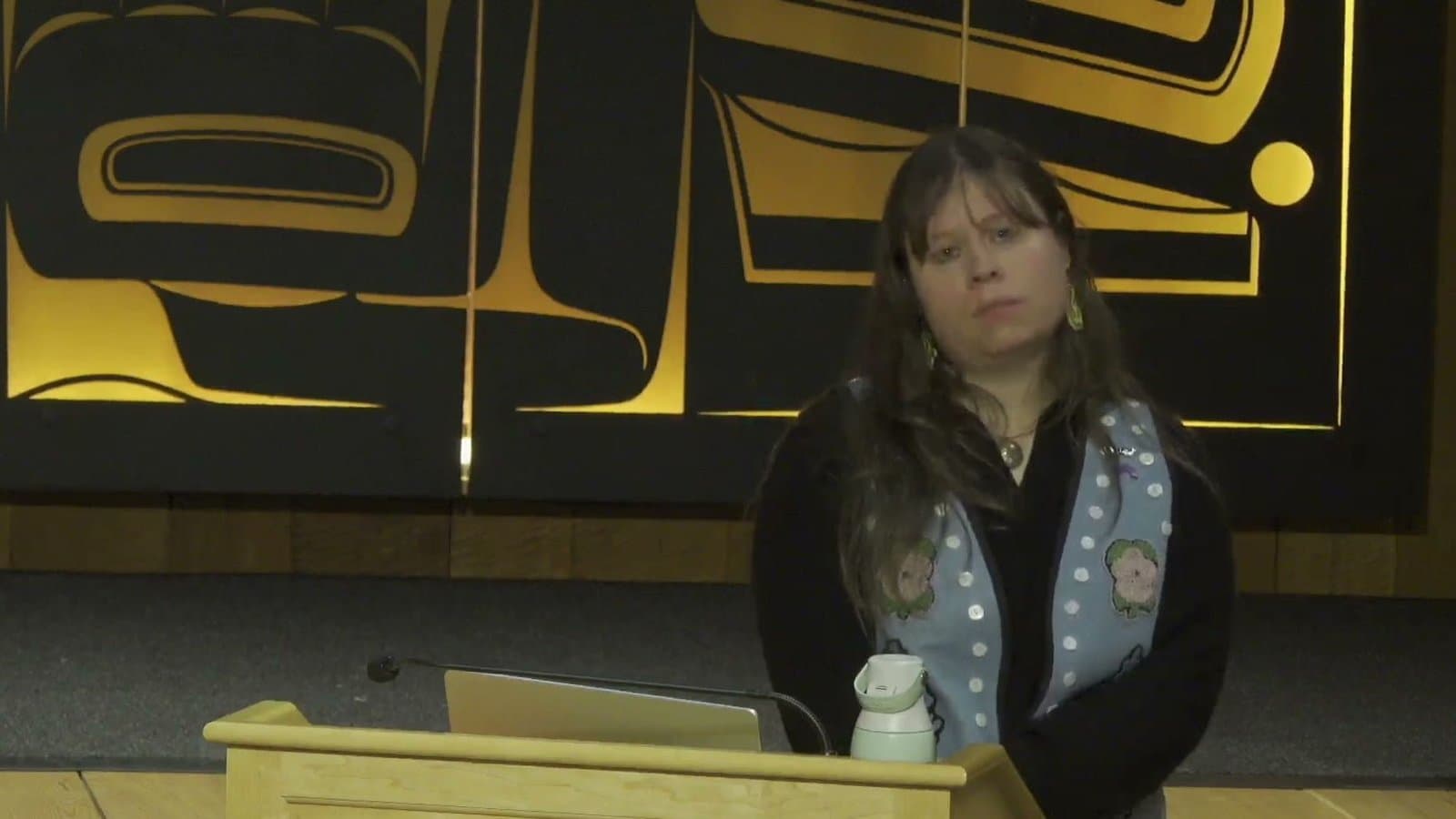
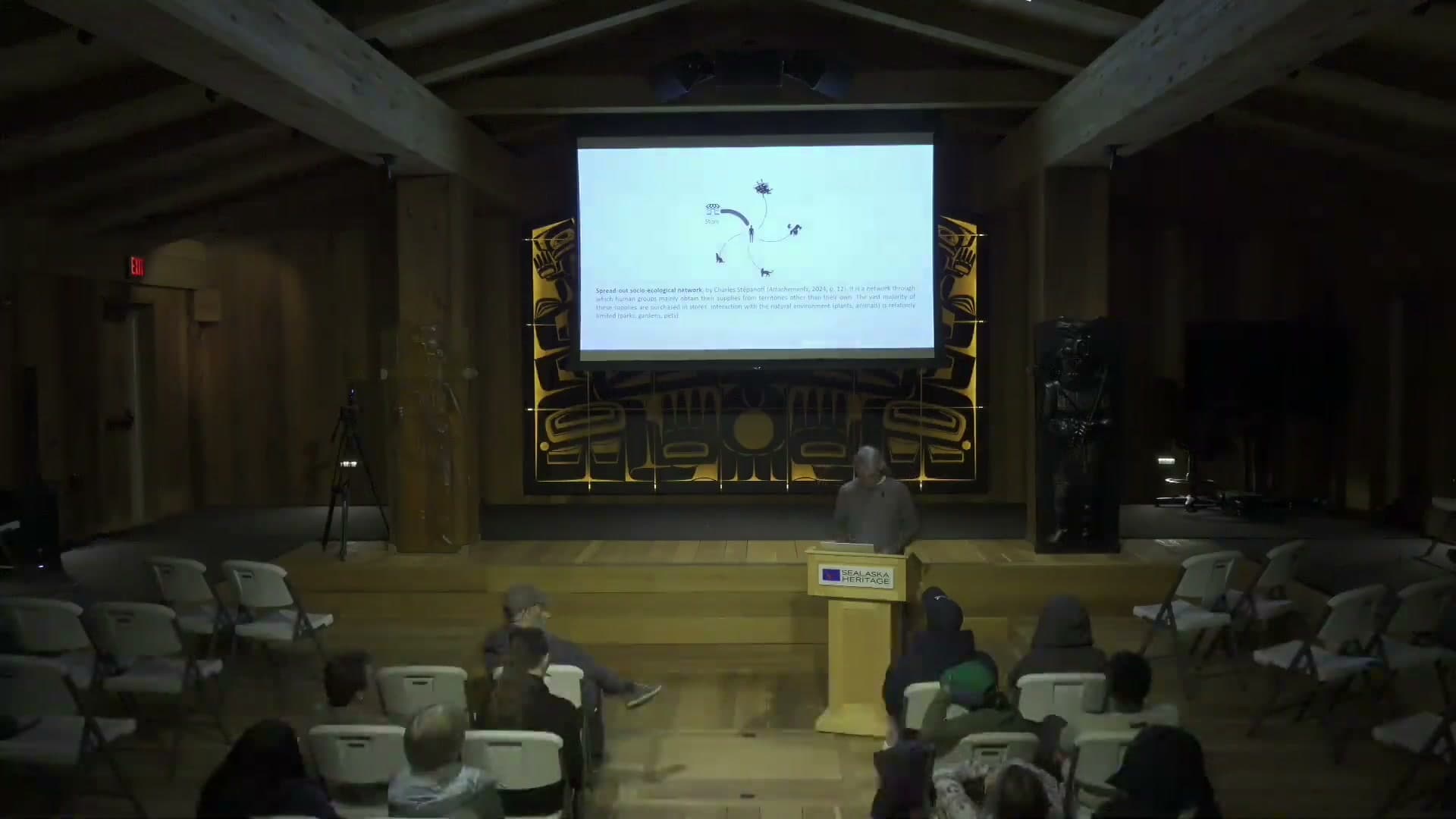
Frame from "Sealaska Heritage Institute" · Photo source
UAS professor tells Juneau audience Lingít land otter people are more than a boogeyman
University of Alaska Southeast professor X̱ʼunei Lance Twitchell told a Juneau audience Monday that the Kóoshdaa Ḵwáani, the Lingít land otter people, help people but also take them, and are more complicated than a boogeyman. The talk was part of Sealaska Heritage Institute's Native American Heritage Month lecture series.
Twitchell, who teaches Alaska Native languages, said at the Sealaska Heritage Institute that he shares the stories so people can respect the land and be safer on it. He said English may not interpret how the world works here, and urged speaking Lingít. He told listeners not to whistle at night, to carry tobacco or copper, to travel with a buddy and to tell others where they are going. If trapped among the land otter people, he said, speak Lingít and explain your loneliness for your own people.
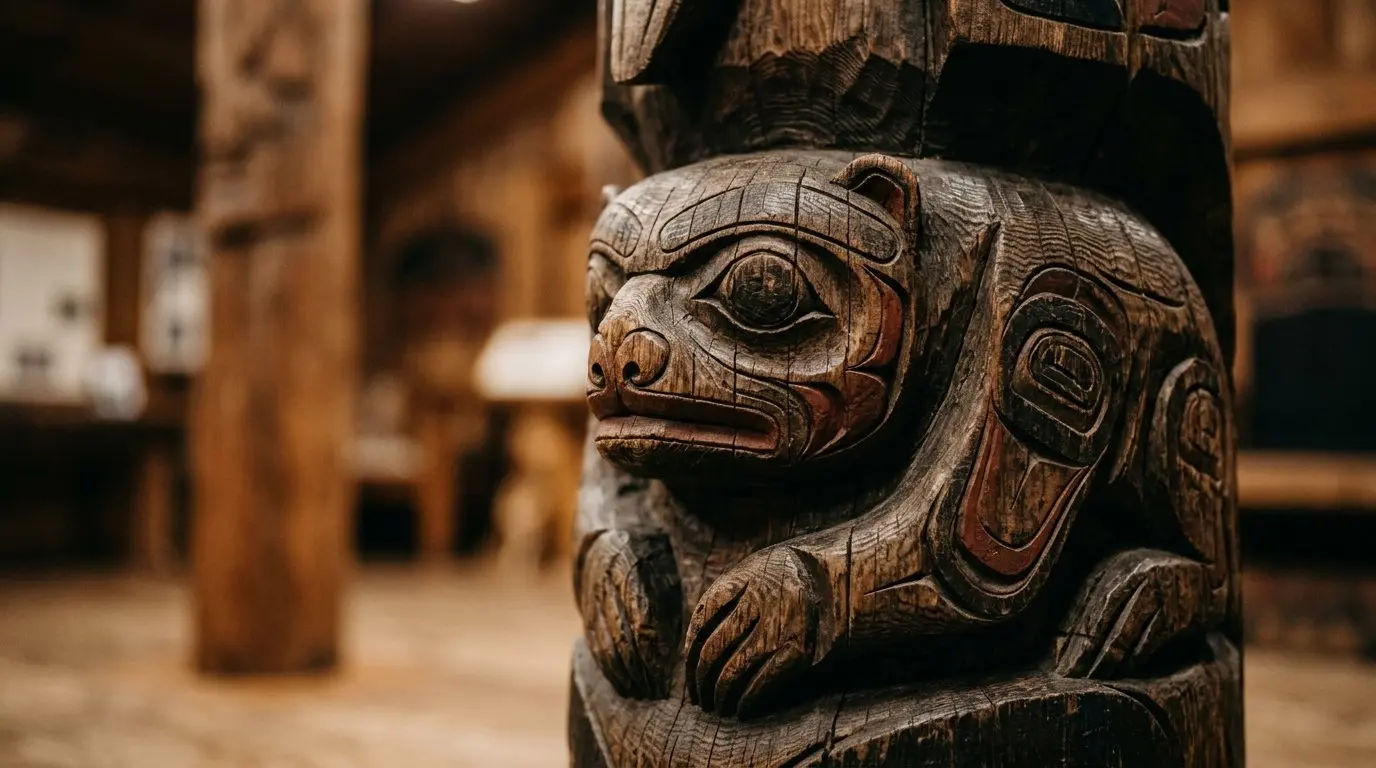
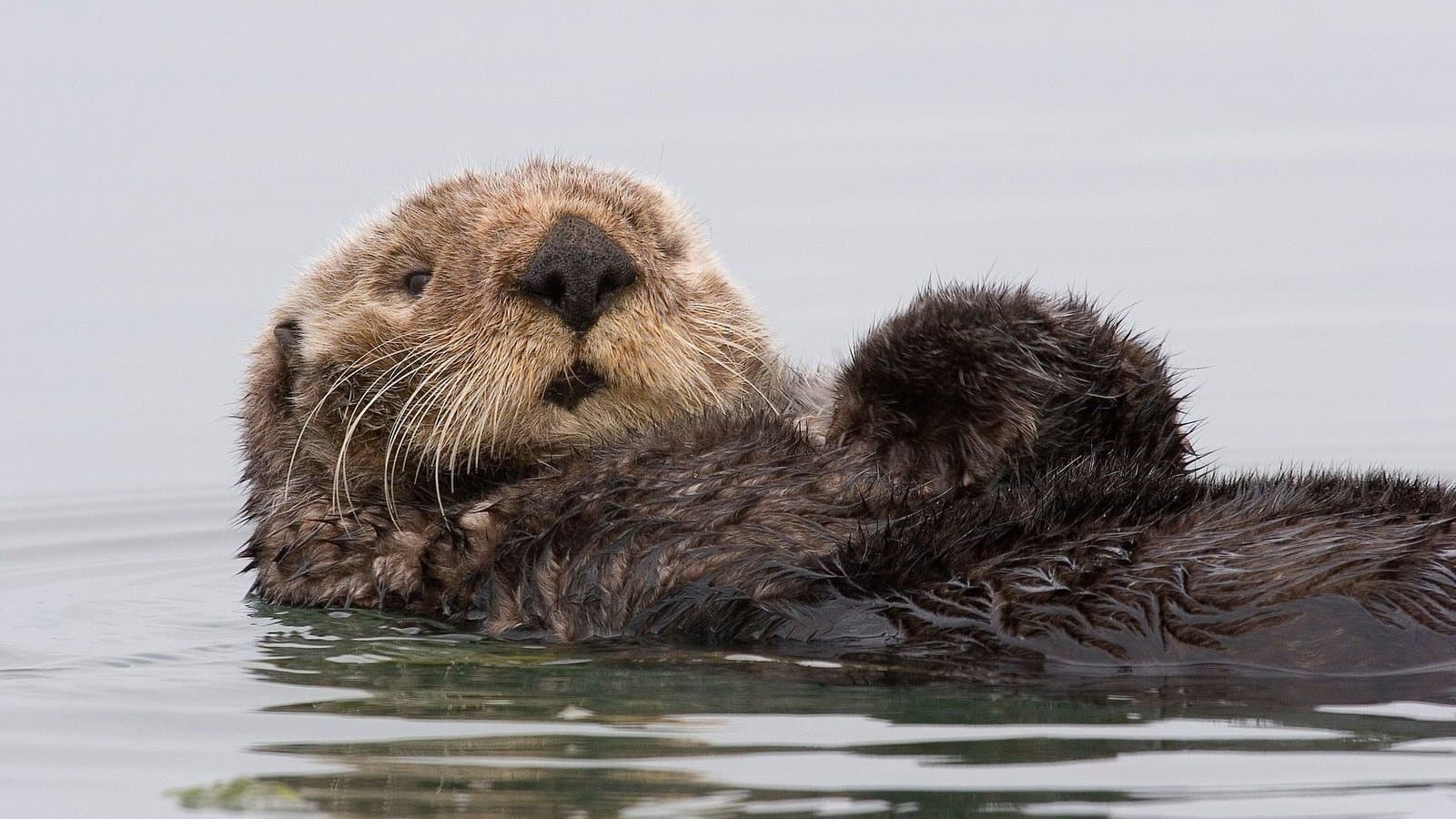
He said the land otter people cross between animal and human form. In accounts he shared, they helped shamans, or íx̱t', find people lost at sea. Some accounts say people they take are turned into land otters. The land otter is a crest of at least four Raven clans, he said.
He told of Shaksháani Marge Dutson, a fluent elder, being grabbed by the hair and shaken by her teacher for speaking Lingít on her first day of school in Douglas. The land otter stories are "wild," he said. "But colonization is a big monster."
An audience member said elders had warned against discussing the land otter people. Twitchell said he was taught caution in public but worries people have been "tricked into never talking about certain things." He said people once stopped a planned book of these stories, calling it a sin, but another will probably come.
He called for museums and universities to return shamans' belongings to Lingít land. Shamans were laid to rest with their tools, he said, and the tools were later stolen. The institute plans an April 2027 shamanism exhibit curated by Twitchell. Its traditional scholars, who adopted protocols for such exhibits, hoped museums would return shamanic objects to their clan owners.
What did you make of this story? (no account needed)
Made by our human newsroom with AI. Reviewed by Cale Green. How humans and AI work here · Grow with our newsroom · Transcript byWalter AlaskaNews
Keep Alaska News free for everyone.
No paywall, ever. Members pay so everyone can read the meetings and records Alaska News covers.
Get Alaska News in your inbox
Create your free account and get the day’s top stories around 6 each morning, in a few minutes’ read.
Top stories, around 6 each morning.
Stories on what you follow, on Sundays.
This article is based on a public meeting of Sealaska Heritage Institute — Sealaska Heritage Institute: NAHM Lecture Series: KÓOSHDAA KWÁANI - SPIRITUAL CONNECTIONS WITH THE LAND OTTER PEOPLE | SHI ().









Comments
Sign in to leave a comment.
No comments yet. Be the first to share your thoughts.