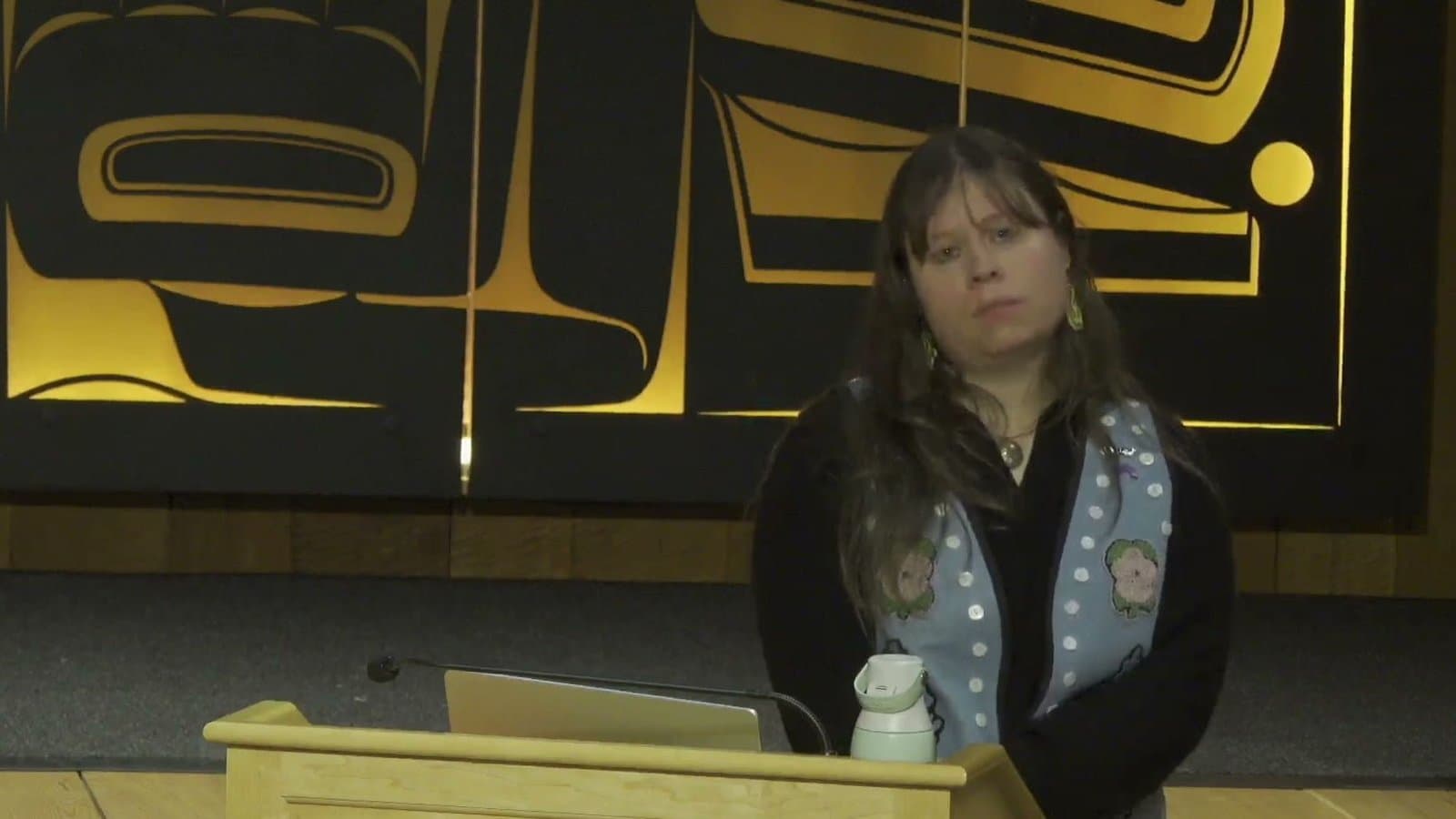
Frame from "Sealaska Heritage Institute" · Photo source
Tlingit man at Juneau lecture says Sealaska, not clans, has the say over clan land
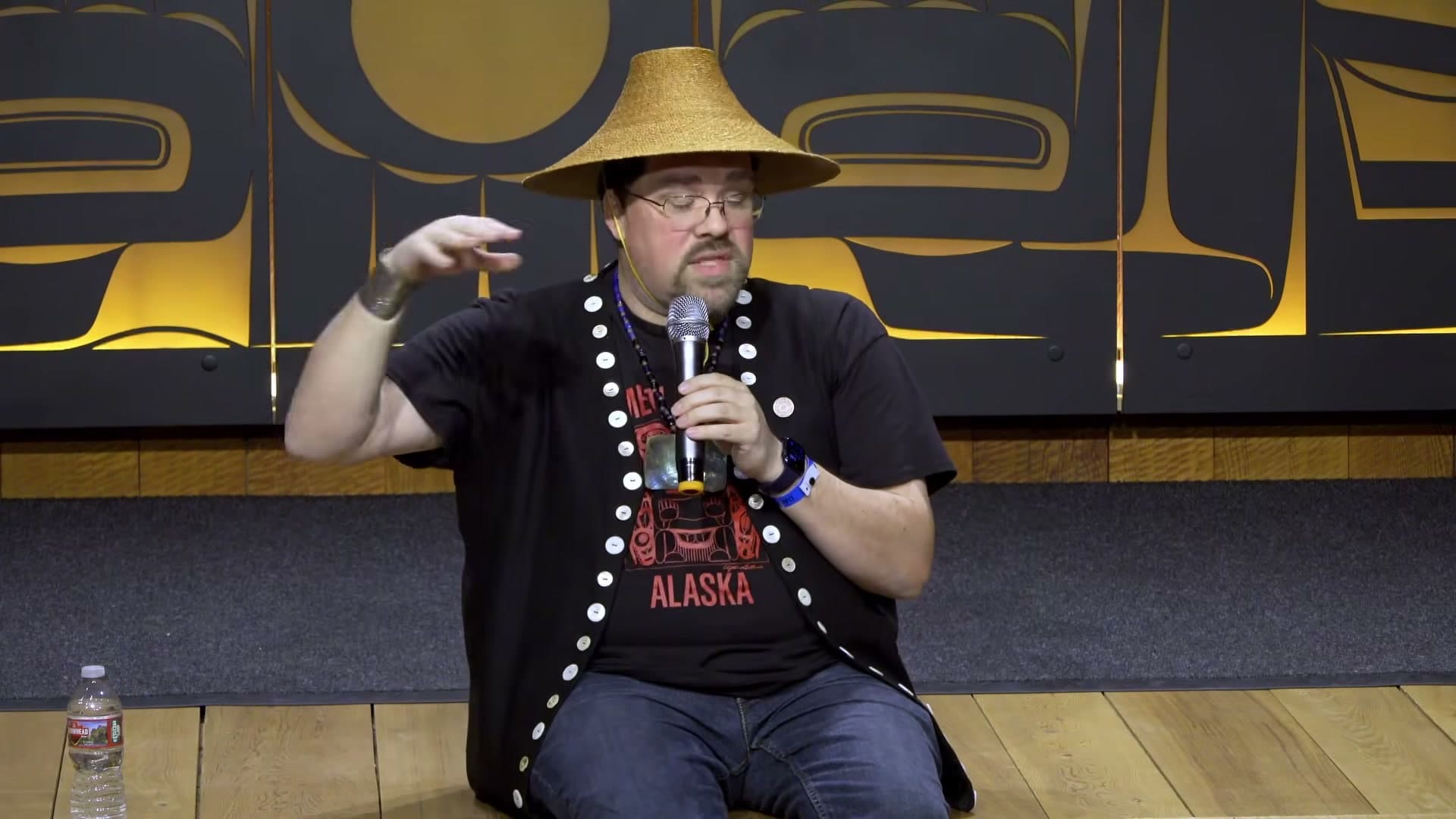
A Tlingit man at a Sealaska Heritage Institute lecture in Juneau on Tuesday said Sealaska, the regional Alaska Native corporation, now has the say over land that Tlingit clans once controlled.
"Sealaska owns the land. Clans don't have any say on their land. Sealaska has the say," he said during the question period.
In Tlingit terms, he said, clans own the land and clans make the decisions. "We still haven't gotten over colonization," he said. He said he wanted "more interaction with clans" and to "call it what it is": "clan ownership intellectual property rights."
He said non-Natives are being paid to tell stories that Tlingit and Haida people should tell themselves. If it isn't passed down, he said, that knowledge is something "our grandchildren's children will have to buy in the future."
He also said he wasn't trying to "down talk" Sealaska. "You guys are doing a good job or else I wouldn't be here," he said. When he was growing up, he said, hardly anyone at Sealaska had a degree. "But look where we are today. That's so amazing." He called for a coalition among the corporation, Juneau and other communities "if we are going to survive."
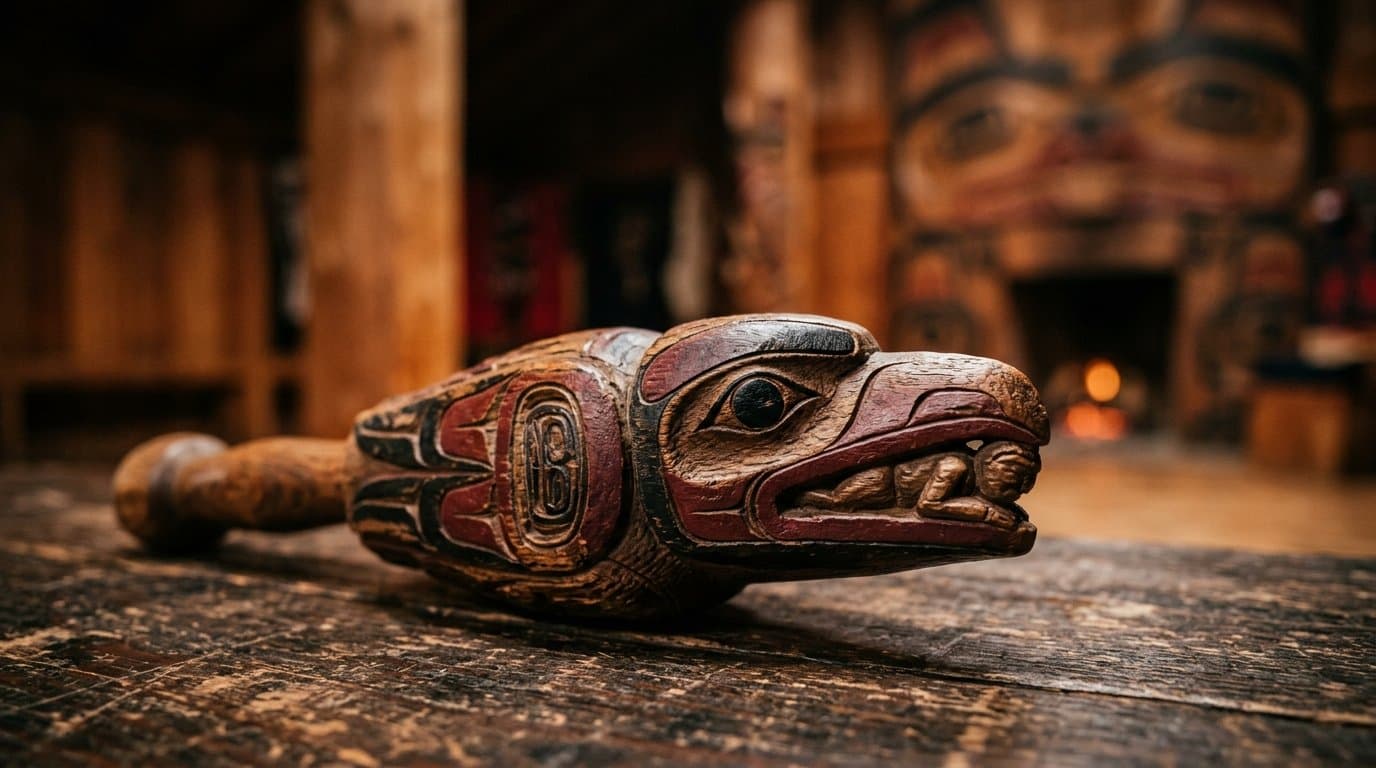
He said he was the youngest member of the Repatriation Committee in 1990, and that elders on it told him they never wanted a clearinghouse for returned items such as at.óow, sacred clan property. "We wanted the stuff to go back to the clans," he recalled them saying.
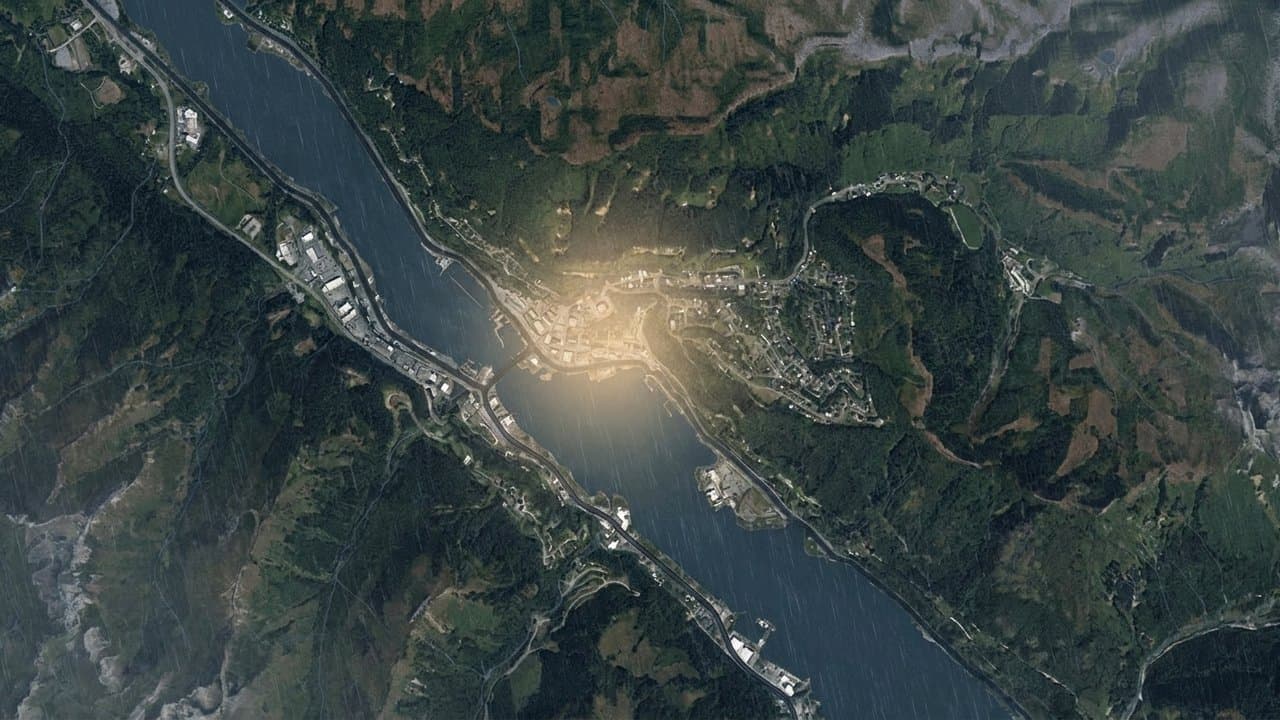
Sealaska was incorporated in 1972 under the 1971 Alaska Native Claims Settlement Act, or ANCSA, which returned about 44 million acres of traditional homelands to Alaska Native corporations statewide, according to Sealaska. Sealaska says it manages about 362,000 acres, mostly forest, for about 26,000 shareholders, roughly 1.6% of the homelands of its Tlingit, Haida and Tsimshian shareholders.
Sealaska founded the institute in 1980 after clan leaders, traditional scholars and elders conceived it at the first Sealaska Elders Conference, according to SHI. The institute is a separate nonprofit, but two Sealaska directors sit on its board of trustees.
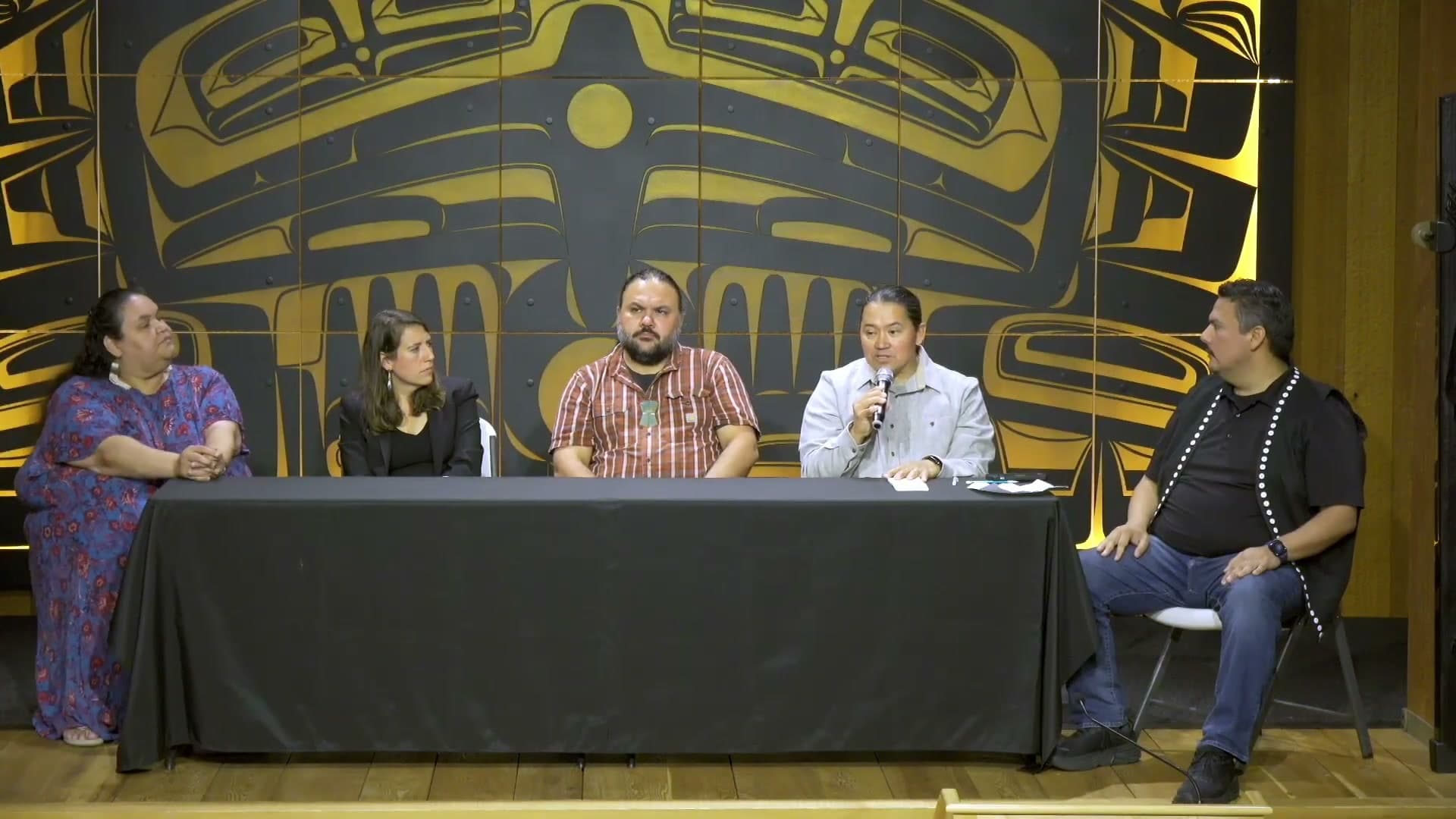
SHI President Rosita Worl said at an institute panel in August that SHI "really believes in traditional ownership of clan-owned property" and has sued corporations to protect its intellectual property. She said what the institute holds dear is clan ownership of land. "We say we don't care who owns Western title to our lands. We still own these lands. We own our stories," she said.
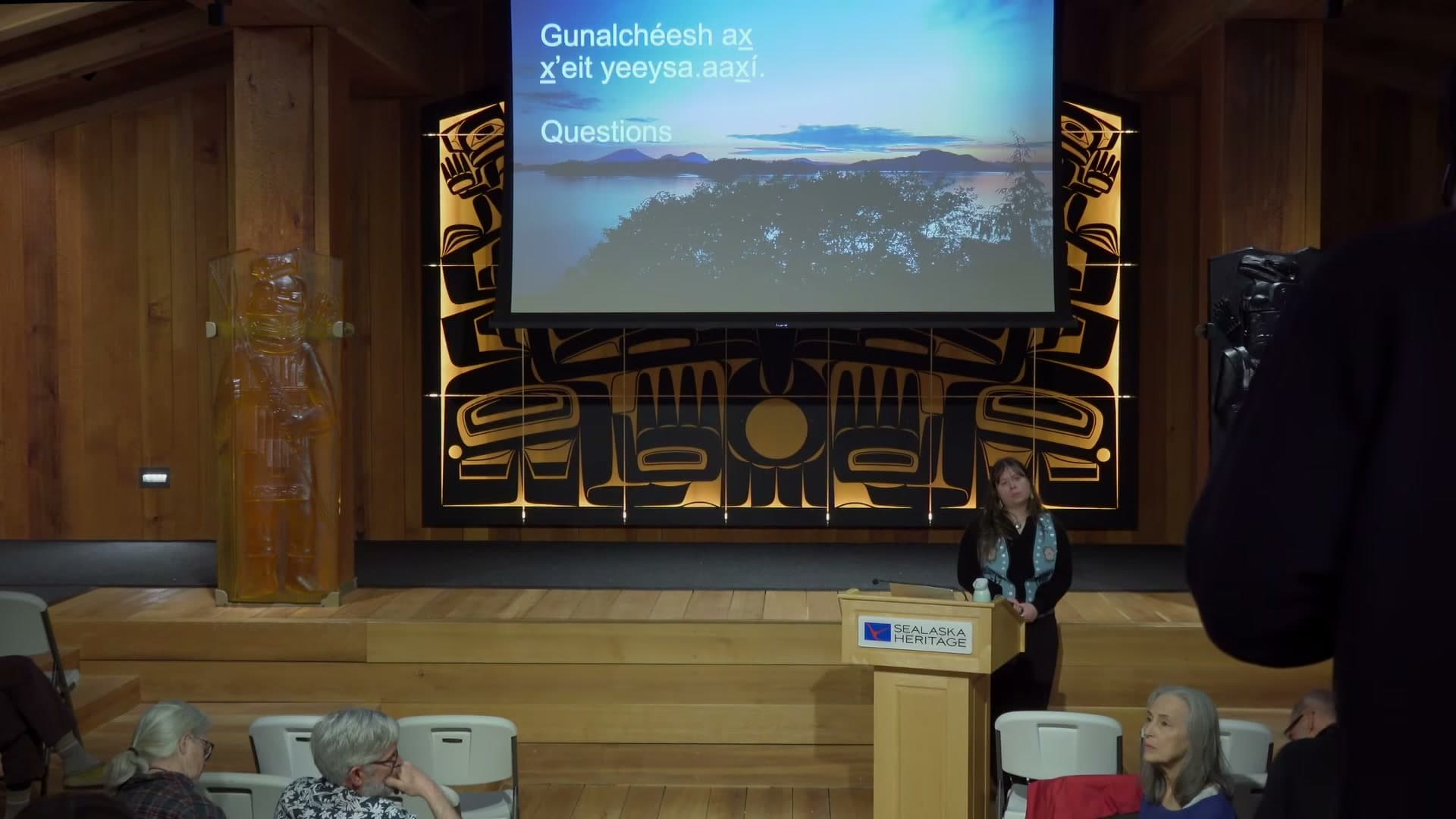
The lecturer, Aandax̱joon Sabena Allen, a Tlingit scholar from Sitka, spoke on Tlingit knowledge and climate change. One of her case studies was a 2024 process, which she took part in, that wrote four possible futures for Southeast Alaska. Many participants were non-Indigenous, and many of them didn't know how tribal governments or Native corporations work, she said, and one draft scenario had no Tlingit people in the region by 2050. The group quickly judged it not plausible and left it out.
Responding to the man, Allen said one of her next steps is helping pass clan knowledge and protocols to younger generations, work that she said "really needs to be rooted in community and not so much for, you know, the larger academic discourse."
What did you make of this story? (no account needed)
Made by our human newsroom with AI. Reviewed by Cale Green. How humans and AI work here · Grow with our newsroom · Transcript byWalter AlaskaNews
Get Alaska News in your inbox
Create your free account and get the day’s top stories around 6 each morning, in a few minutes’ read.
Top stories, around 6 each morning.
Stories on what you follow, on Sundays.
This article is based on a public meeting of Sealaska Heritage Institute — Sealaska Heritage Institute: Temporality of Haa Shuká A Scalar Perspective on Climate Change, Lingít Knowledge, Alaskan Identity ().


Comments
Sign in to leave a comment.
No comments yet. Be the first to share your thoughts.