French anthropologist reframes Tlingit foodways as living relational system, not subsistence
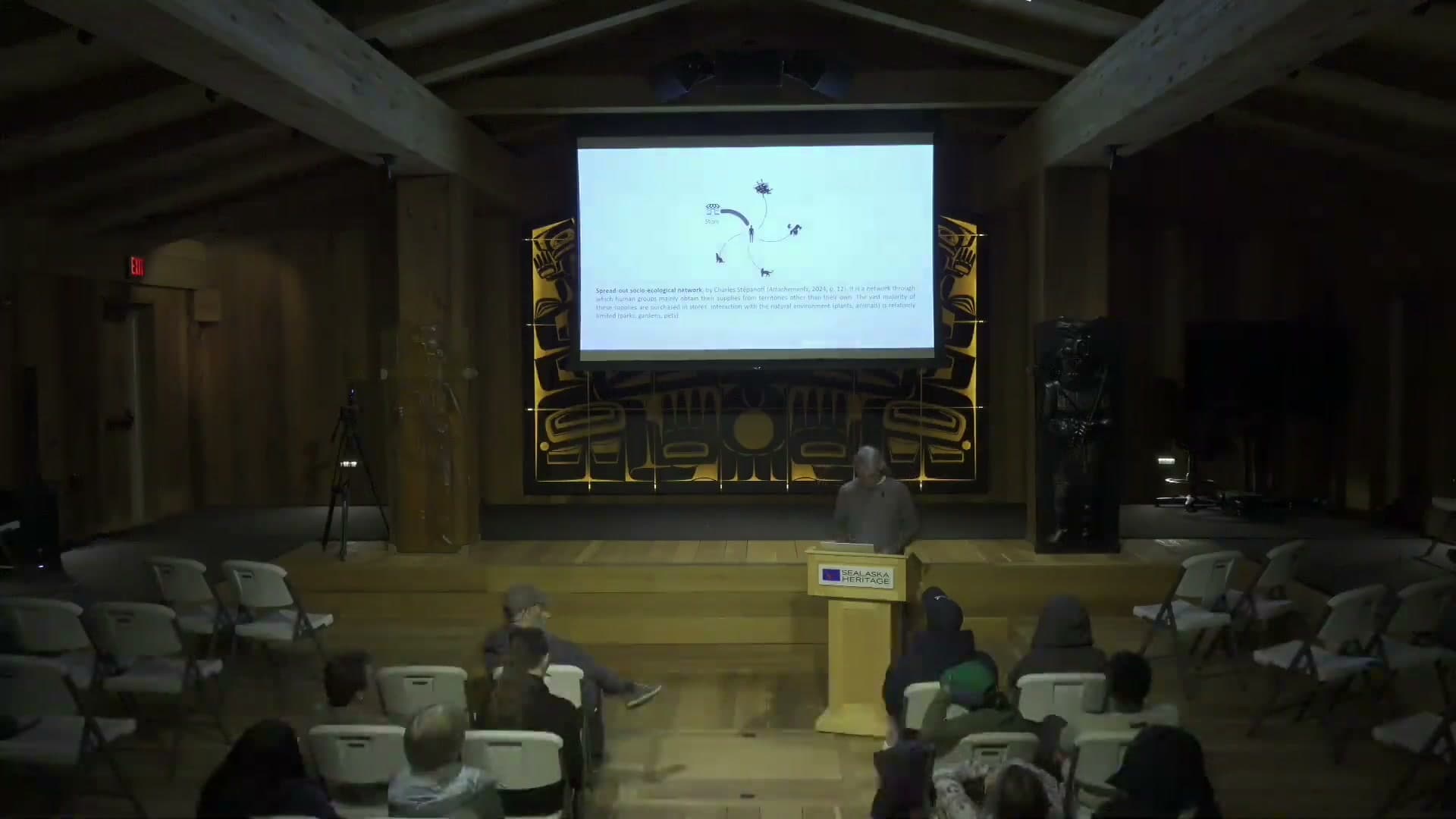
Federal and state rules call it "subsistence." Many Alaska Native people say that word gets it wrong — that it shrinks a whole web of relationships down to calories. That was the thread running through a recent talk at Sealaska Heritage Institute in Juneau, where visiting anthropologist Arnauld Chandivert shared what he'd taken away from several summers in Hoonah and Juneau: that Tlingit traditional foods are less about eating than about connection.
He put it in a simple example. When Elders in Hoonah are given goose eggs from Glacier Bay, he said, "the most important thing is not the protein in the yolk" — it's the spiritual and cultural nourishment that comes with them. Food, in this view, is a way of tying people to one another, to the land and water, and to the generations before and after. Or, as the Tlingit saying goes, "When the tide is out, the table is set."
Sharing is central to it. Salmon, herring eggs, and black seaweed travel long distances when they're passed among family and friends — making traditional foods connectors, he argued, not signs of isolation. It's a striking contrast with a region that imports something like 90 to 95 percent of its non-wild food.
None of it is guaranteed. Chandivert pointed to regulation, climate change, competition from commercial and sport fishing and hunting, and changing ways of life as real pressures on traditional foodways. What stuck with him, he said, was how determined Native people in Southeast are to keep the practice alive anyway — a living heritage, even under strain.
This article is based on a public meeting of Sealaska Heritage Institute — Sealaska Heritage Institute: Lecture: AN "ARCHIPELAGO OF CONNECTIONS" AND A LIVING HERITAGE | Sealaska Heritage ().
AI-assisted. How we use AI Transcript byLucas Brown
Watch key moments from the source meeting. Click to expand.
Stay informed. Support what matters.
Free, permanent access to local news you can verify. Subscribe to support Bill AlaskaNews and go ad-free.
Related Coverage
Two Indigenous peoples, linked by a migratory bird, trade what they've learned
Alaska News · 2mo ago
A Haida class spends two years recovering a 74-line migration story
Alaska News · 1mo ago
Southcentral Foundation treats traditional food as medicine at a free Anchorage gathering
Alaska News · 3mo ago
A Tlingit robe turns a warrior's last stand into sacred clan property
Alaska News · 3mo ago
A Juneau artist beads a warrior, a relative, and a record
Alaska News · 3mo ago
Comments
Sign in to leave a comment.
No comments yet. Be the first to share your thoughts.