AI image
A Tlingit robe turns a warrior's last stand into sacred clan property
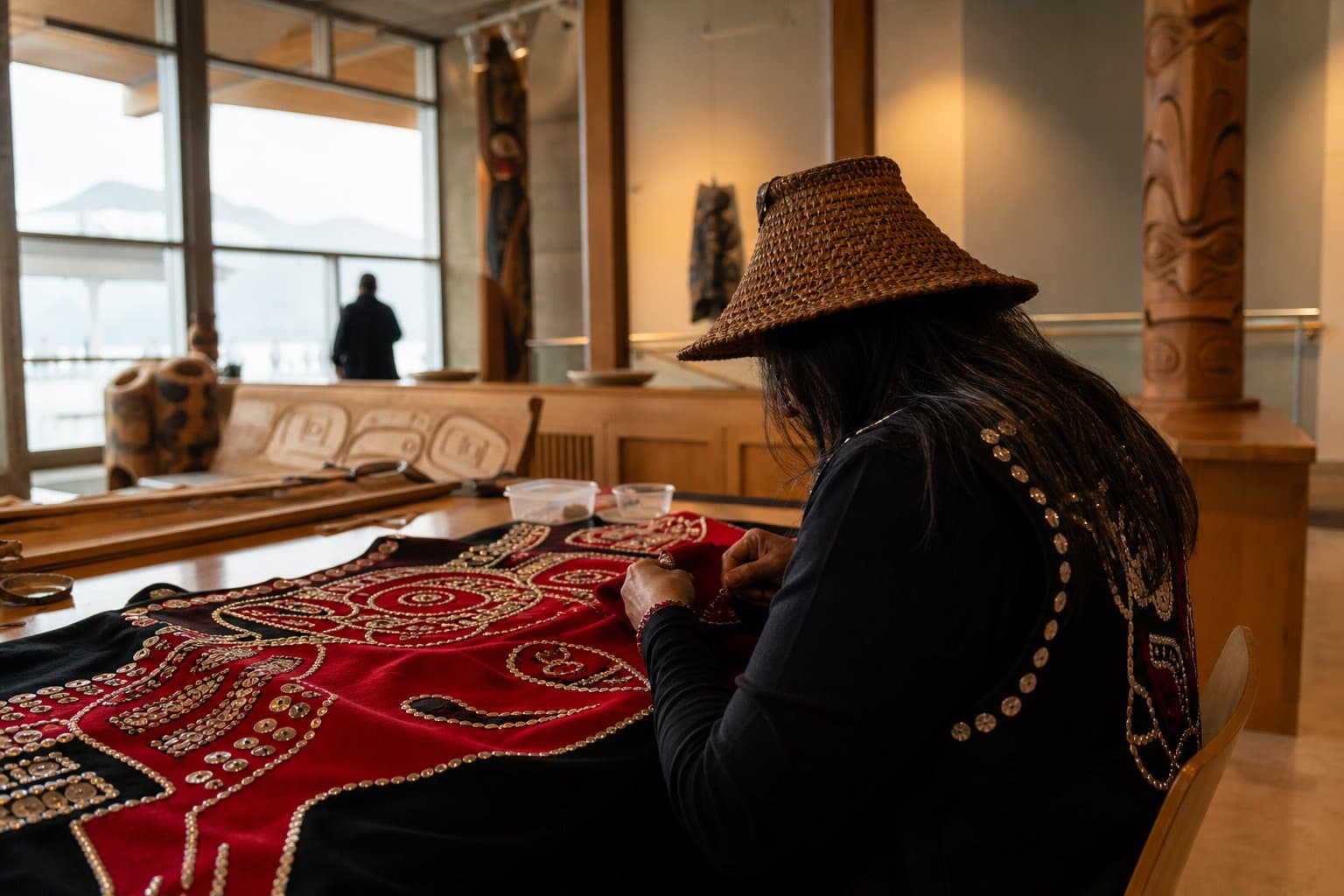
A Tlingit artist in Juneau is beading a warrior's last stand into a clan robe — and next week she'll tell his story in public before the robe passes beyond the reach of any museum or gallery.
Tl'aagunk Renee Culp, the artist in residence at Sealaska Heritage Institute, is creating a beadwork robe depicting Kahtushtu, a Chookaneidí ancestor who strapped daggers to his wrists and went to fight a giant octopus that had been terrorizing his people. He was never seen again. Against red felt, white and silver beads trace the outline of the creature's tentacles. When the robe is finished, it becomes at.óow — sacred Tlingit clan property, a term that translates literally as "that which was paid for," usually with the life of an ancestor.
That's what separates the work from art as most people mean it. "Our pieces aren't just works of art. They're historical documents," Culp said as she beaded a tentacle. "At.óow has a soul, and it's connected to our people in that way. So to say that it's art — it definitely is, but it's so much more than that."
Culp came to beading late. Her grandmother tried to teach her at seven, and it didn't take. "I was too young to be sitting and doing something so patient," she said. "The lessons she taught me about beading and being an artist came after she was with the ancestors."
Culp will speak about the robe at a free public lecture from noon to 1 p.m. Tuesday, June 30, at the Shuká Hít Clan House in Juneau, also streamed on SHI's channel. A second free talk follows Wednesday, when French anthropologist Arnauld Chandivert presents research on traditional Southeast Alaska foods as a living heritage linking communities like Hoonah and Juneau to their histories.
Source: Sealaska Heritage Institute, Sealaska Heritage Institute: Sealaska Heritage Institute to host two lectures next week.
AI-assisted. How we use AI
Stay informed. Support what matters.
Free, permanent access to local news you can verify. Subscribe to support Maggie AlaskaNews and go ad-free.
Related Coverage
A Juneau artist beads a warrior, a relative, and a record
Alaska News · 3mo ago
Sealaska Heritage president says Tlingit-Russian War story belongs to all clans, not Kiks.ádi alone
Alaska News · 1mo ago
Haida class returns a 1901 migration story to its own language
Alaska News · 2mo ago
A Haida class spends two years recovering a 74-line migration story
Alaska News · 1mo ago
A Sugpiaq artist who works in fish skin is in residency in Sitka
Alaska News · 4w ago
Comments
Sign in to leave a comment.
No comments yet. Be the first to share your thoughts.