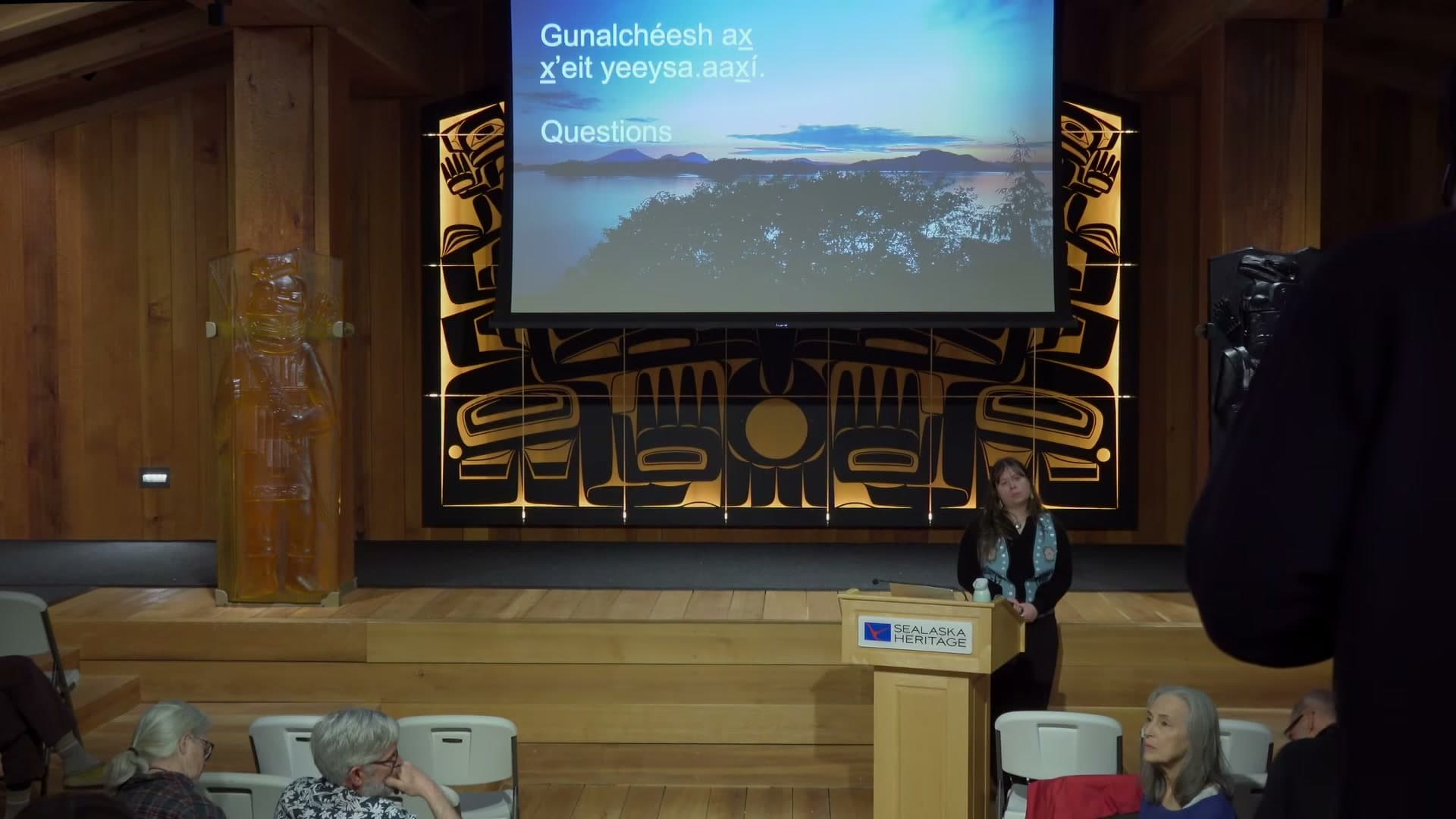
Frame from "Sealaska Heritage Institute" · Photo source
Tlingit scholar says Southeast climate adaptation should rest on Tlingit knowledge
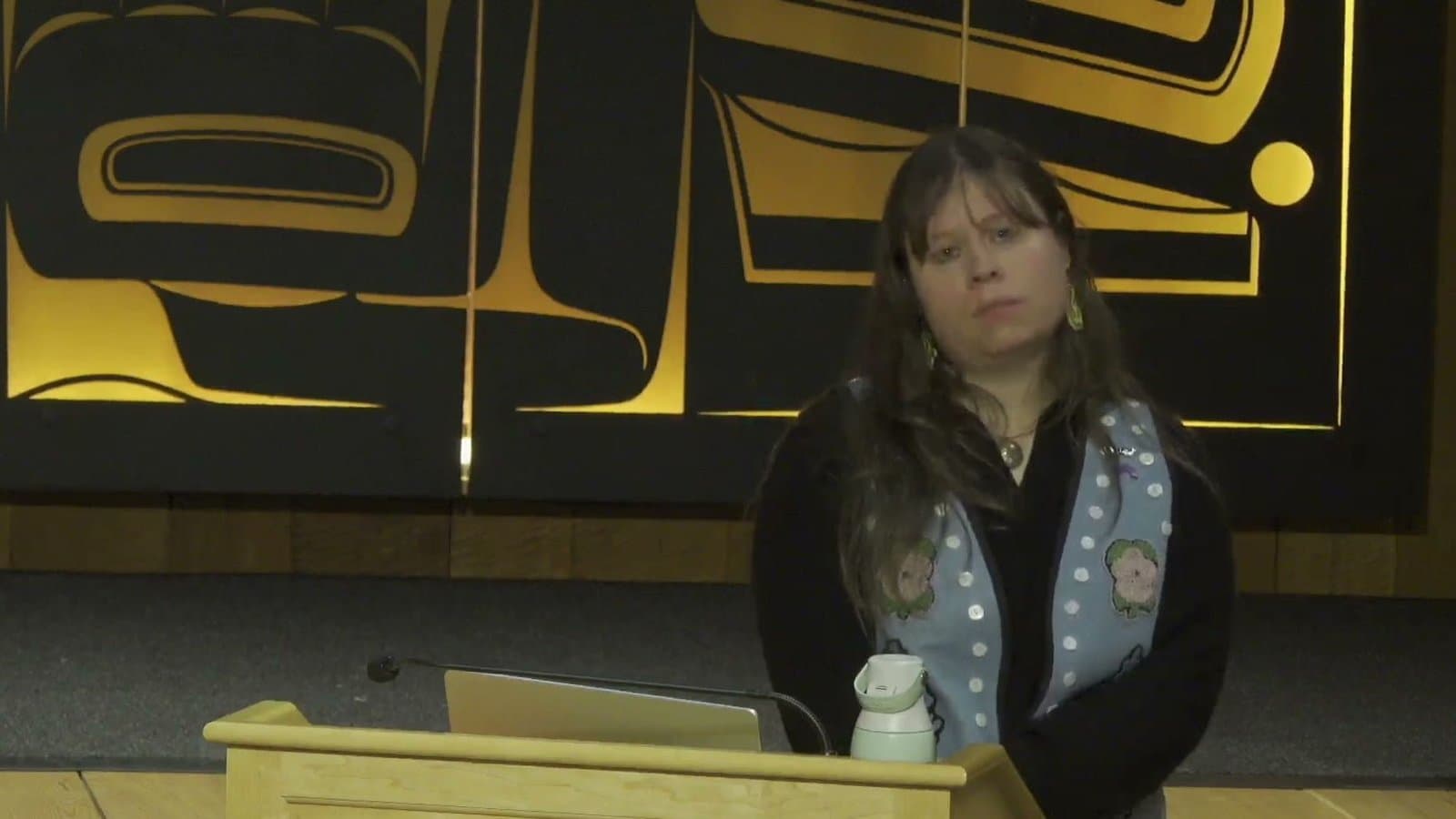
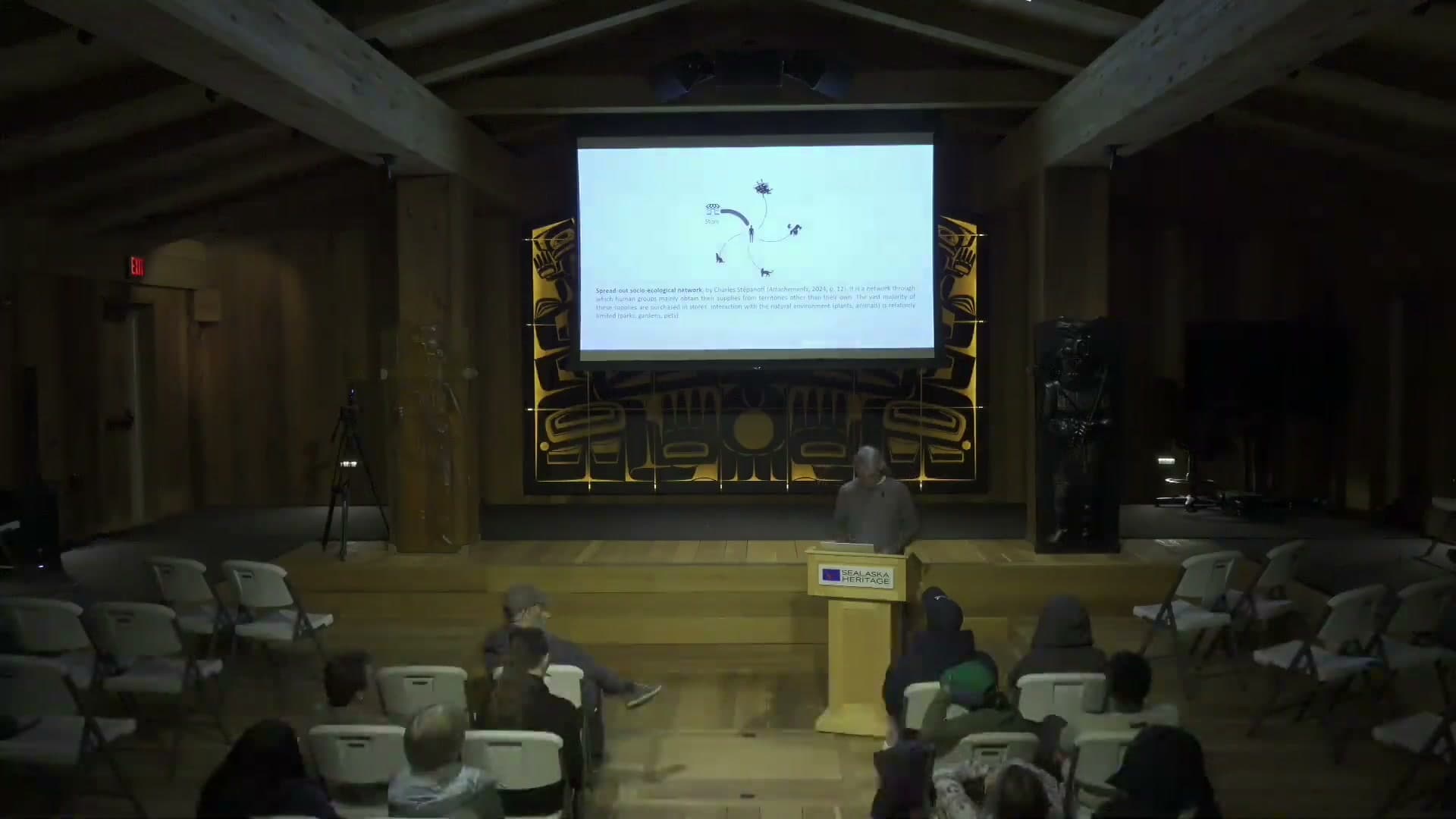
University of Alaska Fairbanks scholar Aandax̱joon Sabena Allen argued Tuesday in Juneau that Southeast Alaska should handle climate change at the scale of its own region and communities, drawing on Tlingit knowledge, rather than treating it mainly as a planetary problem.
"Due to the long history of Tlingit presence and adaptation in our homelands, we hold relevant knowledge of our changing region and also a unique cultural approach towards change," Allen said in a lecture for Sealaska Heritage Institute's Native American Heritage Month series.
Allen, an assistant professor of Indigenous studies, is Gaanax̱teidí, a child of the Kaagwaantaan clan, and an enrolled citizen of the Sitka Tribe of Alaska and the Central Council of the Tlingit and Haida Indian Tribes of Alaska.
One example she gave came from a regional planning project she worked on. Possible Futures for Southeast Alaska drew on more than 30 contributors and workshops in Saxman and Juneau to sketch four scenarios for the region from 2025 to 2050. One draft scenario imagined no Tlingit people in the region by 2050. It "was very quickly deemed not plausible and was not included in the final scenarios," Allen said, partly because of long-term Tlingit presence. She also said the scenario method grew out of work by the oil company Royal Dutch Shell, which she said draws on knowledge systems at odds with Indigenous ways of life.
Her framework rests on Haa Shuká, a term she said is often translated as "our ancestors" but can also mean "our descendants." In her telling, it means carrying ancestral considerations into the present and future. "Our presence in the past allows us to project our presence into the future," she said.
She distinguished that knowledge from what she calls "climate talk," the everyday observations Southeast residents trade, which she said is related to Indigenous knowledge but draws on more recent, firsthand experience. "If berries are at all off in their timing, everyone is going to be talking about it," she said.
She also drew on the Raven Cycle, stories that belong to no one clan. In one, Raven flees a flood and must adapt to a changed landscape, trying things again until they work. The stories teach adaptation and repetition, she said.
Allen applied her argument to cruise tourism. In Sitka's debates over cruise ships, she said, non-Indigenous residents sometimes claim their rootedness as authority, which she said can undermine Tlingit political identity. "Tribal citizenship is important within issues like environmental justice because it provides specific political authority, including to negotiate with the US federal government," she said.
On outside research, she pointed to a training built by the Sitka Sound Science Center and the Sitka Tribe of Alaska that trains visiting scientists to work with Indigenous communities. She also cited the tribe's shellfish toxicity testing as a case of a tribe using Western science for its own purposes. Traditional shellfish-harvest guidance "has become less reliable because of these climate change-induced shifts," she said.
During questions, one audience member said Sealaska, not the clans, now has the say over Tlingit land. Allen said one of her next steps is helping pass clan knowledge and protocols to younger generations.
Asked what small communities can do, Allen said the cruise industry has "been able to come in and divide communities" and urged communities to work together to set standards for how that interaction should look.
Allen said she is working on a book proposal. Her next question is where Western science and Indigenous knowledge stop fitting together. "Is there a point at which these are no longer compatible?" she asked.
What did you make of this story? (no account needed)
Made by our human newsroom with AI. Reviewed by Cale Green. How humans and AI work here · Grow with our newsroom · Transcript byLucas Brown
Get Alaska News in your inbox
Create your free account and get the day’s top stories around 6 each morning, in a few minutes’ read.
Top stories, around 6 each morning.
Stories on what you follow, on Sundays.
This article is based on a public meeting of Sealaska Heritage Institute — Sealaska Heritage Institute: Temporality of Haa Shuká A Scalar Perspective on Climate Change Lingít Knowledge & Alaskan Identity.
Watch key moments from the source meeting. Click to expand.







Comments
Sign in to leave a comment.
No comments yet. Be the first to share your thoughts.