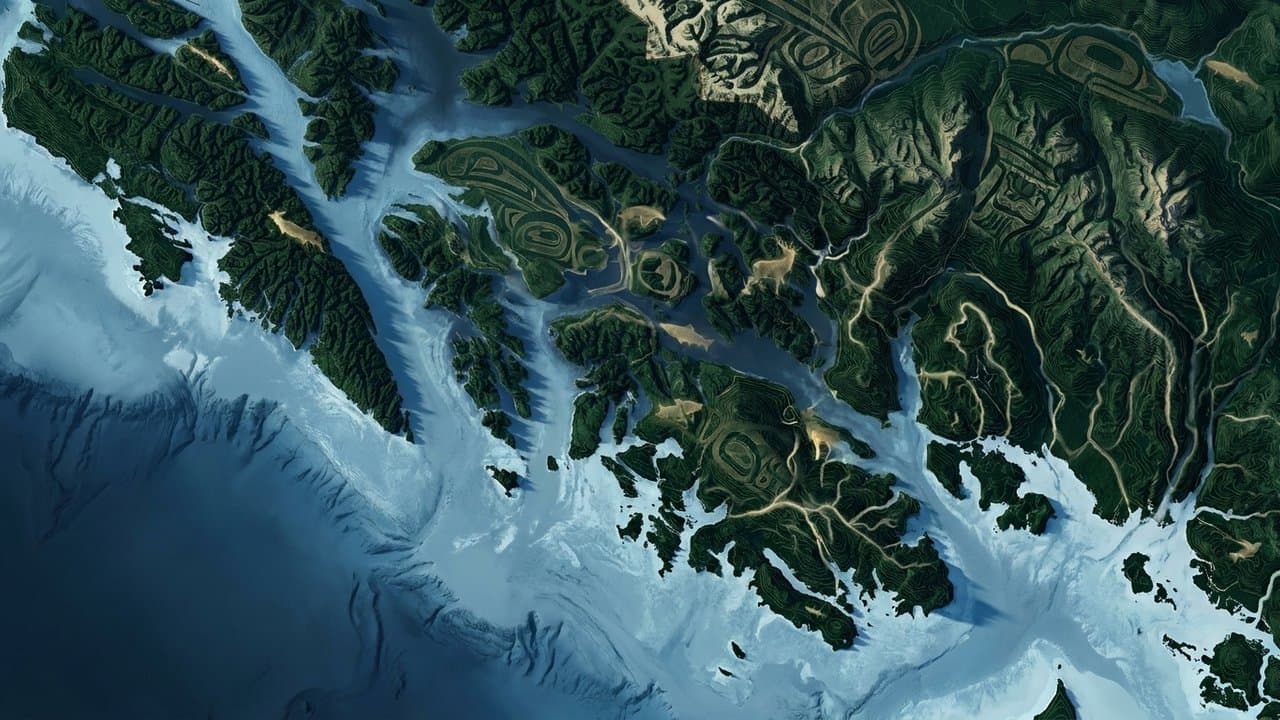
AI image
The Tlingit & Haida tribal government opposes opening the Tongass
The Central Council of the Tlingit & Haida Indian Tribes of Alaska has put its 38,000 citizens on record against lifting road-building limits across the Tongass National Forest.
Its resolution says rescinding the 2001 Roadless Rule would open unroaded parts of the Tongass to logging and industrial activity, putting at risk Sitka black-tailed deer, cultural trees, salmon and other anadromous fish, berries and medicinal plants. Continued protection, the council wrote, is "necessary to safeguard Alaska Native subsistence resources, cultural and spiritual use areas, biodiversity, watershed integrity, and climate resilience within Tlingit & Haida homelands."
Tribes have fought this before. Five federally recognized tribes went to court when USDA exempted the Tongass in 2020. Twelve Southeast tribes filed joint comments against the current proposal last October. The resolution reaffirms a 2020 petition from nine tribal governments, and conservation groups including the Southeast Alaska Conservation Council have organized against the rescission alongside them.
The forest itself belongs to the public. Congress settled aboriginal land claims across Alaska in 1971, transferring more than 40 million acres and $962.5 million to newly created Native corporations in exchange for extinguishing those claims, and the Tongass stayed in federal hands. That is why the decision gets made in Washington.
The same settlement entitled Southeast Native corporations to select about 540,000 acres out of the Tongass, and for a generation they were the region's dominant loggers. Harvests began in 1979 and reached roughly 400 million board feet a year by the late 1980s, according to Forest Service research. More than 3 billion board feet came off Native land by 1989. From 1983 onward, over half of all timber cut in Southeast Alaska came from Native-owned ground, most of it leaving as round logs bound for Japan.
Sealaska, the regional corporation, is a separate institution from the tribal government, with a fiduciary duty to shareholders rather than a cultural and governmental mandate. The people are largely the same. At least one Sealaska director currently serves as a Tlingit & Haida delegate, and in December 2024 the corporation's board and the tribe's Executive Council began meeting regularly to coordinate, while noting that "there will be times when we may not agree."
Sealaska logged for more than four decades. By 2019 it was cutting 55 to 65 million board feet a year, which its policy vice president told the Legislature was "nowhere close to what we used to harvest." That same year the corporation urged the Trump administration to open additional Tongass land to logging, including areas never harvested. The exemption arrived in October 2020. Three months later Sealaska quit logging entirely.
The market had moved out from under it. Southeast's old-growth industry was built on exports to Asia, and it had been shrinking for years, from roughly 4,200 timber jobs at the time of the 1990 Tongass Timber Reform Act to about 325 today, by Southeast Conference's count. In 2018 Sealaska had taken $100 million from BP to leave 165,000 acres standing and sell the carbon credits, which by then was worth more than cutting them.
That is the industry the current fight is over. USDA calls the 2001 rule a "one-size-fits-all restriction" that has frustrated land managers and blocked wildfire risk reduction, and says lifting it would not itself require a road or a cut anywhere. Decisions would return to each forest's own management plan.
Alaska Native interests do not all land on the same side of it. Pacific Legal Foundation, representing the Inside Passage Electric Cooperative, told a House subcommittee in May that the road ban has made renewable energy projects for remote Alaska Native communities uneconomical. Attorney Mark Miller testified that the estimated cost of the Kake-Petersburg intertie rose from $17.5 million with road access to $65 million without it.
Sen. Lisa Murkowski has long argued the rule never suited the state. "It's never been a good fit for us," she said at a June markup, adding that Tongass areas stay protected by other laws with or without it. She has also cited the 2014 Sealaska lands bill as one of the ways Congress "ensured access to the Tongass." That same bill designated eight new areas where commercial timber harvest is prohibited.
Public comment closes Sept. 21.
Source: Tlingit & Haida Executive Council adopts resolutions on cultural, health, and economic matters.
Made by our human newsroom with AI. How humans and AI work here · Grow with our newsroom
Stay informed. Support what matters.
Free, permanent access to local news you can verify. Subscribe to support Maggie AlaskaNews and go ad-free.
Related Coverage
The federal government wants to lift roadless protections, including in the Tongass
Alaska News · 1mo ago
USDA moves to rescind the roadless rule on the Tongass
Alaska News · 3mo ago
Craig's council asked Washington to keep the Tongass roadless rule
Alaska News · 1mo ago
USDA proposes lifting roadless rule protections on Tongass and Chugach
Alaska News · 1mo ago
The Forest Service approved logging it says may restrict subsistence hunting
Alaska News · 1mo ago
Comments
Sign in to leave a comment.
No comments yet. Be the first to share your thoughts.