Senate Finance presses Alaska LNG spur line: who builds, who pays, who regulates
Alaska's Senate Finance Committee spent Tuesday pressing the Alaska LNG project's developer and two state agencies on the money — who pays if the project dies, who pays for the Fairbanks spur line, and how long Alaska must hand the developer a tax break to get the pipeline financed at all.
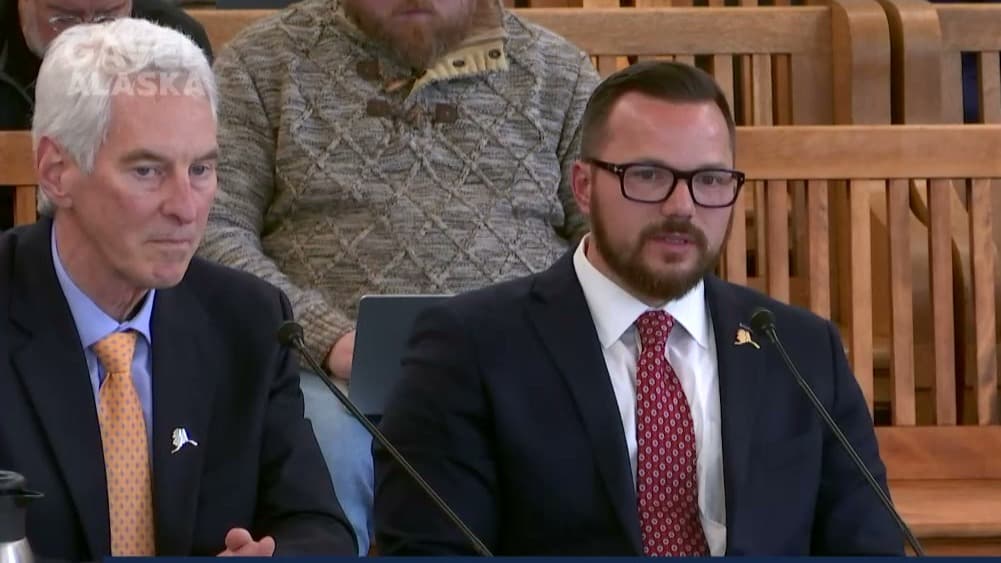
The cleanest answer came on the first question. If Glenfarne walks away before a final investment decision, the state owes it nothing. "Glenfarne is developing the Alaska LNG Project at our own risk and at our own expense," company president Adam Prestidge told the committee, saying there is "no right or expectation" of reimbursement. Matt Kissinger of the Alaska Gasline Development Corporation confirmed it: no payment obligation, under any pre-FID exit. If Glenfarne drops its 75 percent stake in the joint-venture company, 8 Star Alaska, AGDC simply becomes sole owner of all the permits, licenses, and engineering studies — with no compensation to Glenfarne, an arrangement Sen. Jesse Kiehl called "excellent." Prestidge said the developer even turned down a $50 million state backstop for its engineering costs. Chair Lyman Hoffman put the exchange on the record pointedly, citing "rumors abound in this building." The caveat: none of that touches what Alaska could spend if it chooses to exercise its right to invest up to 25 percent — that's where cost-overrun exposure would begin.
Where the answers got murkier was the Fairbanks spur. The roughly 30-mile line meant to bring gas to the Interior was never in the project's federal permit, the Regulatory Commission of Alaska told the committee, meaning FERC's 2020 authorization almost certainly doesn't cover it — and with no confirmed builder or operator, the RCA can't yet say whether it would be economically regulated at all. Prestidge characterized the spur language in HB 381 as a good-faith permitting condition for tax eligibility, not a guaranteed build, and pushed to strike a provision spreading its cost to export customers as "outside the bounds of commercial sensibility." Spreading it across domestic buyers, he estimated, would add 20 to 30 cents per MMBtu. The RCA flagged a tension there: regulatory principle holds that whoever causes a cost should pay it, and not every gas customer benefits from a Fairbanks spur — when ENSTAR extended service to Homer, Homer customers paid the surcharge. AGDC's Frank Richards said an optimized route along Murphy Dome Road could come in under $150 million, a figure he said he hadn't independently verified.
The third thread was time. Prestidge argued the bill's 2060 property-tax sunset is essential to financing, because lenders model the worst case across the full loan term: "If there's any possibility that after a period of time the tax rate would revert back to 20 mils, that's what lenders and investors would assume will happen." He flatly disputed a consultant's view that a 10-year abatement would suffice, calling it "factually not correct." Sen. Bert Stedman, unsatisfied, again asked for the one number the committee still hasn't seen — the marginal effect of the tax break on the pipeline alone: "Does it put you clear in the green light zone so it goes to FID tomorrow?" Noting the Department of Revenue's cost assumptions have run roughly 50 percent off, he asked Glenfarne to run its own analysis. Prestidge agreed.
The committee continues its review of HB 381, the property-tax bill on which the whole project's math depends.
This article is based on a public meeting — Alaska Legislature: Senate Finance - June 16, 2026 1:30pm ().
Drafted with AI. Edited by Cale Green (1 revision). No full editor review is on record. Who is accountable. Transcript byLucas Brown
Watch key moments from the source meeting. Click to expand.
Stay informed. Support what matters.
Free, permanent access to local news you can verify. Subscribe to support Walter AlaskaNews and go ad-free.
Related Coverage
Alaska's LNG tax break now hinges on a gas line to Fairbanks
Alaska News · 2mo ago
Alaska House examines $4 billion LNG equity option, Fairbanks spur-line tax break
Alaska News · 3mo ago
Senate Finance demands Phase 1 pipeline math before Alaska LNG tax vote
Alaska News · 3mo ago
Where Alaska's gas-line tax deal stands, and what's still stuck
Alaska News · 2mo ago
House panel ties Alaska gas line tax breaks to Fairbanks spur line
Alaska News · 4mo ago
Comments
Sign in to leave a comment.
No comments yet. Be the first to share your thoughts.