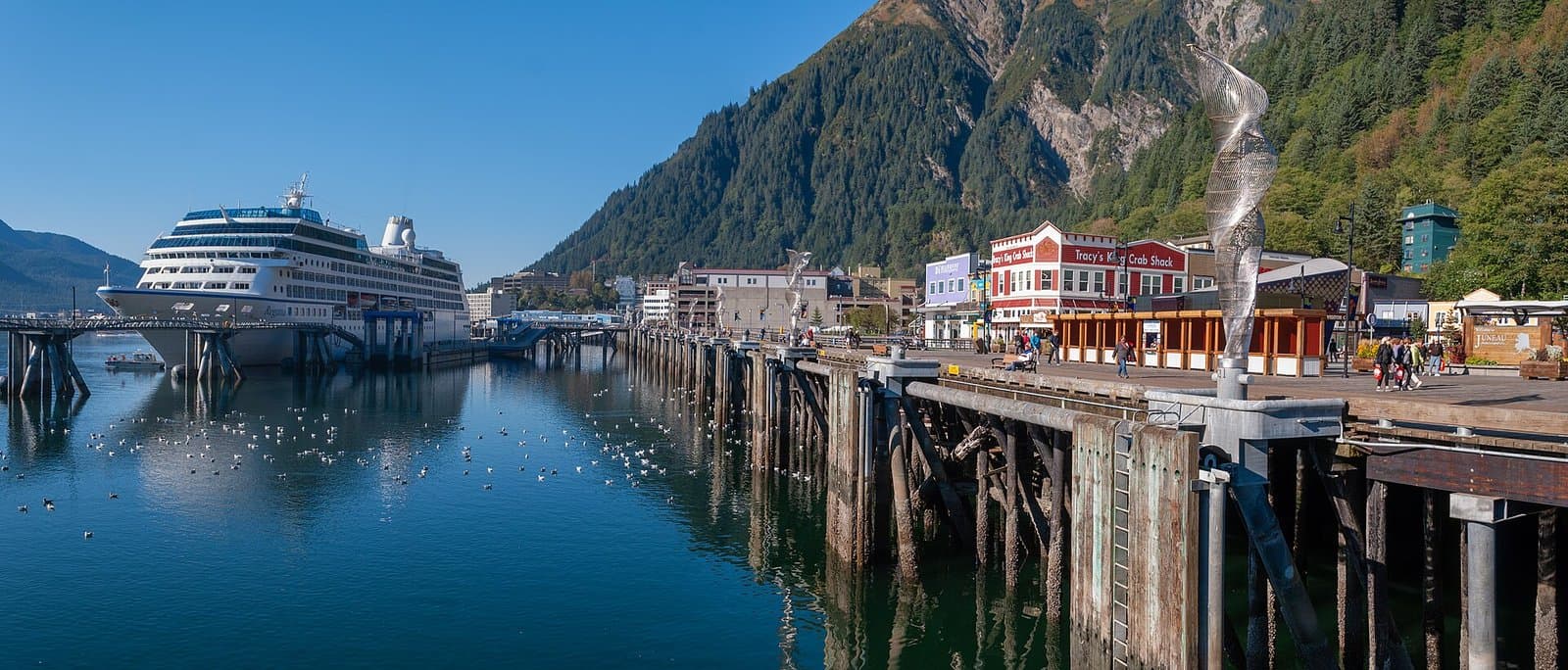
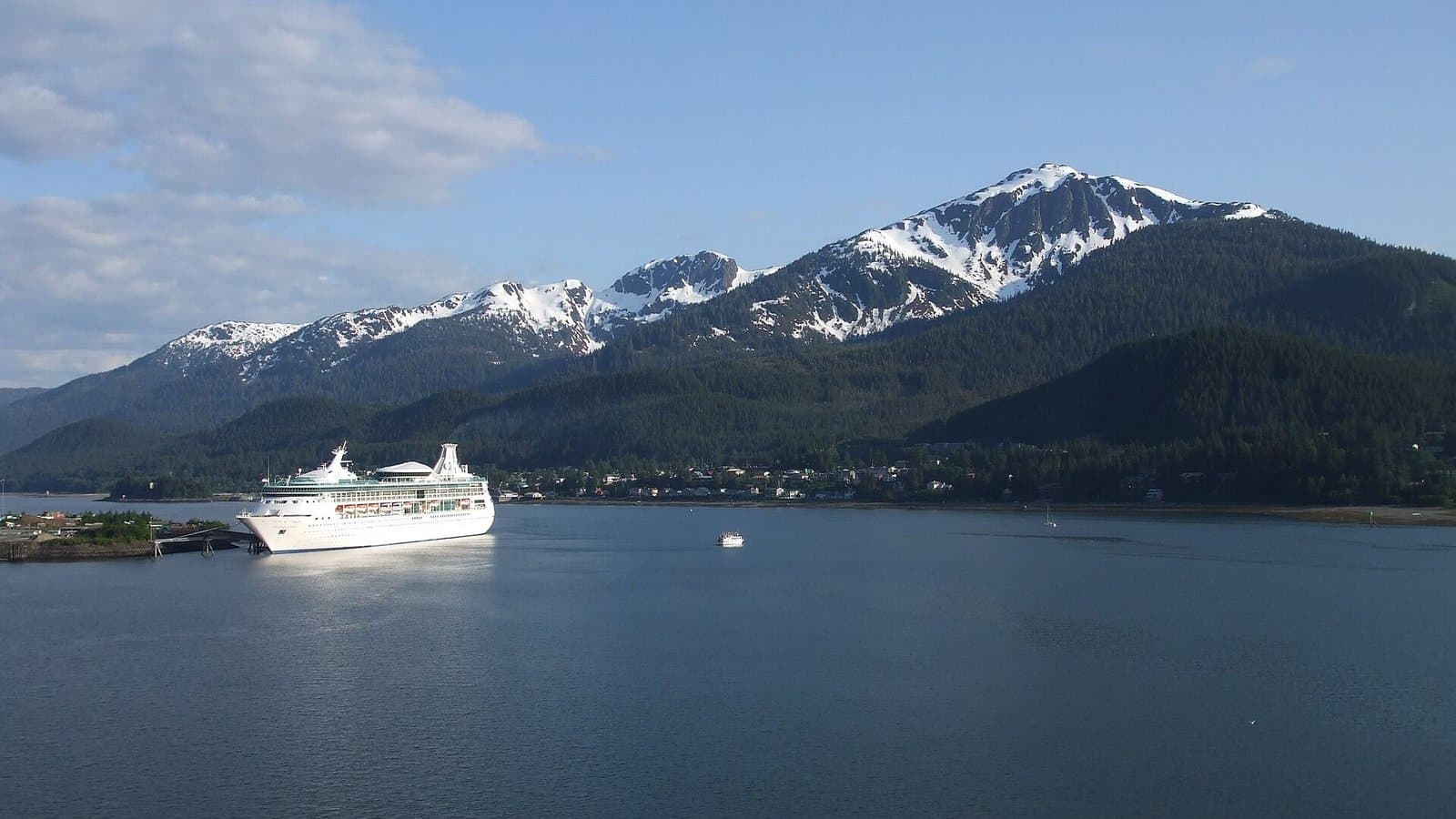
Photo: Gordon Leggett via Wikimedia Commons · Photo source · CC BY 4.0
Robes telling the story of the Navy's 1882 bombardment of Angoon will be danced Friday
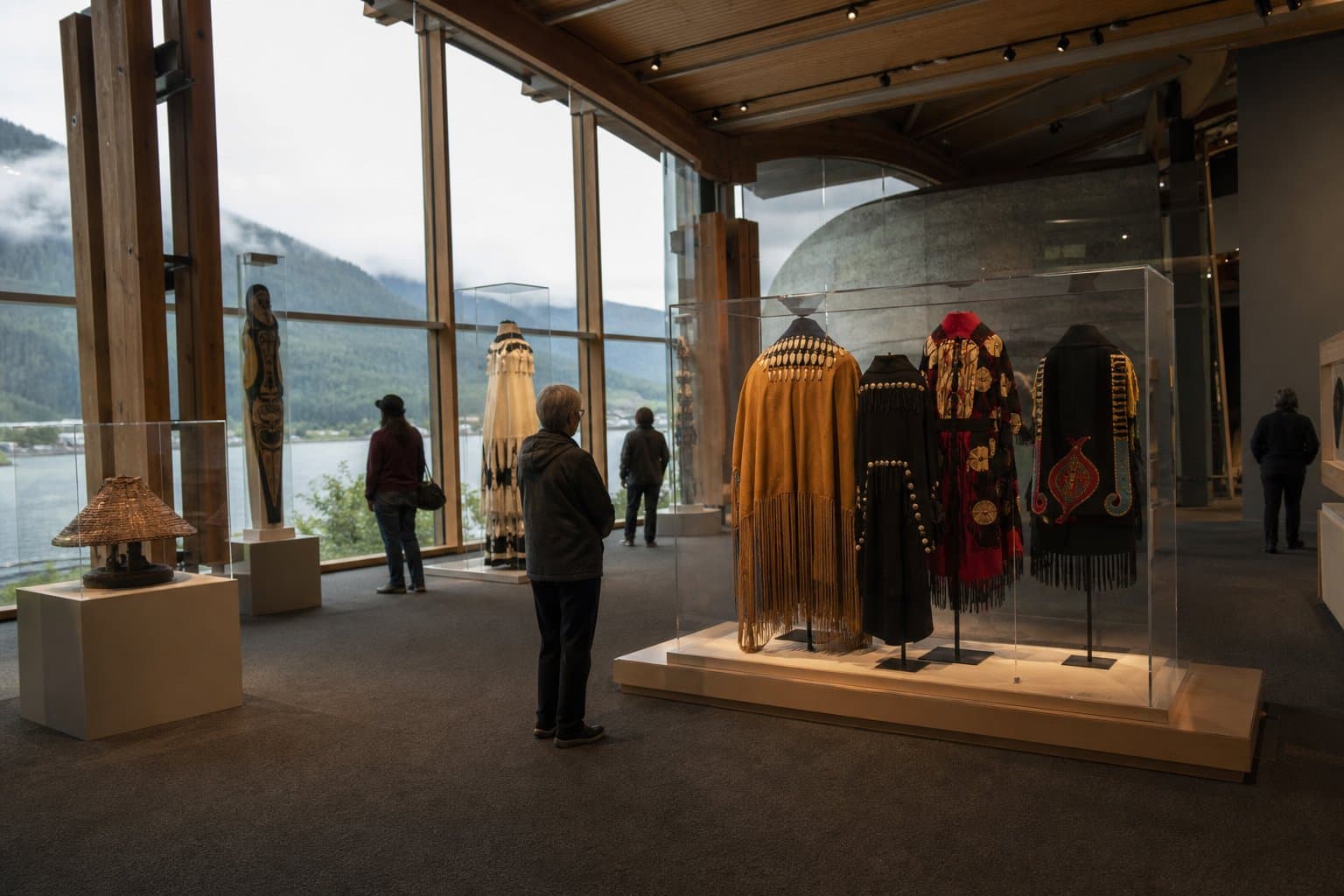
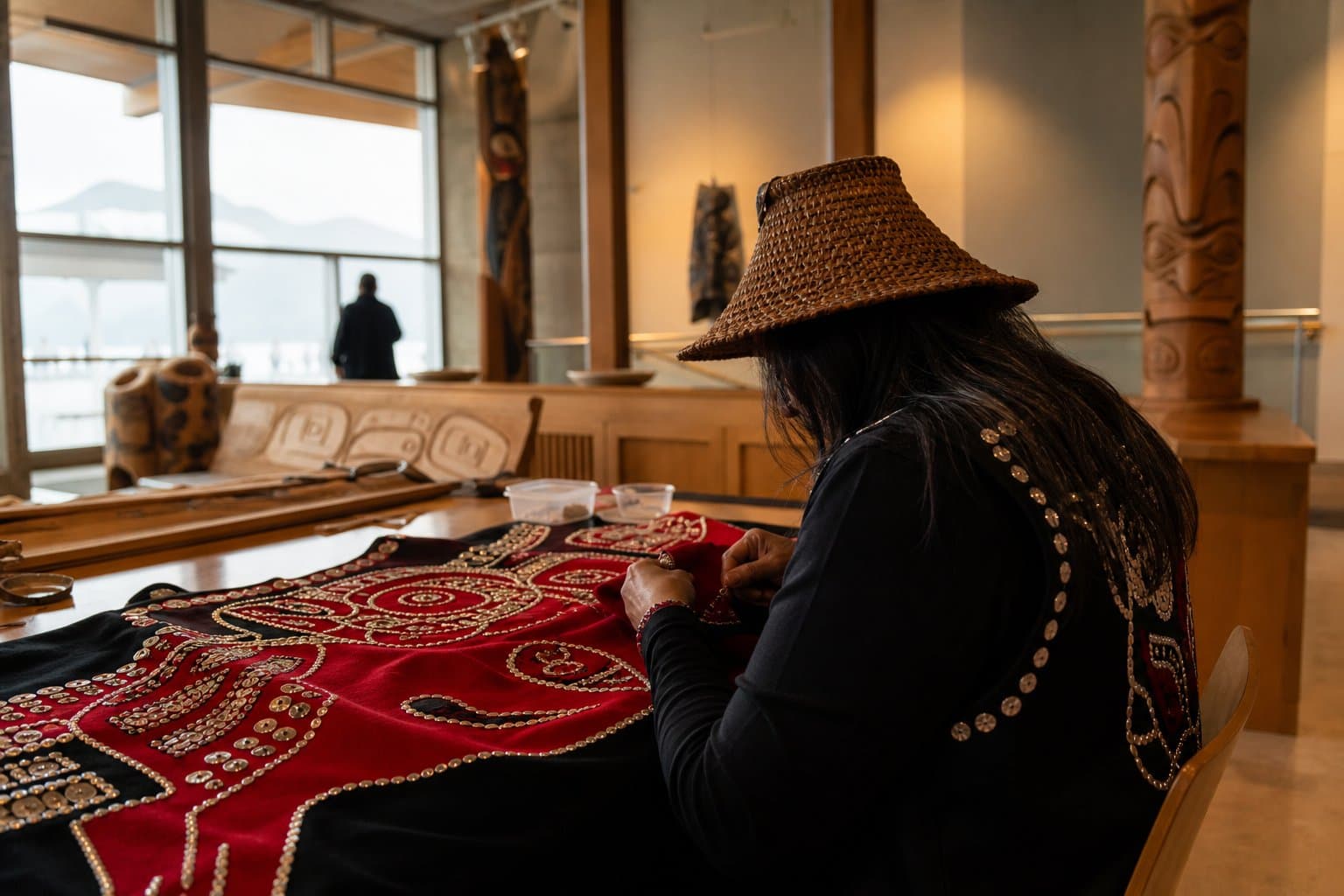
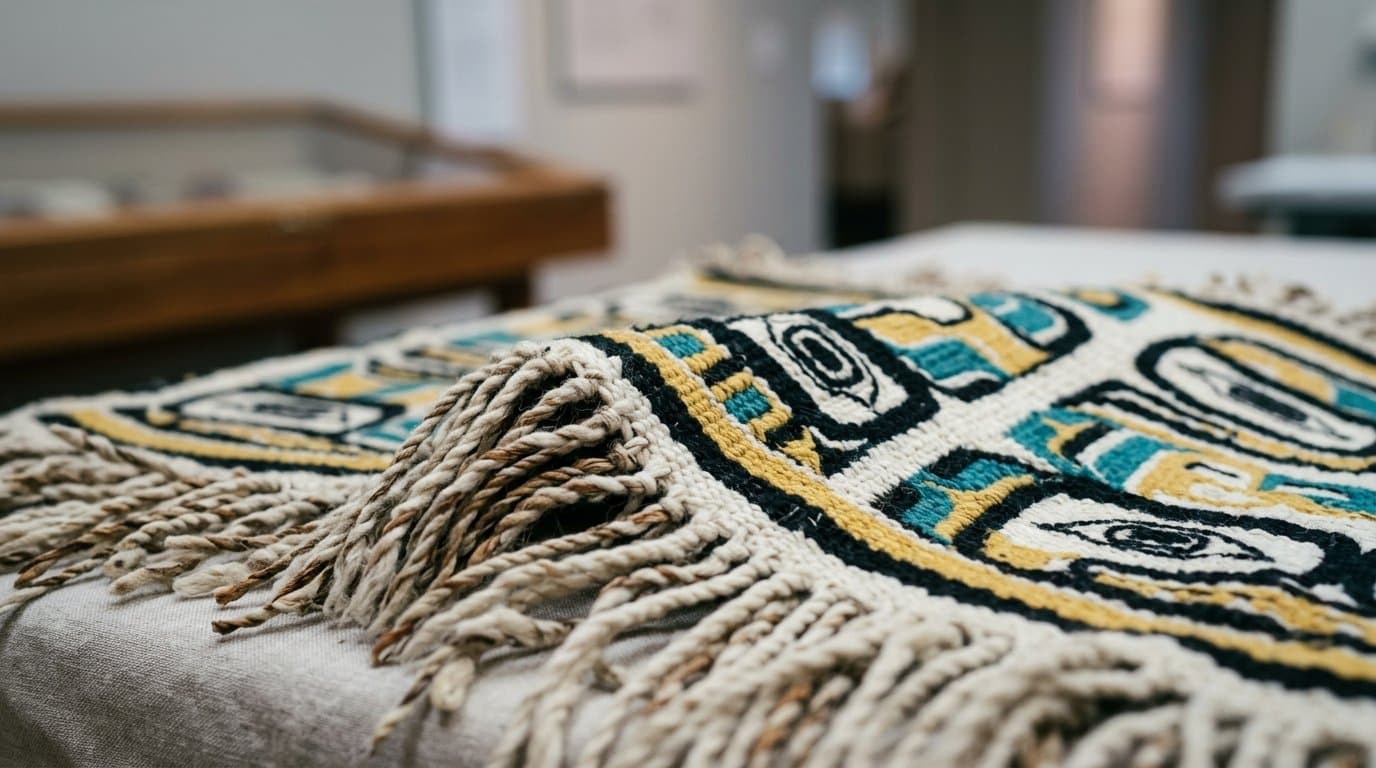
Ten robes that Lingít weaver Shgendootan George made to tell the story of the U.S. Navy's 1882 bombardment of her village, Angoon, will be danced in Juneau on Friday, many of them for the first time. The dancing starts at 5 pm in the museum's atrium, and then the robes go on display in the museum through March 20, 2027.
George says it's essential to teach the next generation from an Indigenous perspective, one "not found in history books but in the wearing and dancing of robes," according to a 2025 profile in a University of Puget Sound alumni magazine.
Each robe recounts one episode, and together they cover the events before the shelling, the attack, survival, rebuilding and the Navy's apology in 2024, according to the museum. Two are titled "Déix Hándít L'ée - 200 Blankets" and "Táakwde yaa kugaháa - Winter Started to Come."
The Navy shelled and burned Angoon on Oct. 26, 1882. The attack killed six children, and untold others died the following winter after the village lost its shelter and its storehouses of food, the magazine's profile says.
George grew up in Angoon and taught there. For 20 years, she taught her students about the attack and talked about how there was still no apology. When she applied in 2022 for a Rasmuson Foundation award and a solo show at the museum, the theme of her proposals was "Still No Apology."
The apology came while she was working. On Oct. 26, 2024, the 142nd anniversary, Rear Adm. Mark Sucato apologized in Angoon on the Navy's behalf for "the pain, suffering, and generational trauma" the bombardment caused, according to the profile. George and her daughters were there and performed ceremonial songs.
That changed what one robe means. "I have one robe that is really based on a sailor's uniform," she told the magazine. "It was originally intended to be something of a shame robe, but now it will signify the Navy doing the right thing by apologizing."
The exhibit takes its English title, "Miscellaneous Events of the Day," from the heading on the Corwin's logs for the days before the shelling. The logs recorded the weather, the tides, who came on and off the ship and activities like "prepared to shell the village," according to the profile. The Lingít half of the title, "Yee een kakkwalaneek yáa Aangóont akawdulgaaní," translates as "I will tell you all the story of when Angoon was set afire," the museum says.
The robes are Naaxein, or Chilkat; Yéil koowú, or Raven's Tail; and Kaayuka.óot x'oow, button blankets. George tried to use Hudson's Bay blankets throughout the series, "representing the blankets used as payment and death in historical times in the community," she told the magazine. On one of her Raven's Tail robes, strips of the blanket replace the sea otter fur strips used traditionally. Photographs, drawings, ship's logs and accounts tied to each robe will be shown alongside them.
The Navy also apologized to Kake that fall. In May, Rear Adm. Jon Townsend, commander of Navy Region Northwest, told the Legislature's Joint Armed Services Committee that the Navy had apologized at ceremonies in Kake in September 2024 and in Angoon that October for "wrongful U.S. military actions" against the two Tlingit villages in 1869 and 1882. "The Navy acknowledges these tragic incidents resulted in loss of life, loss of resources, and intergenerational trauma for the communities," he said. The Army has also apologized for its 1869 bombardment of Wrangell.
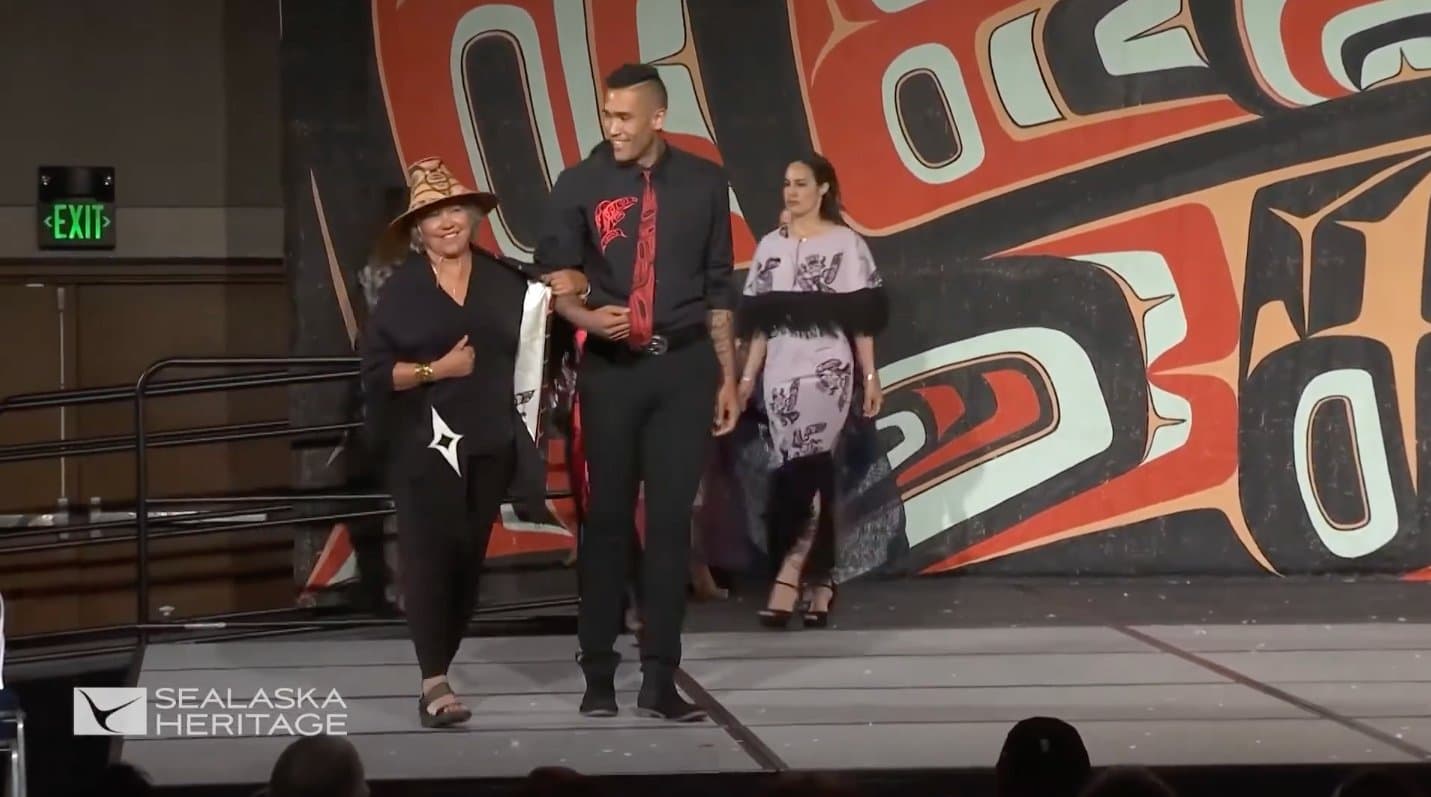
When Angoon's dancers took the stage at Celebration in Juneau in June, the announcer told the crowd the apology "was consistently pursued over the years and now provides the opportunity for closure."
George is Lingít, Daḵl'aweidí, and a housemaster of Kéet Oox̲ú Hít, the Killer Whale Tooth House. She received a Rasmuson Fellowship Award in 2023, and her work is in the collections of Sealaska Heritage Institute, the Museum of the North and the Juneau-Douglas City Museum. She'll talk about the robes and how she made them at 7 pm Friday in the museum's lecture hall.
What did you make of this story? (no account needed)
Made by our human newsroom with AI. How humans and AI work here · Grow with our newsroom ·
Get Alaska News in your inbox
Create your free account and get the day’s top stories around 6 each morning, in a few minutes’ read.
Top stories, around 6 each morning.
Stories on what you follow, on Sundays.
Based on a press release from Alaska State Libraries, Archives, and Museums.




Comments
Sign in to leave a comment.
No comments yet. Be the first to share your thoughts.