The Army apologized for bombing a Tlingit village. It only took 156 years.
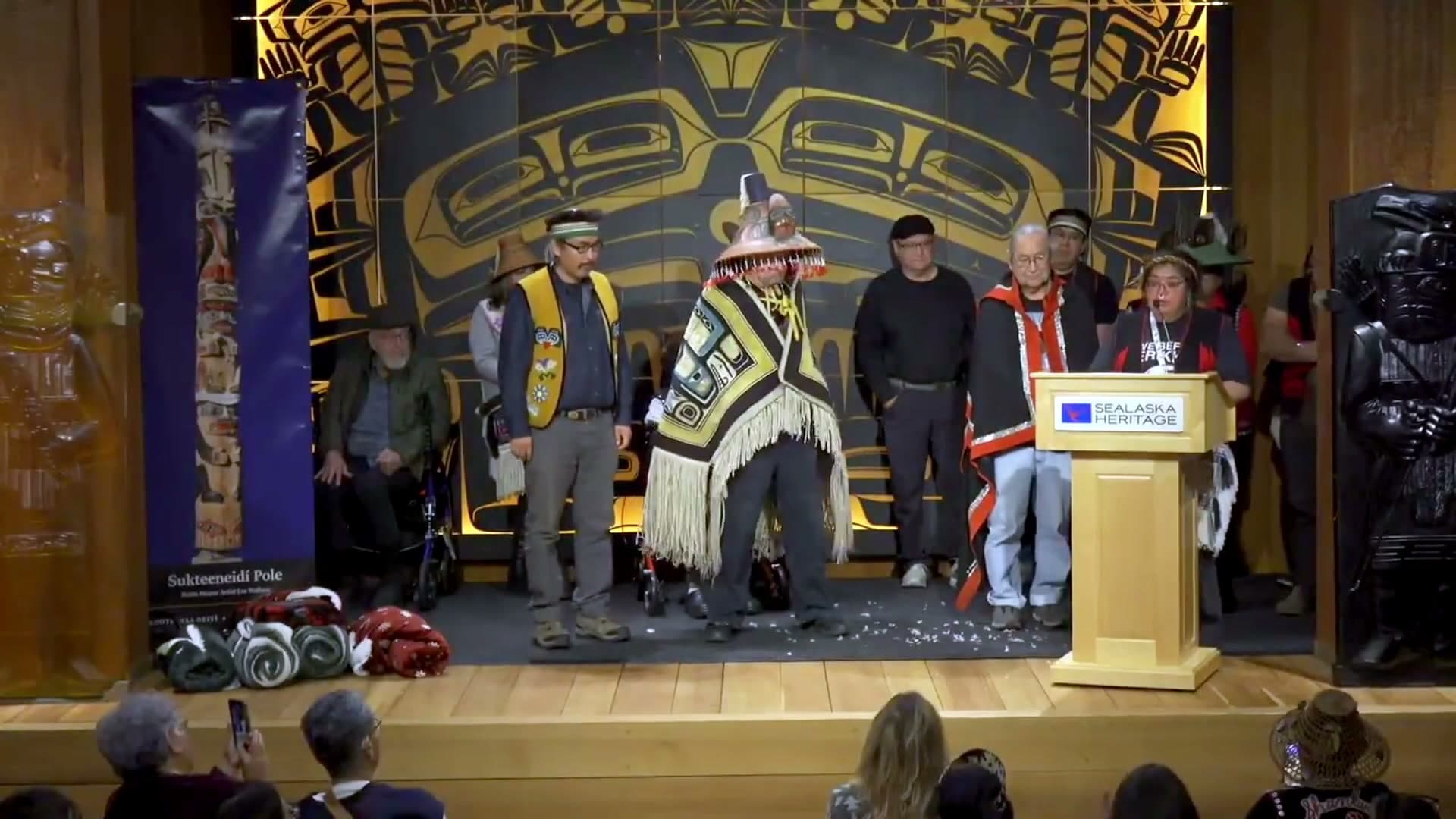
The single most striking thing in Sealaska Heritage Institute's year is one line the rest of the report circles around: the U.S. Army formally apologized for bombing a Tlingit village more than 150 years ago.
The 1869 bombardment destroyed the Tlingit village at Wrangell, known in Tlingit as Kachinok. In its statement, the Army acknowledged that "wrongful and undeserved military action resulted in injury, death, and destruction," and said it "regrets the long delay" in issuing the apology — a delay of more than a century and a half.
Tlingit artist Renee Culp called the apology a kind of trail marker for accountability: saying a wrong out loud, and honoring those it harmed, teaches something that silence can't.
The apology landed in a year when the institute was building things meant to last. On its Juneau campus, SHI opened an Indigenous Science Building — a place to teach science grounded in Tlingit, Haida, and Tsimshian knowledge, with a traditional food kitchen alongside modern labs.
And on the waterfront, it raised the 14th totem pole on its Kuteeyaa trail, carved by Haida artist Lee Wallace and five apprentices, part of a path planned to hold 30 poles in all. Together they trace what the institute, founded in 1980 by the Sealaska corporation, is trying to do: keep a living culture rooted, and on the record.
This article is based on a public meeting of Sealaska Heritage Institute — Sealaska Heritage Institute: 2025 Annual Report | Sealaska Heritage ().
Made by our human newsroom with AI. How humans and AI work here · Grow with our newsroom Transcript byLucas Brown
Stay informed. Support what matters.
Free, permanent access to local news you can verify. Subscribe to support Maggie AlaskaNews and go ad-free.
Related Coverage
Angoon youth dancers perform at Celebration following Navy apology
Alaska News · 4mo ago
SHI book documents the fraught origins of three Juneau totem poles
Alaska News · 3mo ago
Unalaska student wins national naval history award for Angoon bombardment project
Alaska News · 3w ago
Sealaska Heritage concludes ninth annual education conference
Alaska News · 2mo ago
Tlingit & Haida Unveils Revitalized Veterans Totem Pole in Juneau
Alaska News · 3mo ago
Comments
Sign in to leave a comment.
No comments yet. Be the first to share your thoughts.