AI image
An Angoon weaver tells the story of the Navy's 1882 bombardment of her village in 10 robes
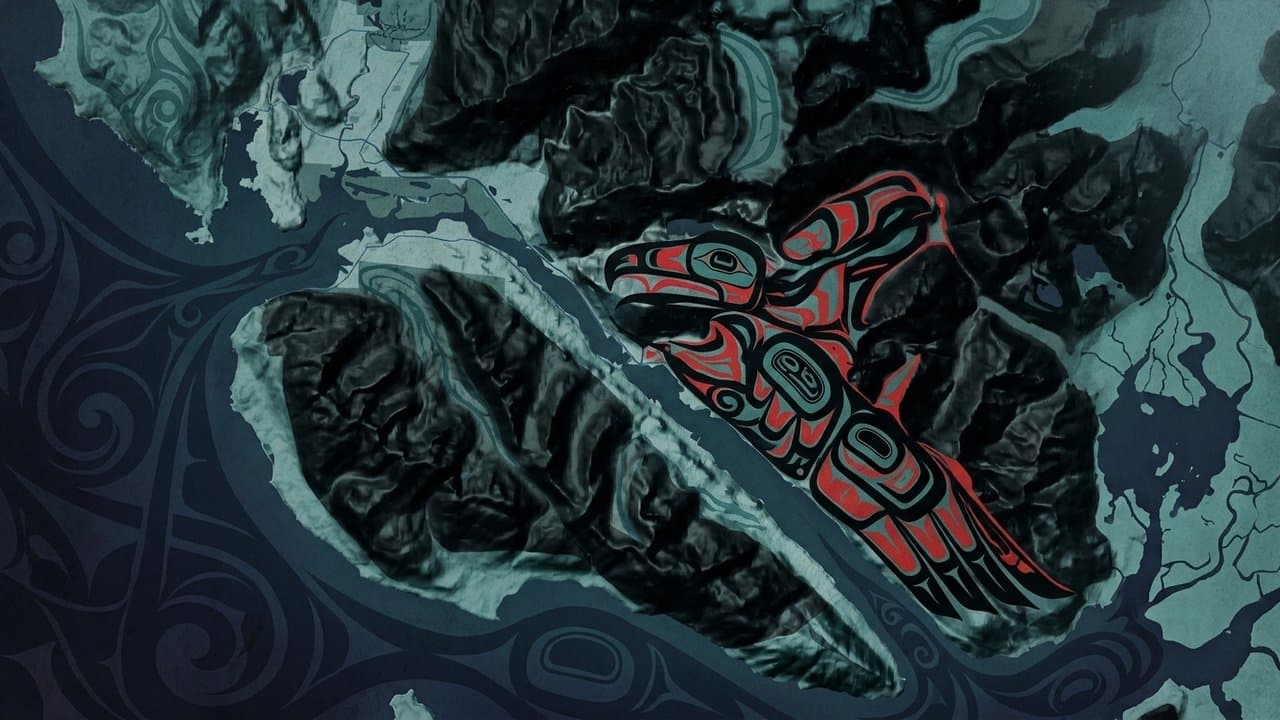
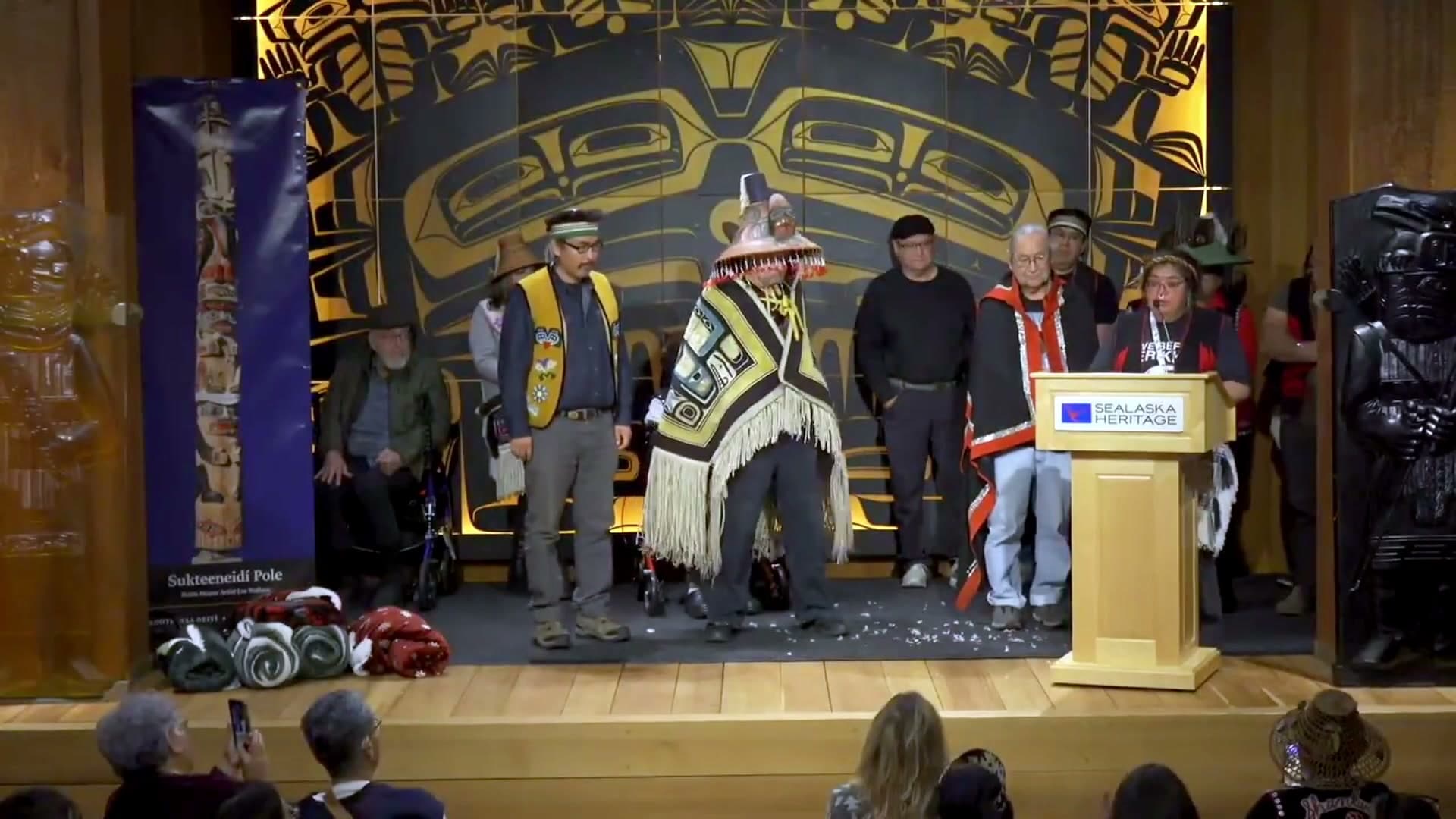
In 2022, Lingít weaver Shgendootan George set out to tell the story of the U.S. Navy's 1882 bombardment of her home village, Angoon, in 10 robes. On Nov. 6, they'll be danced in public, many for the first time, before going on display at the Alaska State Museum in Juneau.
Each robe tells one part of the story, from the days before the shelling through the attack, survival, rebuilding and the Navy's apology in 2024, according to the museum.
The bombardment on Oct. 26, 1882, destroyed clan houses, food caches and about 40 canoes, killed several children and left the community without sufficient resources for winter, the Navy acknowledged when it apologized on the 142nd anniversary.
George's proposals in 2022 were built around the theme "Still No Apology." They won her Rasmuson Foundation support and a solo show at the museum, according to a University of Puget Sound profile. In 2024, the Navy apologized. One robe is based on a sailor's uniform, which she said would "signify the Navy doing the right thing by apologizing."
In place of traditional sea otter fur, she has used strips of Hudson's Bay blankets to represent "the blankets used as payment and death in historical times," she told the university.
The show's English title, "Miscellaneous Events of the Day," comes from the heading on the USS Corwin's ship's logs, according to the profile. The Lingít half of the title, "Yee een kakkwalaneek yáa Aangóont akawdulgaaní," translates as "I will tell you all the story of when Angoon was set afire."
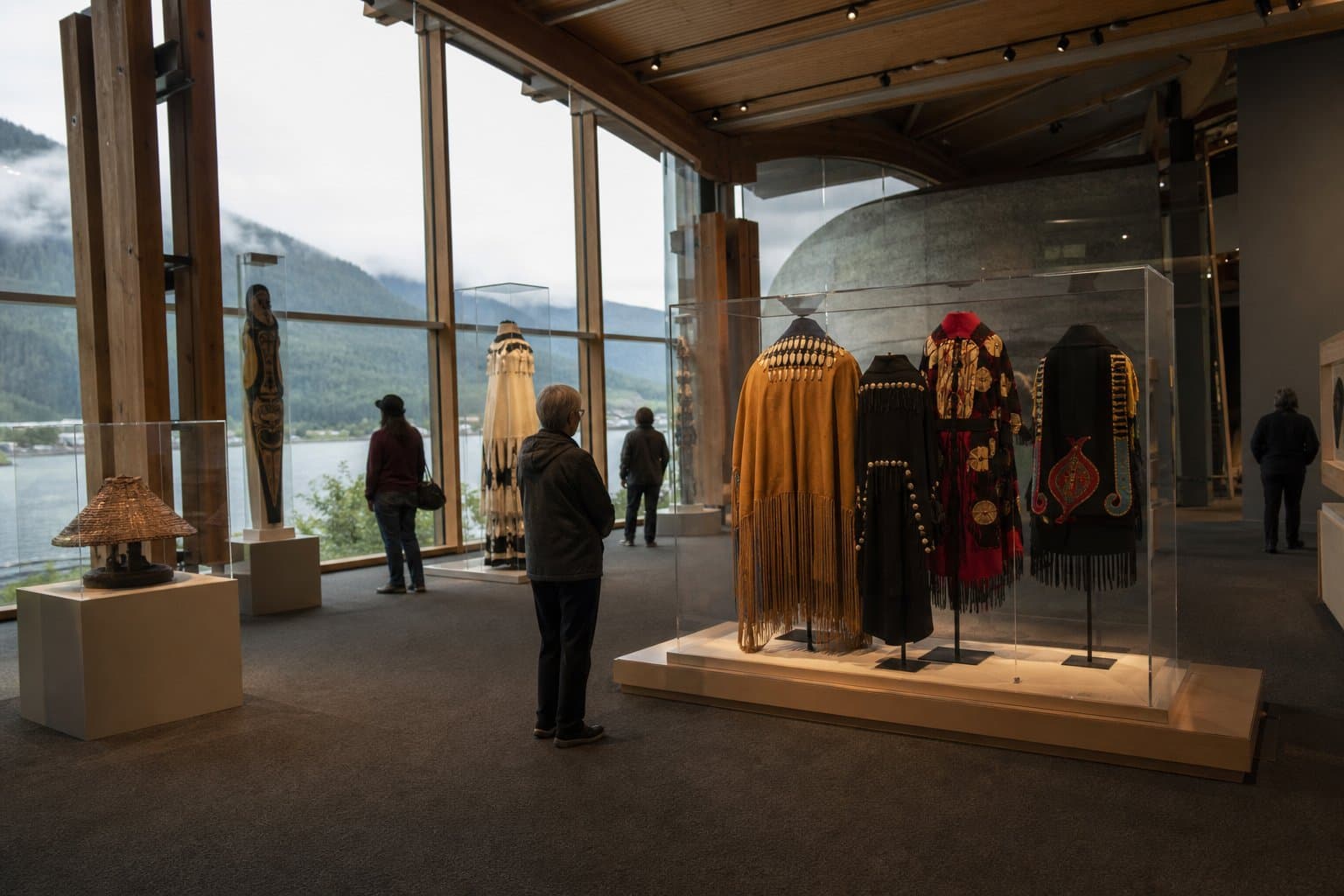
The robes come in three forms: Naaxein, or Chilkat; Yéil koowú, or Raven's Tail; and Kaayuka.óot x'oow, button blankets. Photographs, drawings, ship's logs and accounts tied to each robe will be shown alongside them.
The opening starts at 5 pm in the museum's APK Atrium, where the robes will be danced before they move into the galleries. Among them are "Déix Hándít L'ée - 200 Blankets" and "Táakwde yaa kugaháa - Winter Started to Come." George will talk about the robes and her process at 7 pm. The show runs through March 20.
George is Lingít, Dakl'aweidí, and a housemaster of Kéet Ooxú Hít, the Killer Whale Tooth House. She spent more than 22 years teaching in classrooms, and her work is in the collections of Sealaska Heritage Institute, the Museum of the North and the Juneau-Douglas City Museum.
Based on a press release from Alaska State Museum.
Made by our human newsroom with AI. Reviewed by Cale Green. How humans and AI work here · Grow with our newsroom
Stay informed. Support what matters.
Free local news you can verify. Support Walter AlaskaNews and go ad-free.





Comments
Sign in to leave a comment.
No comments yet. Be the first to share your thoughts.