Photo: Wikideas1 via Wikimedia Commons · Photo source · CC0
Railbelt Reliability Council asks regulators to cut utilities' payments by about 16%
The Railbelt Reliability Council asked state regulators Tuesday to cut the monthly charge that the Railbelt's five electric utilities pay to fund it by about 16%, starting Jan. 1.
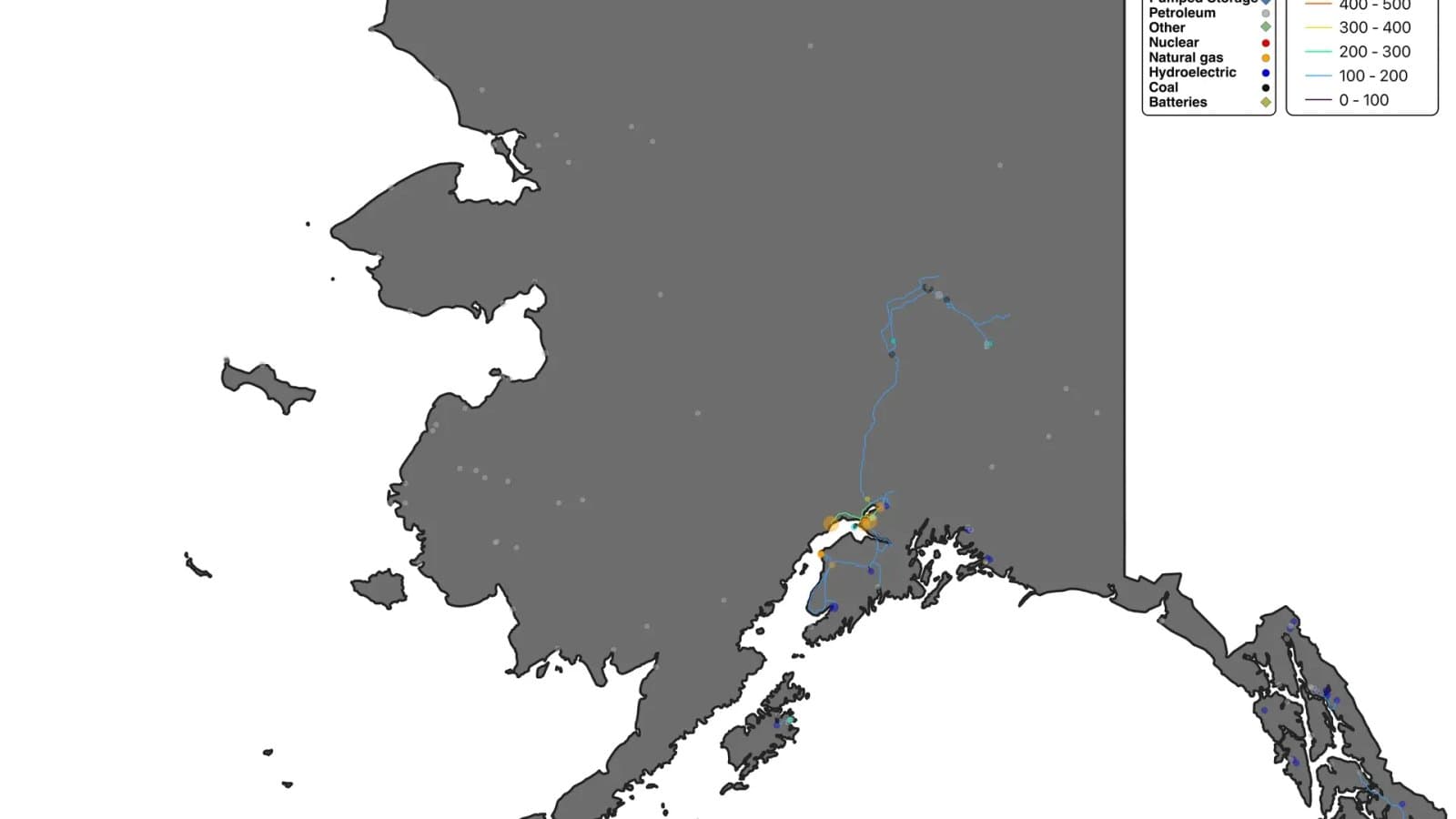
The Railbelt is home to about 75% of Alaskans, according to the Alaska Energy Transparency Project. State rules let each utility add a separate charge to customers' bills to collect its share. Matanuska Electric Association's rate sheet lists that charge, its ERO charge, at 0.069 cents per kilowatt-hour.
At that rate, a 750 kilowatt-hour month would come to about 52 cents. MEA set the charge in January from a projected share of about $540,000. Under the proposal, its share would be about $448,000. If MEA passed the smaller share through at this year's projected sales, the same bill would be roughly 10 cents lower.
The council sets the grid's operating rules and ensures advance planning of new generation and transmission projects of 15 megawatts or more, according to the council. Its yearly budget is split among the utilities by net energy for load, the power each needs to serve its customers.
The council's 2027 budget filing puts planned spending at about $3.66 million, down 21% from this year's budget of $4.62 million. Planned consultant costs would fall by about $1 million. The council says its first integrated resource plan, a long-range plan for the grid, should be done by mid-2027, and that a full staff needs fewer consultants.
The council projects it will end this year with about $1.3 million left over, which it counts against next year's budget. The five monthly invoices would fall from about $253,600 to about $211,900.
Chugach Electric Association would pay about $88,100 a month instead of $107,600. Golden Valley Electric Association would pay about $60,500 instead of $70,000. Homer Electric Association would pay about $23,500 instead of $28,000. Matanuska Electric Association would pay about $37,300 instead of $45,000. Seward Electric System would pay about $2,500 instead of $3,000.
Comments are due to the Regulatory Commission of Alaska by 5 pm Dec. 4 through its public notice comment page. Commenters must cite docket TE16-9001 and send a copy to the council.
The council asked the commission to approve the charge without an investigation, saying the commission did so with its 2025 and 2026 budgets. The commission may still approve a rate different from the one proposed.
What did you make of this story? (no account needed)
Made by our human newsroom with AI. How humans and AI work here · Grow with our newsroom ·
Keep Alaska News free for everyone.
No paywall, ever. Members pay so everyone can read the meetings and records Alaska News covers.
Get Alaska News in your inbox
Create your free account and get the day’s top stories around 6 each morning, in a few minutes’ read.
Top stories, around 6 each morning.
Stories on what you follow, on Sundays.
Source: Alaska Department of Commerce, Community, and Economic Development, Regulatory Commission of Alaska: Notice of Electric Reliability Organization Tariff Filing.



Comments
Sign in to leave a comment.
No comments yet. Be the first to share your thoughts.