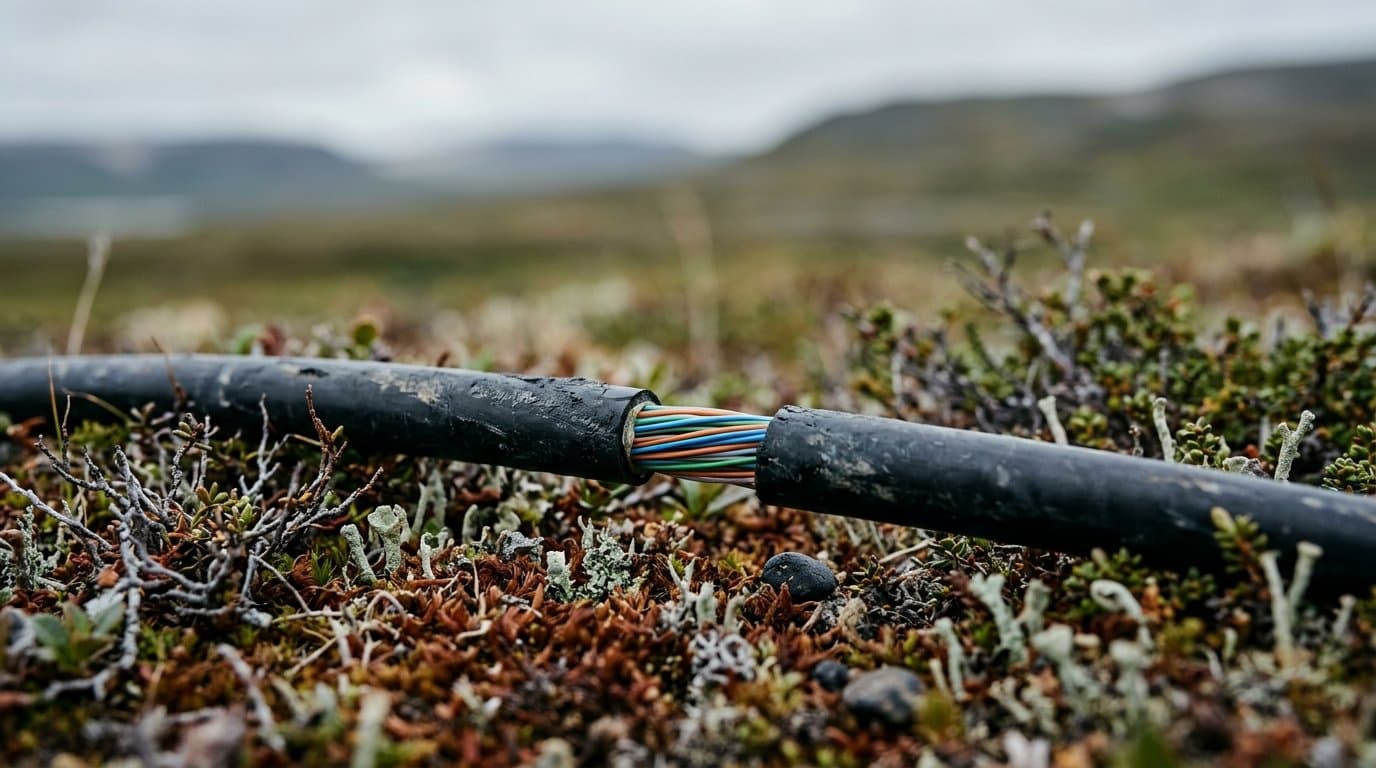
AI image
One Kotzebue phone subsidy nears $26 million as the program behind it ends
The Federal Communications Commission added about $1.5 million in October to one of the federal awards behind phone, cell and internet service from Kotzebue's phone cooperative, bringing that award's total since 2019 to nearly $26 million.
The program paying it, the Alaska Plan, ends this year. Its replacement starts paying cell carriers in January, and the cooperative has warned federal regulators that one of the new program's rules could set off a "land rush" favoring bigger carriers.
The award goes to OTZ Telecommunications. OTZ Telephone Cooperative, a member-owned phone company that says it serves 11 villages in Northwest Alaska, says on its website that OTZ Telecommunications was created to provide long distance service to its members. The cooperative has its own, separate Alaska Plan award of about $25.4 million, according to federal records.
The FCC obligated $1,471,234 to OTZ on Oct. 31, according to federal award records. The rest, about $24.5 million, was obligated at the end of 2019.
The Alaska Plan, adopted in 2016, froze $1.5 billion over 10 years to maintain, extend and upgrade broadband service in parts of Alaska. It ends this year, and the Alaska Connect Fund, adopted in November 2024, takes over through 2034, paying more for faster service. Its support for cell carriers is set to start Jan. 1.
The new fund also decides which carrier gets federal support when cell coverage reaches a place no carrier covered before. That place goes to whichever carrier shows coverage there first in the FCC's coverage maps. If two carriers report it at the same time, it goes to whichever one gets an updated plan accepted by the FCC first.
OTZ CEO Kelly Williams and the cooperative's lawyer took that up with FCC staff in June. The first-to-cover rule "makes a certain amount of sense," OTZ wrote in its summary of the meeting. But the tiebreaker would have carriers hurrying their plans in "the minute the final maps are released," it wrote, which "would unfairly and unnecessarily favor larger carriers with the staff and outside resources to quickly analyze data." OTZ also said challenging another carrier's coverage claims takes labor-intensive testing.
Separately, FCC Chairman Brendan Carr circulated an order in October that would add $162 million for cell service in rural Alaska.
OTZ also got $1,644 more on Oct. 31 through Lifeline, which the cooperative uses to offer qualifying low-income members a free phone and wireless service, bringing that award to $16,835 since 2020. Award records show money committed, not necessarily spent.
What did you make of this story? (no account needed)
Made by our human newsroom with AI. Reviewed by Cale Green. How humans and AI work here · Grow with our newsroom ·
Keep Alaska News free for everyone.
No paywall, ever. Members pay so everyone can read the meetings and records Alaska News covers.
Get Alaska News in your inbox
Create your free account and get the day’s top stories around 6 each morning, in a few minutes’ read.
Top stories, around 6 each morning.
Stories on what you follow, on Sundays.
Source: Federal Communications Commission.











Comments
Sign in to leave a comment.
No comments yet. Be the first to share your thoughts.