The U.S. Federal Communications Commission (FCC) is the federal agency that regulates interstate and international communications in the United States. It oversees E-Rate school internet discounts, rural health clinic subsidies, broadband mapping and telecom mergers affecting Alaska communities.
fcc.gov ↗Anchorage, AK, USA
Places and topics in this news
Numbers are stories in the last 30 days.

AI generated image
FCC authorizes a SpaceX network of up to 1 million data-center satellites
The Federal Communications Commission on Wednesday authorized a SpaceX network of up to 1 million satellites that would work as data centers in orbit, a network the company calls Starmind.
That's more than 60 times the roughly 15,800 working satellites in orbit now, by the European Space Agency's count. The FCC's order sets a ceiling, not a build order. SpaceX must have one Starmind satellite working by 2033, 100,000 by 2035 and half a million by 2038, or the license lapses.
Advocates point to sunlight. In low orbit, satellites can get near-constant sun and generate up to eight times more solar power than panels on Earth, according to Google, which is testing its own AI chips in space.
Data centers on the ground need enormous amounts of power.
In Alaska, one proposal calls for a 1-gigawatt data center on the North Slope, more power than the entire Railbelt grid now uses, and Fairbanks North Star Borough planners have recommended pausing permits for large data centers until mid-2028 while the borough writes rules for them.
The license the FCC issued is narrow. It covers radio frequencies the satellites would use for backup and emergency control. Their main communications would run over laser links connected to SpaceX's Starlink network.
The agency didn't decide whether orbital data centers can work. Doubts about the technology, its cooling and its economics fall outside the FCC's job of regulating radio, the order says. Many comments, it says, "seek to substitute the government's judgment regarding the viability of business endeavors for that of the applicant and private enterprise. We decline to do so."
The FCC's news release went further. Chairman Brendan Carr credited President Donald Trump, and the release said Starmind could move humanity toward a "Kardashev II civilization," one that harnesses the full power of its sun.
The order came from the chief of the FCC's Space Bureau, Courtney Reinhard, under authority the commission delegates to staff, not from a vote of the commissioners.
What did you make of this story? (no account needed)
Have a story about U.S. Federal Communications Commission? Send a tip
Latest
Feds commit $2.2 million for internet in Chevak and at rural Alaska health sites
The FCC committed $2.2 million for school and library internet in Chevak and health care internet in Nome and four villages, as it weighs ending E-rate.
 by Melinda Communities.News2 min readFrom

One Kotzebue phone subsidy nears $26 million as the program behind it ends
One federal award behind Kotzebue's phone co-op grew $1.5M to nearly $26M as the Alaska Plan ends. The co-op warned a new rule could spark a "land rush."
by Melinda Communities.News2 min readFrom 
Nationwide alert test will interrupt Alaska TV and radio Tuesday morning
Alaska TV and radio stations will break in for about a minute around 10:20 am Tuesday for a nationwide emergency alert test. Phones won't get this one.
 by Alaska News1 min read

Alaska joins 48 attorneys general saying the FCC's robocall list is too easy to get onto
Alaska's attorney general and 48 others told the FCC its robocall gatekeeping list is too easy for bad actors to get onto, and asked for tougher rules fast.
 by Walter AlaskaNews2 min read

More Alaska homes could qualify for federal internet money as challenge window grows
Over 5,000 more Alaska homes and businesses could qualify for federal internet money. The feds just gave challengers more time to try knocking some off.
by Walter AlaskaNews2 min readFrom 
FCC hasn't approved $162 million for Alaska cell service, past the October vote Trump cited
Trump told a Wasilla rally that Carr said the FCC would vote in October on $162 million for Alaska cell service. It's November, and it's still pending.
by Walter AlaskaNews3 min read
GCI says court ruling could disrupt subsidies behind nearly half its revenue
A court says the FCC illegally created the group that runs its telecom subsidy fund. GCI gets 47% of its revenue from it and can't say what that means yet.
by Walter AlaskaNews3 min read
GCI rival takes Quintillion price worries to FCC chairman's office after approval
GCI got the FCC's OK to buy Quintillion's Arctic fiber line. A satellite internet rival took its wholesale price worries to the FCC chairman's office anyway.
by Melinda Communities.News3 min read
GCI rival questions whether FCC's Quintillion conditions will keep wholesale prices fair
The FCC let GCI buy the Arctic fiber line serving Utqiagvik, Kotzebue and Nome. A rival met with FCC staff to question whether the deal's conditions are enough.
by Melinda Communities.News3 min readFrom 
Hatch Act complaint targets Trump officials' remarks at Sullivan rally
Two groups want the special counsel to look at Carr, Burgum and Lutnick for talking agency business at Sullivan's Wasilla rally. Carr says he spoke personally.
by Walter AlaskaNews3 min read
Alaska House members ask FCC to preserve E-Rate school internet discounts
Twenty-one Alaska House members asked the FCC to preserve E-Rate, which discounts school internet. Alaska's own school broadband grant depends on it.
by Walter AlaskaNews2 min readFrom 
FCC clears SpaceX to send satellite service straight to phones in Alaska and the rest of the U.S.
The FCC cleared SpaceX to beam service from 15,000 planned satellites straight to phones, Alaska included, with no wireless carrier in the middle.
by Walter AlaskaNews2 min read
Alaska Communications presses FCC to block or condition GCI-Quintillion sale
Alaska Communications asked the FCC to block or restrict GCI's $310 million purchase of Quintillion unless rivals get guaranteed access to the undersea fiber network at regulated prices.
by Walter AlaskaNews5 min readFrom 
FCC weighs new ways to set prices for rural Alaska clinics' internet and phone service
A federal telecom subsidy that's about 97% Alaska is up for a rewrite. The FCC wants comments by Wednesday on how rural clinic internet prices get set.
by Melinda Communities.News2 min read
Aniak's Bush-Tell has drawn more than $12 million in federal support to serve river villages
An Aniak phone company has drawn more than $12 million in federal support to keep calls and internet running in villages along the Kuskokwim and Yukon.
by Melinda Communities.News2 min read
Homer asks FCC to keep internet discount that covers most of the public library's bill
Homer's library gets $11,970 a year from a federal internet discount the FCC is reviewing. The City Council would like it left alone, please.
by Walter AlaskaNews2 min readFrom 
About U.S. Federal Communications Commission

fcc.gov ↗Anchorage, AK, USA
The U.S. Federal Communications Commission, known as the FCC, is the federal agency that regulates interstate and international communications in the United States. Its rulings cover telephone, broadband, wireless, satellite and radio service, including in Alaska.
The FCC runs programs funded through the Universal Service Fund that matter greatly in Alaska, including E-Rate discounts on school and library internet and rural health care subsidies for clinic connectivity, most of which flow to Alaska. It also reviews mergers and acquisitions among telecom carriers and licenses services such as satellite connections straight to phones. Alaska carriers, lawmakers and rivals file comments in its dockets on how those programs and deals are set.
Its decisions shape what Alaska telecom companies such as GCI and Alaska Communications can do and charge, and whether rural and Alaska Native communities can afford connections. The state's own school broadband support depends in part on E-Rate.
More from U.S. Federal Communications Commission
The FCC review that could end E-Rate is filed under children and screens
The federal review that could end E-Rate is filed under a docket about children and screens. The program does not pay for a single screen at all.
by Walter AlaskaNews1 min read
E-Rate payments send $335,276 to broadband in three Alaska towns
Keeping King Salmon connected took $302,400 in a single federal payment. The FCC is now reviewing whether to keep the program that paid for it.
by Melinda Communities.News2 min read
GCI is buying the only fiber link connecting Alaska's Arctic coast to the state
GCI, Alaska's biggest telecom, is buying the only wired link between the Arctic coast and the rest of the state for $310 million, a route rivals depend on.
by Walter AlaskaNews2 min read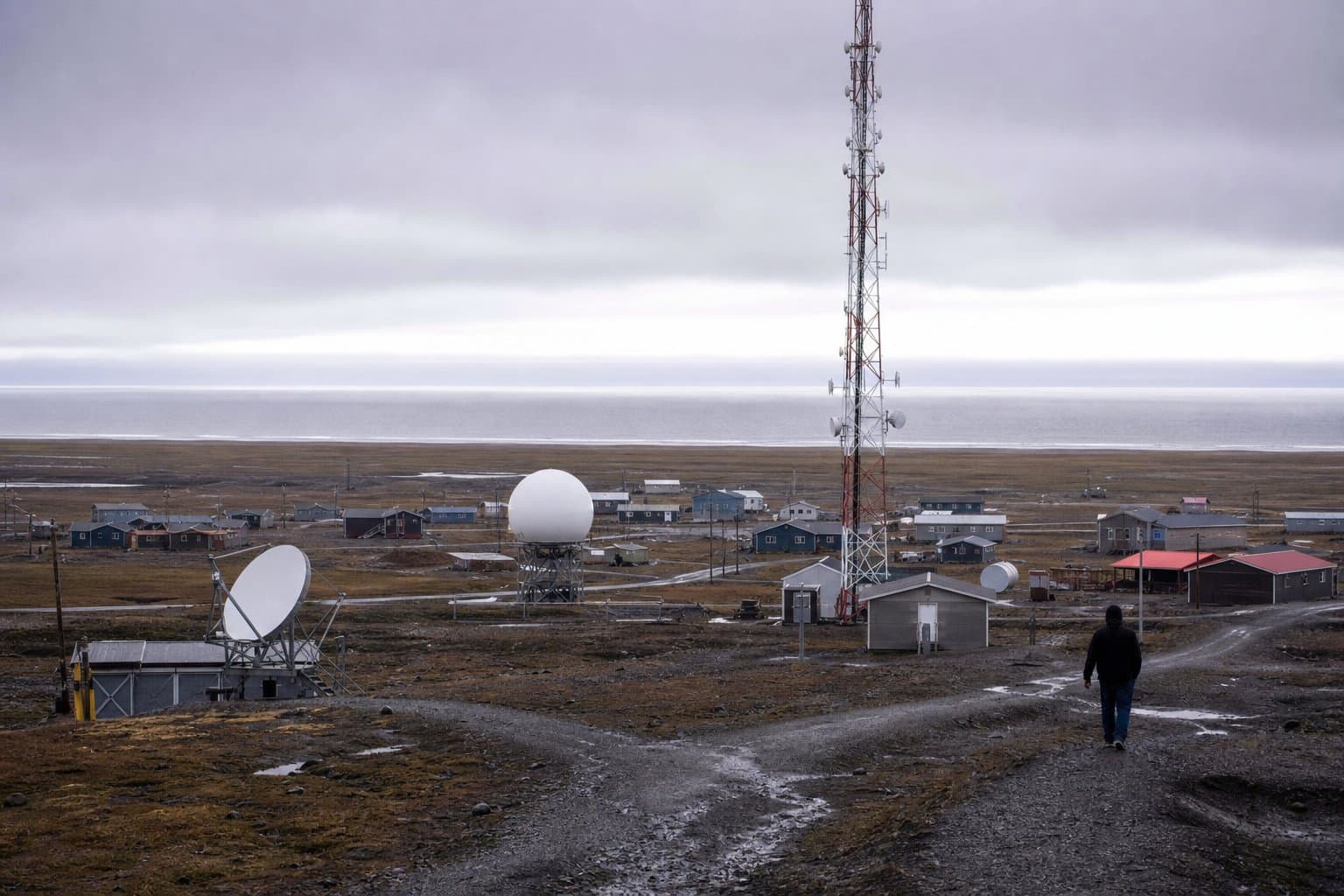
Alaska has no marine radio examiner, so UAS is asking to become one
No one in Alaska can give the marine radio license exam in person. UAS has asked the FCC for permission to do it at its Ketchikan training center.
by Melinda Communities.News2 min read
A rural Alaska phone company says a subsidy cut costs $185 per connection
Alaska Power & Telephone told the FCC that ending a rural subsidy would cost the company $1.1 million yearly across its 40 remote communities.
by Melinda Communities.News2 min read
Alaska superintendents ask FCC not to cut school internet subsidy
Alaska superintendents told the FCC that districts reachable only by plane or boat would lose the discount that makes school internet affordable.
by Melinda Communities.News2 min read
Alaska's mobile service through 2034 gets locked in next week
Alaska's mobile carriers must lock in coverage and speed commitments running through 2034 by Sept. 1, based on maps frozen at the end of 2024.
by Walter AlaskaNews1 min read
Alaska schools could face a choice between internet and teachers if a federal subsidy is cut
A federal review could cut E-Rate, the subsidy that sent $203.5M to Alaska schools and libraries last year — and school boards warn it's internet or teachers.
by Walter AlaskaNews2 min read
Cordova carrier tells FCC spectrum hoarding blocks rural broadband
Cordova Wireless told the FCC that major carriers are sitting on unused spectrum licenses over the town and won't lease them, blocking the local provider from meeting federal broadband speed standards.
by Alaska News2 min read
Small Alaska telecom warns FCC 'land rush' favors big carriers
OTZ Telephone Cooperative warned the FCC that a first-to-file rule for Alaska broadband funding favors large carriers over small rural providers, creating a race to submit applications that smaller companies cannot win fairly.
by Alaska News3 min read
Cordova Wireless challenges FCC broadband maps, says waterways and islands missing
Cordova Wireless told the FCC on May 22 that federal broadband funding maps exclude coastal waterways and islands where Alaskans work and travel, potentially cutting off support for over-water cell service residents depend on for safety.
by Walter AlaskaNews2 min readGCI to end landline long-distance service in six Southeast communities
GCI will discontinue landline long-distance service in six Southeast communities on or after August 1, 2026, citing rising facility costs, pending FCC approval.
by Walter AlaskaNews1 min read