North Slope oil throughput tops 500,000 barrels a day, ex-commissioner says
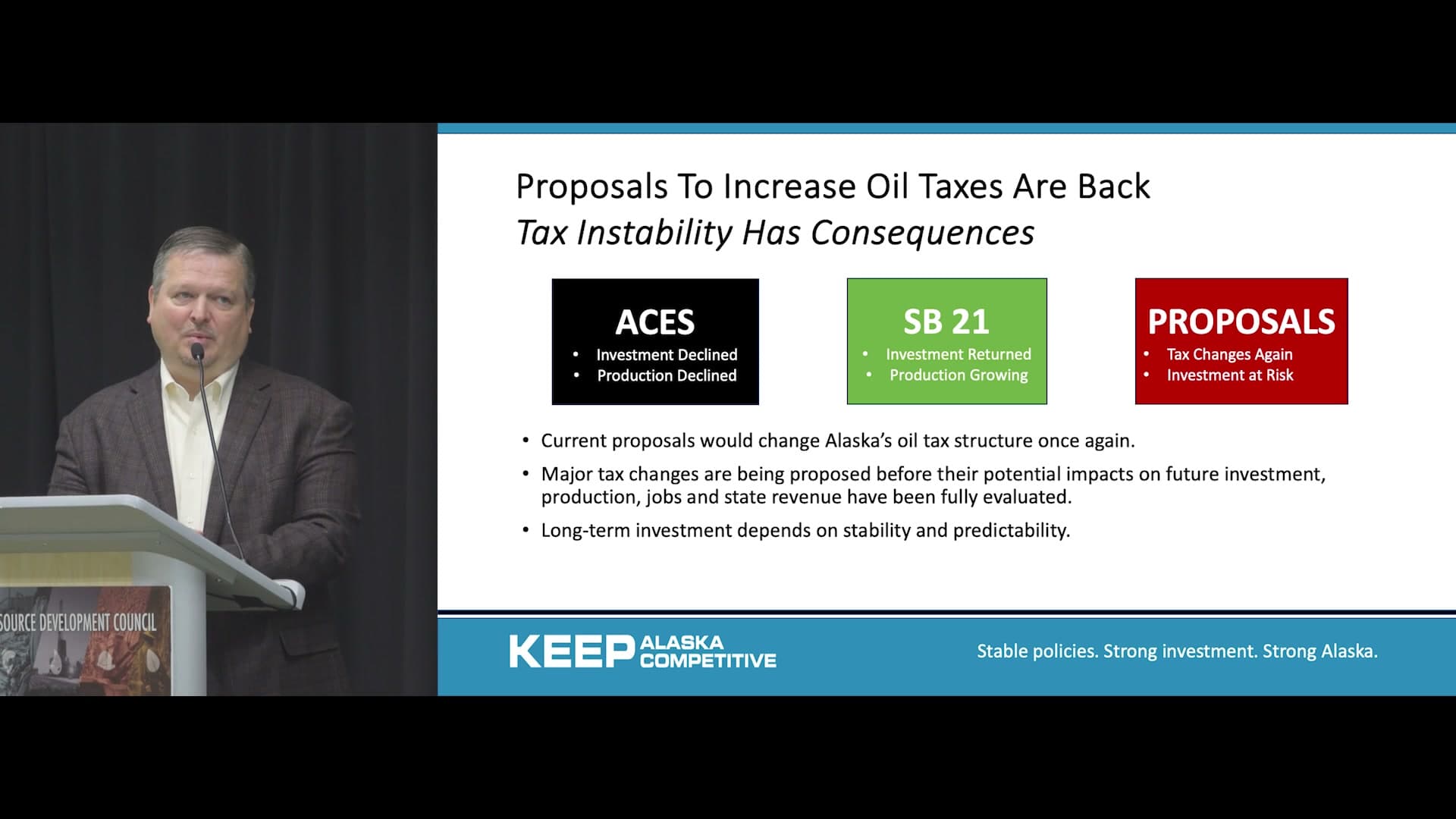
North Slope oil moving through the Trans-Alaska Pipeline System has climbed back above 500,000 barrels a day, Joe Balash told a Resource Development Council breakfast forum on Thursday, Oct. 1. Department of Revenue daily figures put Sept. 30 at 551,247 barrels, though September averaged 499,703; February 2022 was the last month to average more than 500,000. Balash, a former state Natural Resources commissioner, shared the stage with Keep Alaska Competitive's co-chairs, who are organizing against new oil taxes they expect to see next legislative session.
The state forecast 518,500 barrels a day for the fiscal year that began July 1; daily figures averaged about 454,000 in July and 457,000 in August. Balash said Pikka, which his company is developing and which began continuous production this year, had "gotten up over 70,000 barrels" the day before he spoke.
Balash noted the gains came before Willow, ConocoPhillips' National Petroleum Reserve-Alaska project, comes online. ConocoPhillips expects first oil in early 2029 and a peak of about 180,000 barrels a day, which Balash said will push the curve higher toward decade's end. The Revenue Department's spring forecast includes Willow starting in fiscal 2029.
Co-chair Jim Jansen went further: "We are now seeing forecasts in the range of 700,000 barrels per day by 2032. It could not have happened with ACES," referring to the 2007 tax system. Balash was more careful. "It's a dashed line because it's just a forecast," he said, noting the figure is risk-weighted. The spring forecast puts fiscal 2032 at about 622,000 barrels a day, peaking near 651,000 in fiscal 2034.
Because pipeline costs are largely fixed, more oil also lowers the per-barrel tariff. "Our 80,000 barrels a day from PICA is going to reduce the TAPS tariff by more than $1 per barrel," Balash said, over the first 10 years, putting the Treasury effect at "about $35 million for every $1 difference" in price realized.
The presenters credited the 2013 tax law, SB 21. "We have had 14 years of tax stability, which has reversed the production decline," Jansen said. Balash was narrower: the tax change "coincided with the drilling of a well called the Cougar 3," which discovered Pikka.
On the Alaska State Senate floor June 19, Sen. Bill Wielechowski raised a separate corporate income-tax concern: one North Slope producer pays none, leaving the state "deprived every year of $100 million, $150 million per year."
This article is based on a public meeting of Resource Development Council — RDC_2026_10_01_1 ().
AI-assisted. How we use AI Transcript byWalter AlaskaNews
Watch key moments from the source meeting. Click to expand.
Stay informed. Support what matters.
Free, permanent access to local news you can verify. Subscribe to support Bill AlaskaNews and go ad-free.
Related Coverage
North Slope oil is running below the state's forecast so far, and the price is running above it
Alaska News · 3w ago
North Slope crude runs $15 above Alaska's spring forecast, budget group says
Alaska News · 6d ago
The number that quietly sets the state budget: a barrel of oil
Alaska News · 3mo ago
Alpine pipeline seeks nearly double metering capacity for Willow-era output
Alaska News · 2w ago
North Slope pipeline company seeks to double metering capacity at TAPS
Alaska News · 4mo ago
Comments
Sign in to leave a comment.
No comments yet. Be the first to share your thoughts.