RDC_2026_10_01_1
Alaska News • • 36 min
Source
RDC_2026_10_01_1
video • Alaska News
Articles from this transcript
Gateway into the topic today. We're, we're fortunate to have the co-chairs of Keep Alaska Competitive here with us today, Jim Jansen and Aaron Schutt. They're going to talk with us about the importance of maintaining Alaska's investment climate. And I think I've been drafted to help with a couple of the slides as well. So just a little bit of an intro.
Jim is chairman of the Lynden Companies. He began his career as a truck driver. And heavy equipment operator, graduated from Central Washington with a degree in business administration. He began working in Alaska in 1967, driving a truck at the Kennecott Mine, and later served as a Navy Seabee with a tour in Vietnam. Jim joined Lynden full-time in 1970 and went on to serve as president and CEO before becoming chair.
He's an accomplished pilot. I've flown with him myself. An avid outdoorsman, and has spent decades contributing to Alaska's business, transportation, aviation, and civic communities. Aaron Schutt, as of today, is the CEO and director of Alaska Silver Corp. Uh, Schutt was the president and CEO of Doyon for the past 15 years and was with Doyon for 20 years in total.
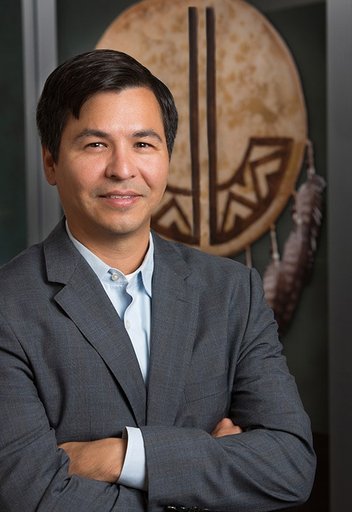
He graduated from Stanford Law School, has a Master of Science in civil engineering from Stanford, and a Bachelor of Science in Civil Engineering from Washington State University. Aaron serves on the boards of Northrim Bank, the University of Alaska, Doyon Utilities, and is chair of the board of Akela Inc. and a co-chair of Keep Alaska Competitive. He's Koyukon Athabascan, a Doyon Limited shareholder, and member of the Native Village of Tanana. He was raised in Tok. He's married to Marissa Flannery and has 3 children.
He spends his free time coaching youth hockey. Following the presentation, time permitting, we'll open the floor to questions. And if you would please help me welcome Jim Jansen.
Thank you, Joel. I want to personally thank the RDC first for having us today, but more importantly, for being an outstanding partner on these oil tax battles for the past 14 years.
I want to recognize Elizabeth Stevens, who's on the podium with us today. Elizabeth is the executive director of KEEP and has been our executive director for 14 years. She's the one that does all the work behind the scenes, makes things happen. So let's give Louise— or Elizabeth a Big applause.
So why are we here?
We expect an oil tax battle this next legislative session. We need to organize, inform, and develop a team of Alaskans to defend against new oil taxes. You know what? You know well what happens when we impose uncompetitive taxes. You remember what happened when Sarah Palin passed ACES, when with record high oil prices, investment virtually stopped.
No audio detected at 3:00
We lost more than a decade of investment with ACES and its uncompetitive taxes at a time of record high oil prices. People often ask me why I spend so much of my time and energy on oil tax issues.
I was here before we had oil on the North Slope. It was starvation. When I moved to Fairbanks in 1974, we had one line driver. Finding a load of freight to pay the bills was extremely difficult and highly competitive. I don't ever want to go back to that.
I strongly believe that if Alaska singles out the oil industry and imposes major new taxes, that future investment on the North Slope will cease. Why would they invest? We will have proved that Alaska is not a reliable partner. We will have demonstrated that we will raise their taxes for the sole purpose of paying a large PFD. There is no end to this cycle.
They can and will invest anywhere in the world where they can find reliable partners. I believe that lack of investment and the natural decline in oil production could bankrupt this state. As a minimum, it would badly damage our businesses, our jobs, and our way of life. So that's why I'm so committed to to not let that happen. 14 Years ago, we at KIPT joined the other trade groups to lobby for legislation to provide competitive oil taxes.
We later successfully fought off a referendum, and after that, a ballot initiative. We have had 14 years of tax stability, which has reversed the production decline and brought us major production increases. You probably remember, as I do, when during ACES the concern was that when production fell to about 300,000 barrels per day, the pipeline would shut down.
We are now seeing forecasts in the range of 700,000 barrels per day by 2032. It could not have happened with ACES. For the past 8 years, we've had the luxury of no major oil tax battles. The problem is our defenses have dissipated. We need to rebuild our leadership teams to defend our businesses, our jobs, our Alaska economy, and our way of life.
So how do we do that?
We need to rebuild our defenses. We need to develop leadership teams. We need to develop messaging tools. We need to organize and train our leaders. We need to be prepared to defend and respond when attacked.
That means lobbying. That means messaging. It means selecting the right political leaders, and it means talking to others.
We've started this process this year by organizing weekly lunches with presentations as a call to action. We plan on doing these luncheons every Wednesday between now and, and the holidays.
So I'm gonna go ahead and, uh, kind of stop at this point and turn it over to, uh, Aaron Schutt, our co-chair. I guess if I have one last message for all of us is this: we have a resurgence going on in Alaska. Let's don't screw it up with new oil taxes. Thank you.
Thanks, thanks, Jim. It's a really important issue that, that we've introduced here today, and that's a great intro, Jim. I'm gonna do a couple slides here and then hand it over to Joe, but before I dive into the slides, most of you know me from my time at DOYON, 20 years. It would have been very easy for me this summer to say, sorry, I'm not in this industry anymore, but I care about both our industry and Doyon, where I spent the 20 years. We are an oil and gas contractor, and I also saw how important that issue was for our business when ACES passed.
And, you know, right as I started at Doyon, we had all of our rigs working pretty much all the time, and then we didn't. And that has a dramatic impact on our business, our employees, and the whole industry.
Again, we don't want to go back to that either. We want to see things like our Rig 19 sat at Alpine for 20 straight years, drilled every day for 20 straight years. That's what we need to see. That's what the industry needs to support jobs, taxes, revenue to the state and the companies that are resident here in the state. So it's a really important issue for me.
Appreciate the chance to talk to you today about it. So let's dive in and talk about KEEP.
There's new energy and excitement on Alaska's North Slope, fueled by 12 years of stable oil tax policy. Some $14 billion of new investment is driving this renaissance, propelled by two large megaprojects, Willow and Pikka. Together, these two developments will increase production to levels not seen in two decades. In fact, the state predicts North Slope oil production will top 600,000 barrels a day by 2032. Increased production means more revenue for state and local government, the purchase of more goods and services from Alaska-owned businesses, and most importantly, increased opportunities for high-paying oil and gas jobs for Alaskans.
No audio detected at 9:30
And each direct oil and gas job supports 15 more jobs in other parts of Alaska's economy. With thousands of people working to produce first oil from Pikup by the end of the year and to bring Willow online by the end of 2029. The North Slope is booming again. Alaskans have consistently rejected higher taxes on the oil industry, choosing again and again to maintain a tax policy that is stable and fair. A tax policy that has led to the Resource Renaissance on the North Slope, which has attracted increases in investment and oil production much larger than ever expected.
Now there's full employment on the North Slope, work for our small businesses, and billions to support essential state services through taxes and royalties on this additional oil production. Alaskans have even more reasons to look forward to a stable economic future and a new role as one of the world's energy leaders. Let's continue to keep Alaska competitive and prosper. Great video. Excuse me.
So what is KEEP? For those of you who aren't familiar with our organization, we have been around for a few years and more active back when there were ballot measures and constant legislative proposals to change oil taxes. But we're a nonpartisan, broad-based group of Alaskans. You can— our membership is similar to what's in the room here today. We have trade groups, regular business people, Alaska Native organizations, unions, civic leaders, and just regular individuals that contribute to keep and participate.
Importantly, we do not accept funding from oil producers, although we do accept funding from businesses and individuals who share our vision for keeping Alaska competitive.
Our mission: Promote and preserve competitive, fair, and stable taxes on Alaska's resource industries, specifically the oil and gas industry. Through that, we want to enhance investment, jobs, and production here in Alaska and to secure Alaska's long-term economic future, because we all know how important the oil and gas industry is to the state. So here's— I'm going to hand it off to Joe, who's going to go through a few graphs and statistics, and then we'll get back up at the end.
Well, just a little qualifier. They won't take oil company money, but they'll take our time.
So I'm going to go over some of the history here, in large part because I was smack dab in the middle of it. In 2006, Alaska made a change from a gross tax system to a net tax system. One year later, Governor Palin came into office and in a political reaction put forward what was called ACES, Alaska's Clear and Equitable Solution.
Very politically charged environment in the wake of certain corruption scandals and the like, and really kind of made some quick decisions without necessarily looking at all of the metrics necessary to make a sound sound policy for the state. And so the short version is ACES took the high side and the low side and really left Alaska in a non-competitive position for a variety of reasons. Spending on the slope, the incentives in ACES were targeted at incentivizing spending, but not necessarily production. And so what we saw over the course of the next few years was a decline. And every oil field is declining every day.
When you're in the oil business, you're either growing or dying. It's that simple. And in Alaska's case, that natural decline from our legacy fields was real. But we started to see a significant change by the time 2010 rolled around. And you can see there's a change in the curvature the line there.
Meanwhile, that, that orange line is reflective of the price of oil. So we saw this tremendous spike in oil prices first in 2008 and then again in 2010 and '11. And nevertheless, our production continued to go down and it was going down at an alarming rate, 8% year on year. And we recognized by 2010, at that point I was working in the governor's office, we recognized we had a big problem. Governor Parnell tried to make some changes, crashed on the rocks of a legislature that was pretty skeptical.
And then in 2013, we were able to make a significant reform that made some adjustments. Importantly, it gave a lot of the high side back to investors and protected the state at low prices through a floor mechanism, sort of rebalancing the fiscal take system. And, and that's really where I think the story really gets interesting because as the headline here says, Alaska's been here before. We tried to go with a high tax system, and there was a consequence. Companies don't necessarily leave, but the nature of the investment changes and the production suffers as a consequence.
So how do we know ACEs was underperforming? We can take a look at what else was going on in that same period of time all around the world, and in reaction to high prices, other regimes, other locations around the world and across the United States saw investment climb. And more importantly, production climbed. We suffered the decline. We're kind of an outlier, frankly, in this graph.
And that's not because our rocks don't work. We have some of the best rocks, some of the best petroleum systems on the North Slope. The problem was we didn't have the right investment climate. Our problems aren't below ground, they're above ground. And that's something we can control through our elected representatives.
So it's, it's pretty astounding when you take a look at what was going on around the world. And then when you look at state-by-state comparisons just in the U.S. jurisdiction, North Dakota absolutely exploded with some of the tight light oil that was being developed there. We saw West Texas boom. We saw that same boom move over into New Mexico.
And really, we were far behind. Fortunately, with that change in tax policy in 2013, it coincided with the drilling of a well called the Cougar 3. Which discovered the Pika field, which my company now is developing. But it unlocked an understanding of this Nanushuk Formation. That's what we call it.
It's the Torok Topset. And that, that resource is prolific across the North Slope from east to west, especially out into NPRA. So, so as we take a look now at What has happened since that tax reform in 2013, you see over time, first the decline slowed and now here we are in 2026 and we've seen a nice little increase occur. And that's a consequence of a number of things. Starting off, we had initial investment.
No audio detected at 18:00
There was pent-up demand, if you will, projects that had been sidelined and passed over because of the poor investment climate prior to 2013 that were able to move forward. And so we saw initially this leveling off despite a very severe price crash in 2015.
2016. And as we proceeded through time, more and more understanding of this, this torok play bore out. We saw multiple other companies get involved in exploring for and finding opportunities, but we also saw a transition in some of our legacy assets, and that was from BP to Hilcorp. And, and don't need to get into the minutia of it, but if you were to look at the forecast for production from 2013 compared to what we've actually realized here, there's a significant difference. We sometimes in the industry refer to it as the Hilcorp wedge.
They were able to turn around some significant production rates in specific fields like Milne Point and really make a big difference in the contribution. But as we got to the end of the 2010s, we saw both the Pika and Willow fields move through the regulatory process and get to a point where they could be investable. And, and both of those projects ran into slight delays, either as a consequence of a change in policy at the federal level or through the consequences of the price crash associated with COVID Nevertheless, companies overcame those hurdles. And here we are today seeing production creep up over 500,000 barrels per day, first time since February of 2022. That, that we're seeing that rate of production and throughput in TAPS.
And, and as, as we look out here, I mean, this is before Willow's even come online, and Willow's a massive project. It's going to have really big rates. And, and so when, when that throughput starts coming online, you can see here at the end of the decade, we really start to move, move up the curve. There are more projects, more opportunities. To come.
It's a dashed line because it's just a forecast. This comes from the Department of Revenue sources book, and I can tell you there's a lot of optimism within the industry for what we can do with these, these Nanushuk formations, these Torok Topsets. That's a line. It's a a forecast, but it's, it's risk weighted. There's a certain degree of caution that the state exercises when putting these forecasts together.
That's not to say that's what Alaska's potential is, strictly speaking, but it is an opportunity. And you can put more money in the state treasury one of two ways. You can tax it or you can sit and wait and let production grow and really start to see a big difference in the Treasury deposits.
So, so what were those investments? One of those came online here the prior, prior to last year, even, Nuna. And that's a project that way back in 2014 when I was Commissioner of DNR, we actually looked at doing royalty relief for Nuna. That's, that's how difficult things looked. And, and that ultimately didn't come to fruition.
And, and finally it wound— the, the rocks wound up in the hands of Conoco and they took that project to final investment. It's now producing oil in, in on that's on the slope and coming down taps. Pica, of course, we started up continuous production earlier this year. I have not seen today's numbers, but yesterday we had gotten up over 70,000 barrels. So pretty excited about that.
And, and of course, Willow is, is under development. And when they, when they enter the fray, it's going to be a big splash in the pool. And why is production important? Well, TAPS is, is a regulated pipeline. It's got a certain amount of fixed costs, fixed return for the owners of TAPS.
And so when you put more barrels in that pipeline, the rate that they charge, the tariff goes down on a per barrel basis. What we've looked at is our 80,000 barrels a day from PICA is going to reduce the TAPS tariff by more than $1 per barrel. In the first 10 years. Well, that's like a dollar per barrel increase in the price. So that flows through royalties, production taxes.
Every shipper on TAPS is going to realize a benefit from that reduction. And, and from the Treasury standpoint, it's about $35 million for every $1 difference in the, in the price realized. So, so that's going to be a big difference in how the state estimates its revenue going forward. You really can make your per barrel deposits into the Treasury better if you have more production, and that's the name of the game. So we— I mentioned a couple other things here.
Milne Point, thanks to Hilcorp, has gone from 18,000 up to 50,000 barrels per day. That's a remarkable comeback for a very mature field. And it can't go without comment, but the NPRA lease sale earlier this spring saw the reentry of our good friends at Shell. They have like a 10-year cycle. They leave Alaska, they come back to Alaska.
And, and so we're pleased that they're back and looking forward to their efforts with their partners at Repsol. And we saw ExxonMobil enter the bidding, which is a remarkable accomplishment or event, as it were. But it's reflective of the fact that, A, the rocks are attractive and, B, the investment climate is set at a way that is going to attract investment and attract capital. So very excited about those things. And And as we, we look ahead, you know, we've been dipping down the last couple of years in the 400,000 barrel a day range going through TAPS.
We've, we've come back up over 500 and look to be headed towards 600 in the very near future. And that's, that's a fantastic outcome. So I think with regard to some of the proposals that Jim mentioned, we've been through this cycle. We were in the ACES period. We saw the results.
The state reacted to that. The legislature reacted to that through SB 21. But we've had a very anti-tax governor, anti-fee increase governor for the last 8 years. And he's really been able to hold the line.
There have been proposals in the legislative arena that would increase our tax policy, undermine investment. And in fact, there was one committee substitute that went through the Senate Resources Committee just back this spring. And the fiscal analysis from the Department of Revenue said that that change would make every field on the North Slope uneconomic, every single one. So there are people in Juneau who hold gavels who think that's a good idea, um, and, and they only think that's a good idea because they're not hearing the other side. Um, and so, um, we, we, we know we're getting a new governor here, uh, in the November election.
Don't necessarily know exactly which one, although The writing's on the wall. And so now the question is, what's going to happen when we've got new faces in new places and, and that conversation picks up again? So I think back to Aaron.
Yeah, this slide summarizes it. The recent gains were decades in the making, or at least a decade.
And higher oil prices and an election cycle sometimes contribute to people wanting to tax more to do things like increase the PFD. But we, again, we've seen what happens when those proposals succeed in Juneau. And the result in the future, if a similar proposal passed, is predictable. It's certain, really. So future changes, and there will be future changes in oil taxes, they need to be deliberate, data-driven, and conscious of what we've hopefully learned as a state through ACES and other proposals in the past.
Again, we don't want to repeat mistakes we've made in the state in the past.
We definitely don't want an ACES era of 10 years of non-investment and what it takes to come back from that. I like to remind the DOI board when I was there of, as important as oil is in the state, how much of a bit player we are in the world. We produce right now 500,000 barrels a day. In the United States, it's 12 million barrels a day. So we're not even 5% of US production.
At one time, we were about half of US production. In the world, it's 120 million barrels a day. That's just a couple of weeks of production from a very large field in Alaska. Investment will flee to the jurisdictions where the investment climate and the rocks come together. And we need to remember that.
Again, we're blessed with the rocks, but we have some challenges with logistics and cost and environment here, so our projects take more time.
What can we do? What can you do? That's why we're here today. That's why we were at Madsen yesterday talking to group of company employees. We want to talk about this issue before it comes before the legislature or the new governor.
We want to make sure everyone has their facts. We want to make sure everyone has information. Keith and Elizabeth can share information with you. We're very happy to come to your company, your Rotary, whatever group you have, and talk to your friends and family, and we hope you do the same to educate people. We hope you call legislative candidates or email them and ask them about their position on these issues.
Hopefully they have well-informed positions. If not, maybe we can help inform them either before they're elected or after.
There's one up here that always makes me laugh, the Be Social, because I have no social media, but somebody will. So if you— if that's your thing, please use those Various social media platforms, I know they're very effective. Elizabeth helps us with ours.
So again, reach out to us, help us talk to your employees or your various groups, and let's keep this message going forward.
And then, do we have time for questions?
We have about 10 minutes for questions. Joe, in 1973 when Congress passed the oil spill, the right, they passed the right to build a pipeline, they created a fund, a nickel a barrel up to $100 million. It's called the Oil Spill Liability Trust Fund. And then 1980 came along, Exxon Valdez, et cetera. It got to 9 cents a barrel.
And the cap was $10 billion. And they just, within this last year, they just capped it out at $10 billion. So no longer does the oil company have to pay 9 cents a barrel to go through TAPS. Now that ought to help some investment client.
I think you've spent enough time around politicians, Jack, in the course of your career to know that a pot of money doesn't go unmolested for very long.
So you're right, there, there are certain fees that turn off and on depending upon the fund balance. But, and, and make no mistake, every bit matters. So hopefully we'll see stability there. But I can tell you that on the state side There are proposals on ways to authorize additional uses of that fund to support ongoing operations at various agencies and communities. So, you know, the hunger for dollars remains.
Joe, I've got a question preceded by a statement. In the halls of Juneau, there are people that do hold gavels that cannot wait to get back to the halcyon days of ACES. Teachers unions want to get back to the time when we had the highest education funding per student ever. They lament SB 21. It's the devil in some circles.
So there's an old saying that there's two things that are important in politics. One is money, and I forget the other one. So I want to ask everybody here, who votes? Who's registered to vote and who votes? Raise your hand.
That's your left. See a lot of left hands. Take your right hand out. How many of you write checks to candidates who support your industries? One, two, three, everybody.
Every hand should rise. This is all good social information and staying informed and talking about it. If you want to elect people who will enact policies to protect your industry and Alaska's prosperity, write a check. Give them money. Thanks.
No questions. So please, no questions. Sorry.
I'm curious, the people that are looking to raise the taxes in these different committees, is Keep Alaska trying to get in front of them? And what, you know, what are you doing to do that? So, um, when it comes to Juneau, uh, the, the inside game, as it were, um, there's, there's plenty of expertise on hand and available to legislative committees. In this particular instance, they made the change in question without hearing from a single witness that had any expertise. They took one segment of public comment that was general public, did not have any invited witnesses from any company, from any trade association, from any economist, and they had their minds made up as to what they were gonna do.
It was disconnected from any sort of reality. And that was a majority of the Senate Resources Committee.
Fortunately, it didn't go further than that. But, but that's an indication of where at least one block of votes is in that particular body.
All right, we're not going to prolong the agony. I want to thank everybody for, for being here. Thank you to Connor and Jennifer, the team at RDC, and Lauren. We're, we're back in the swing of things, and if you haven't registered for conference already, please do so. It'd be even better if you chose to sponsor.
So, have a great weekend.
No audio detected at 36:00