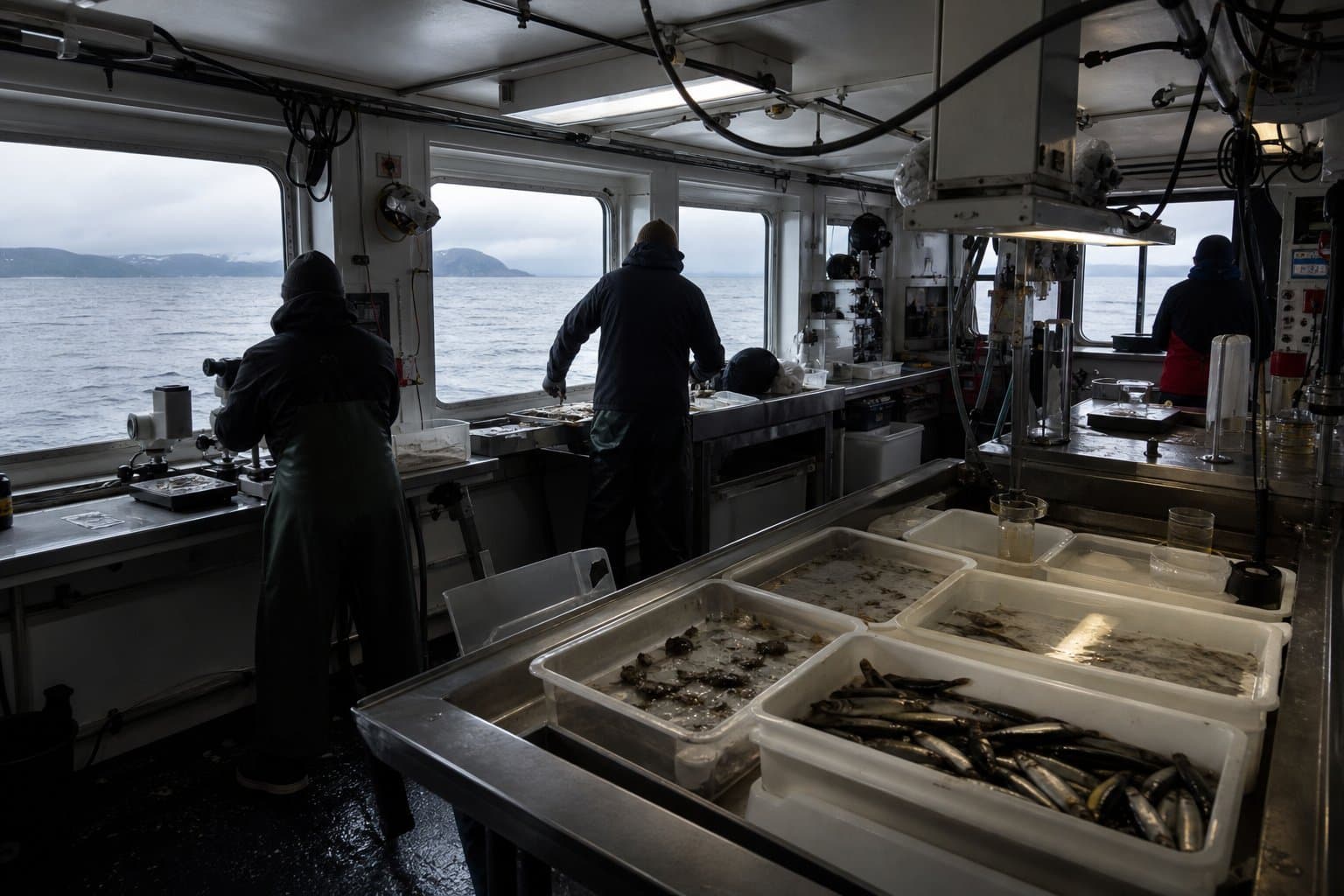
NOAA study finds 41% of capelin examined can spawn more than once
In a new NOAA study, 41 percent of the Pacific capelin examined carry the biological capacity to spawn more than once, a finding that could reshape how scientists forecast the health of a species that Steller sea lions and humpback whales depend on for food and that researchers use as an early signal of changing ocean conditions.
The research, conducted by NOAA Fisheries' Alaska Fisheries Science Center, revises a working assumption: that capelin, like Pacific salmon, are semelparous, meaning they spawn once and die. Iteroparity, the capacity to spawn across multiple years, had not been documented in the Pacific population before this study. Scientists examined ovarian tissue under a microscope; fish carrying both immature and maturing oocytes retain the capacity for a later spawn. Cara Rodgveller, a research fisheries biologist at the center, was lead author.
What is at stake is forecasting, not harvest. Understanding capelin's reproductive flexibility under fluctuating ocean conditions is crucial for predicting their annual reproductive potential and long-term resilience, the agency said. Capelin are not commercially harvested in the northeast Pacific, which makes them an unbiased indicator of environmental change, and they serve as a primary food source for Steller sea lions and humpback whales. During marine heatwaves, center scientists estimated that energy available to predators from capelin fell to less than 1 percent of the maximum in the Bering Sea. "We've learned that warmer ocean conditions appear to disrupt the typical capelin life history," the center said in its accompanying feature story, which reports that Gulf of Alaska capelin spawned at one year old instead of two during the 2014 to 2016 heatwave.
The 41 percent figure sits between two benchmarks: beach-spawning Atlantic capelin in northern Norway show rates up to 60 percent, while Atlantic demersal spawners are entirely semelparous. Rates among wild Pacific capelin remain unmeasured. Researchers plan to design field sampling around spawning windows using observations from Alaskans around the state.
AI-assisted, reviewed by editors. Spot an error?
Stay informed. Support what matters.
Free, permanent access to local news you can verify. Subscribe to support Melinda Communities.News and go ad-free.
Related Coverage
Heatwave-driven mortality identified as key cause of Yukon Chinook crash
Alaska News · 1mo ago · 77% match
Satellite Tags Track Pacific Cod Shifts in Warming Bering Sea
Alaska News · 1mo ago · 77% match
How bubbles can throw off the sound Alaska uses to count its fish
Alaska News · 4w ago · 74% match
The little Kachemak Bay lab watching Alaska's ocean for 70 years
Alaska News · 1w ago · 74% match
A permit to study 14 Alaska marine mammal species is up for comment
Alaska News · 2w ago · 74% match
Comments
Sign in to leave a comment.
No comments yet. Be the first to share your thoughts.