AI image
Heatwave-driven mortality identified as key cause of Yukon Chinook crash
A peer-reviewed study gives Yukon River communities and fisheries managers new insight into why Chinook salmon runs collapsed to their lowest recorded levels between 2019 and 2023: heatwave-associated increases in natural mortality killed fish at the post-juvenile stage before they could return as adults.
The study, published in Ecological Applications, used life-cycle modeling to isolate the drivers of the crash. "Elevated post‐juvenile natural mortality has emerged as an important constraint on contemporary productivity dynamics, acting in conjunction with low juvenile recruitment to drive the most recent and precipitous drop in abundance," the authors said.
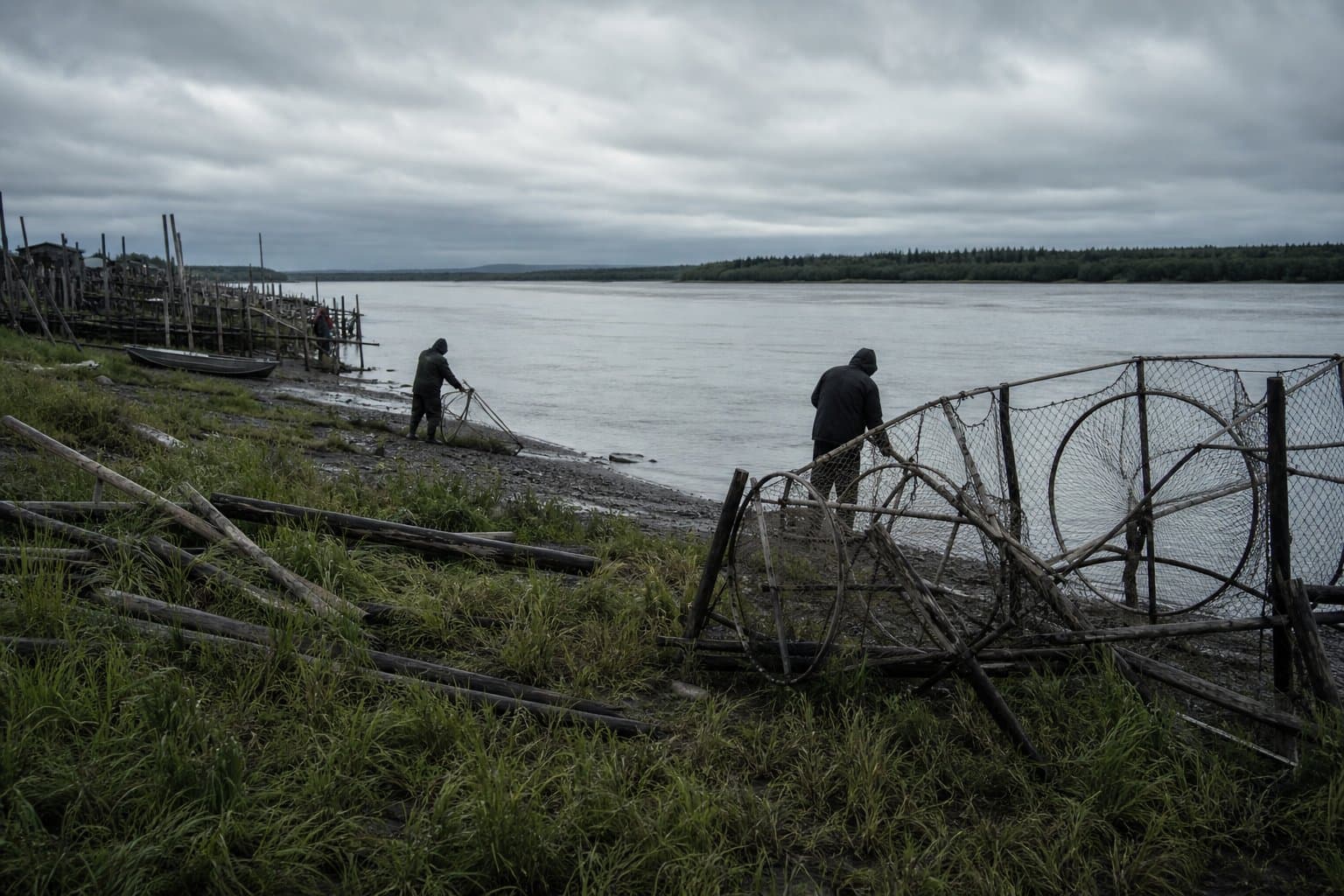
For Alaska Native villages along the Yukon, the collapse has meant years without meaningful subsistence harvest, with impacts extending to culture and livelihoods. Harvest closures have been in place across much of the drainage.
What the Study Found
The management implication is direct and uncomfortable. The study projects that recovery is unlikely if elevated natural mortality persists, but improves if mortality returns to or below median pre-2016 levels. "The significance of post‐juvenile natural mortality is particularly evident from our projection analyses, in which it exerted a strong limiting influence on recovery outcomes," the authors said. In-river harvest restrictions, the primary tool managers have used, address only one part of the mortality equation.
The study does not dismiss other mortality sources but frames elevated post-juvenile natural mortality, linked to anomalous ocean conditions following a marine heatwave, as the dominant constraint in the 2019-2023 period. NOAA Fisheries climate researchers studying Snake River Chinook have said that "the ocean's rising heat content pushing up sea surface temperatures" is closely correlated with increased salmon mortality across the North Pacific, suggesting Alaska's management challenges are part of a wider crisis where freshwater and harvest controls alone may not be sufficient.
Based on a press release.
AI-assisted. How we use AI
Stay informed. Support what matters.
Free, permanent access to local news you can verify. Subscribe to support Maggie AlaskaNews and go ad-free.
Related Coverage
Yukon River gillnet closures spread as Chinook and chum run far below average
Alaska News · 3mo ago
Yukon River sport fishing closed for kings and chums through 2026 as seven-year rebuilding effort continues
Alaska News · 4mo ago
Yukon salmon conservation rules are now locked into state regulation, not left to managers' discretion
Alaska News · 1mo ago
Federal managers close Yukon, Innoko gillnets to protect Chinook and chum
Alaska News · 3mo ago
Yukon Chinook count at Eagle stands at 1,633, a third of average; ADF&G launches telemetry study
Alaska News · 2mo ago
Comments
Sign in to leave a comment.
No comments yet. Be the first to share your thoughts.