AI image
NOAA is still testing groundwater in the Pribilofs, decades after it left
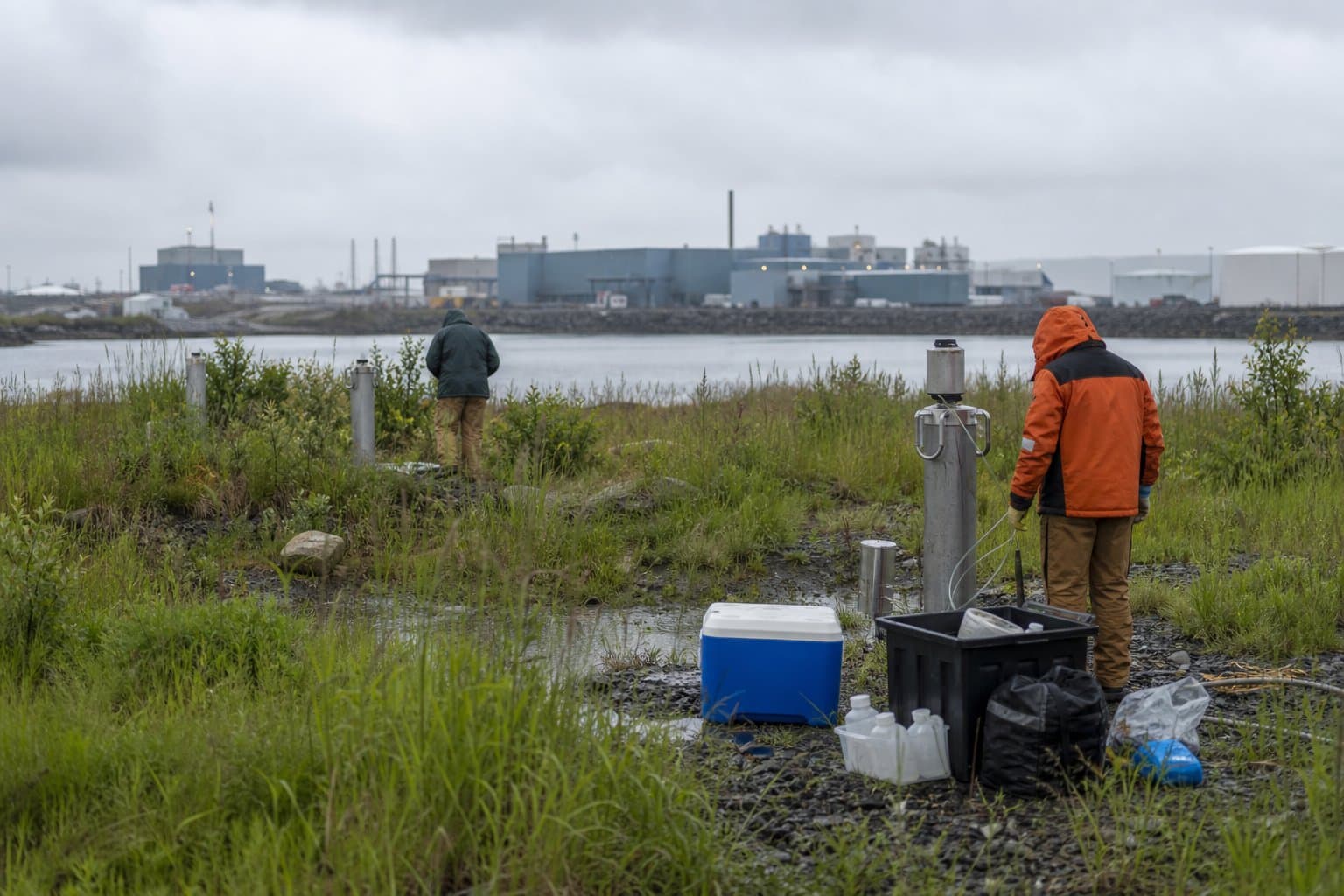
NOAA is paying to keep testing groundwater for contamination left behind by the federal government's century of running the Pribilof Islands.
The agency awarded a $186,644 contract Aug. 17 to Ahtna Solutions LLC, an Anchorage-based 8(a) Alaska Native corporation contractor, for long-term sampling and contaminant trend evaluation through Jan. 31, 2028. The work covers wells under the two-party agreement and an underground storage tank identified as National Marine Fisheries Service Complex UST No. 2.
The two-party agreement is the 1996 Pribilof Islands Environmental Restoration Agreement between NOAA and the State of Alaska. It committed the federal government to clean up what it left on St. Paul and St. George.
There was a great deal to clean up. Russian traders brought Unangax̂ people to the islands from the Aleutians in the 18th century to harvest and process northern fur seals, and the United States took over that operation when it bought Alaska in 1867. The Unangax̂ who lived there were wards of the government, made to work the harvest, until Congress returned local control in 1983. The end of federal management came abruptly, leaving two communities whose economies had depended on it entirely.
By 1997 NOAA had removed thousands of tons of cars, trucks, tractors, barrels, storage tanks, batteries, scrap metal and tires. Starting in 2002 the work shifted from surface debris to contaminated soil and groundwater. NOAA's restoration office ran the project from 1999 to 2008 and reported completing all 60 sites on St. Paul and all 36 on St. George.
The wells are what remains. Depth to groundwater on St. Paul runs between 27 and 79 feet, and monitoring continues at sites where contaminated soil was removed but the groundwater beneath it is still being watched.
Some of the contamination is not NOAA's to address. Several sites sit against former defense sites, and federal law bars NOAA from spending Pribilof restoration money on military cleanup.
The contract posting does not name the contaminants or state where the complex is located.
Source: Department of Commerce, Department of Commerce: Department of Commerce: AHTNA SOLUTIONS, LLC for NOAA IS REQUIRED BY THE ALASKA DEPARTMENT OF ENVIRONMENTAL CONSERVATION (ADEC) T ($186,644).
AI-assisted. How we use AI
Stay informed. Support what matters.
Free, permanent access to local news you can verify. Subscribe to support Alaska News and go ad-free.
Related Coverage
NOAA is paying $735,000 for more cleanup at a site Alaska will not close
Alaska News · 3w ago
State gets new federal grant to oversee monitoring at Amchitka nuclear test site
Alaska News · 4d ago
A Native corporation's cleanup arm is monitoring a fuel spill in the Sound
Alaska News · 1mo ago
FAA hires Calista-owned firm for next round of decades-old Cold Bay fuel cleanup
Alaska News · 1w ago
NOAA pays $1.57 million for samples from subsistence-harvested seals
Alaska News · 1mo ago
Comments
Sign in to leave a comment.
No comments yet. Be the first to share your thoughts.