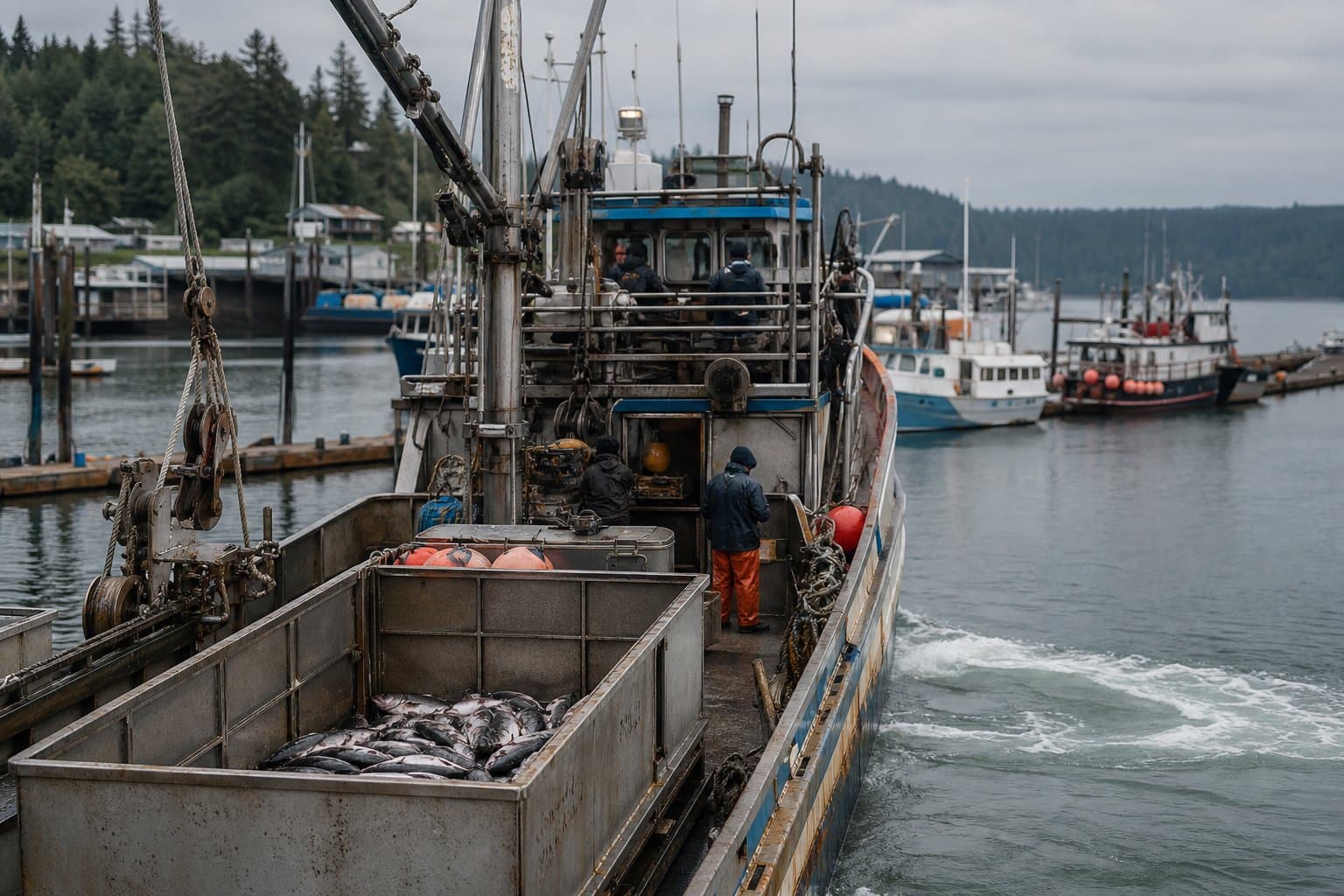
AI image
NOAA Fisheries declined to list Gulf of Alaska Chinook under the ESA
NOAA Fisheries determined this month that Gulf of Alaska Chinook salmon do not qualify for listing under the Endangered Species Act, concluding the stocks are not currently in danger of extinction and are not likely to become so within the foreseeable future. The decision, published May 14, 2026, responds to a petition from the Washington-based Wild Fish Conservancy that sought ESA listing and critical habitat designation for three evolutionarily significant units of Gulf of Alaska Chinook. NOAA's review began with an April 2024 90-day finding that the petition presented substantial information warranting a full status review; the 12-month finding completes that review.
"Gulf of Alaska Chinook salmon do not meet the definition of an endangered or threatened species and do not warrant listing under the Endangered Species Act at this time," NOAA Fisheries said.
The decision lands inside an Alaska Chinook picture that has been documented as concerning across multiple systems. Yukon River Chinook returns have been in long-term decline, prompting multi-year subsistence and commercial closures. Cook Inlet sport Chinook fisheries have been closed across recent seasons; the Little Susitna and the broader Susitna drainage are currently closed, with the Eklutna Tailrace remaining the only open Mat-Su king salmon option this season. The Pacific Salmon Treaty's 2019 Chinook chapter reduced Southeast Alaska troll allocations. NOAA's conclusion is that despite these system-by-system pressures, the three Gulf of Alaska Chinook ESUs do not meet the statutory threshold for ESA listing.
The substantive stakes are real. An ESA listing would have triggered Section 7 consultations on every federal action affecting Chinook habitat — fisheries management, infrastructure permitting (including projects like Alaska LNG and Donlin Gold), federal land management, and military activity. Listing typically also imposes additional harvest restrictions and habitat protections beyond existing state management. The non-listing decision keeps management at the state level, primarily through the Alaska Department of Fish and Game and the Alaska Board of Fisheries, with continued federal involvement through the Pacific Salmon Treaty and the Federal Subsistence Board on federal waters.
The decision is likely to face legal challenge. The Wild Fish Conservancy has a documented history of Pacific Chinook litigation, including past challenges to Southeast Alaska troll fishery harvest practices on grounds related to listed Lower 48 Chinook stocks. Whether this 12-month finding survives judicial review will shape Alaska Chinook management going forward.
Source: Alaska Board of Fisheries ().
Drafted with AI. Edited by Cale Green (1 revision). No full editor review is on record. Who is accountable.
Stay informed. Support what matters.
Free, permanent access to local news you can verify. Subscribe to support Bill AlaskaNews and go ad-free.
Related Coverage
Federal Decision Keeps Chinook Management in Alaska's Hands
Alaska News · 4mo ago
Hatchery groups cite NOAA Chinook decision as validation
Alaska News · 3mo ago
Alaska Board Rejects 25% Hatchery Production Cut After Heated Debate
Alaska News · 5mo ago
Alaska Fishermen Report Salmon Declines Amid Bycatch, Management Concerns
Alaska News · 5mo ago
Alaska's kings are down almost everywhere — here's the picture
Alaska News · 2mo ago
Comments
Sign in to leave a comment.
No comments yet. Be the first to share your thoughts.