Photo by Putulik Jaaka on Pexels · Source
NOAA awards Fish and Game $1.57 million for ice seal and sea lion monitoring
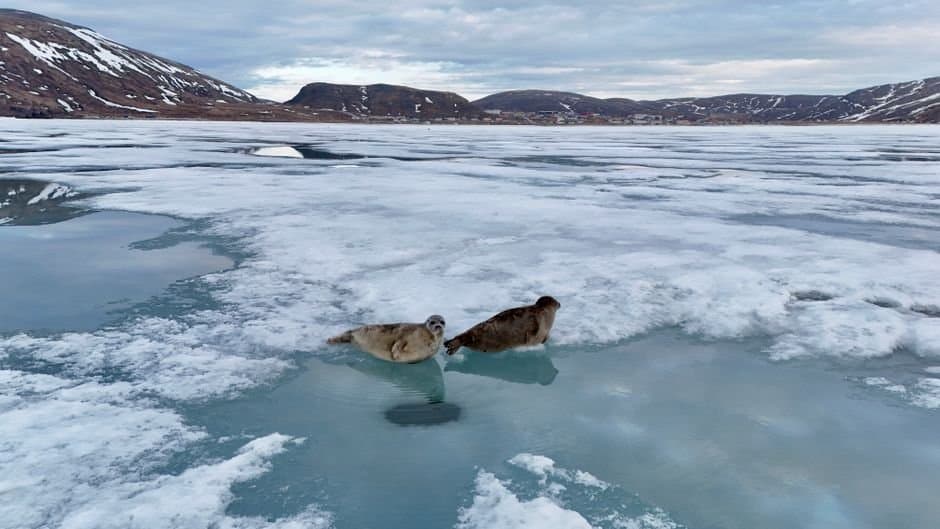
NOAA will pay the Alaska Department of Fish and Game $1.57 million over three years to sample ice seals that Alaska Native hunters take for subsistence in the Bering, Chukchi and Beaufort seas.
The cooperative agreement, NA26NMFX439C0002, runs Sept. 1, 2026, through Aug. 31, 2029. The money funds the department's Pinniped Data and Monitoring Program. Samples from harvested seals track population status and health, with a focus on ringed and bearded seals. The award record does not break out the per-year value.
The same agreement pays for Steller sea lion counts. Fish and Game will survey haulouts and rookeries in areas with sea lion populations within Alaska, using aerial surveys, unmanned aircraft systems and remote cameras. Steller sea lions were listed under the Endangered Species Act in 1990. The western distinct population segment remains endangered after declining roughly 77 to 81 percent between the 1970s and the early 2000s. The eastern segment was delisted in 2013.
A companion award in the same cluster gives the Aleut Community of St. George Island $99,451 to continue co-managing northern fur seals and Steller sea lions with the National Marine Fisheries Service, under an agreement first signed in 2001. That work is authorized by Section 119 of the Marine Mammal Protection Act, added by Congress in 1994. The Fish and Game record does not cite the section. NOAA Fisheries describes it as allowing the agency to "establish agreements with Alaska Native Organizations (ANOs), including, but not limited to, Alaska Native Tribes and tribally authorized co-management bodies." The Ice Seal Committee, which represents five Alaska Native regions, formed in 2004 and signed a co-management agreement with NOAA Fisheries on Oct. 25, 2006, covering ringed, bearded, ribbon and spotted seals.
The program depends on hunters volunteering samples and harvest information. A 2019 ADF&G report for the Ice Seal Committee found that "Alaska Natives fear that reporting their subsistence harvests could get them in trouble and thus are reluctant to volunteer such information."
The award record is a federal spending entry. It carries no statement from Fish and Game, the Ice Seal Committee or any hunter.
AI-assisted, reviewed by editors. Spot an error?
Stay informed. Support what matters.
Free, permanent access to local news you can verify. Subscribe to support Maggie AlaskaNews and go ad-free.
Related Coverage
NOAA awards $99,451 to St. George Island tribe for another year of seal monitoring
Alaska News · 1h ago · 88% match
Mercury in Western Aleutian sea lion pups exceeds safety thresholds, prompting $1.5M NSF study
Alaska News · 4w ago · 81% match
North Slope bearded seal hunters asked to save jaws for 2026 study
Alaska News · 1mo ago · 80% match
NOAA is still testing groundwater in the Pribilofs, decades after it left
Alaska News · 2d ago · 80% match
A permit to study 14 Alaska marine mammal species is up for comment
Alaska News · 3w ago · 79% match
Comments
Sign in to leave a comment.
No comments yet. Be the first to share your thoughts.