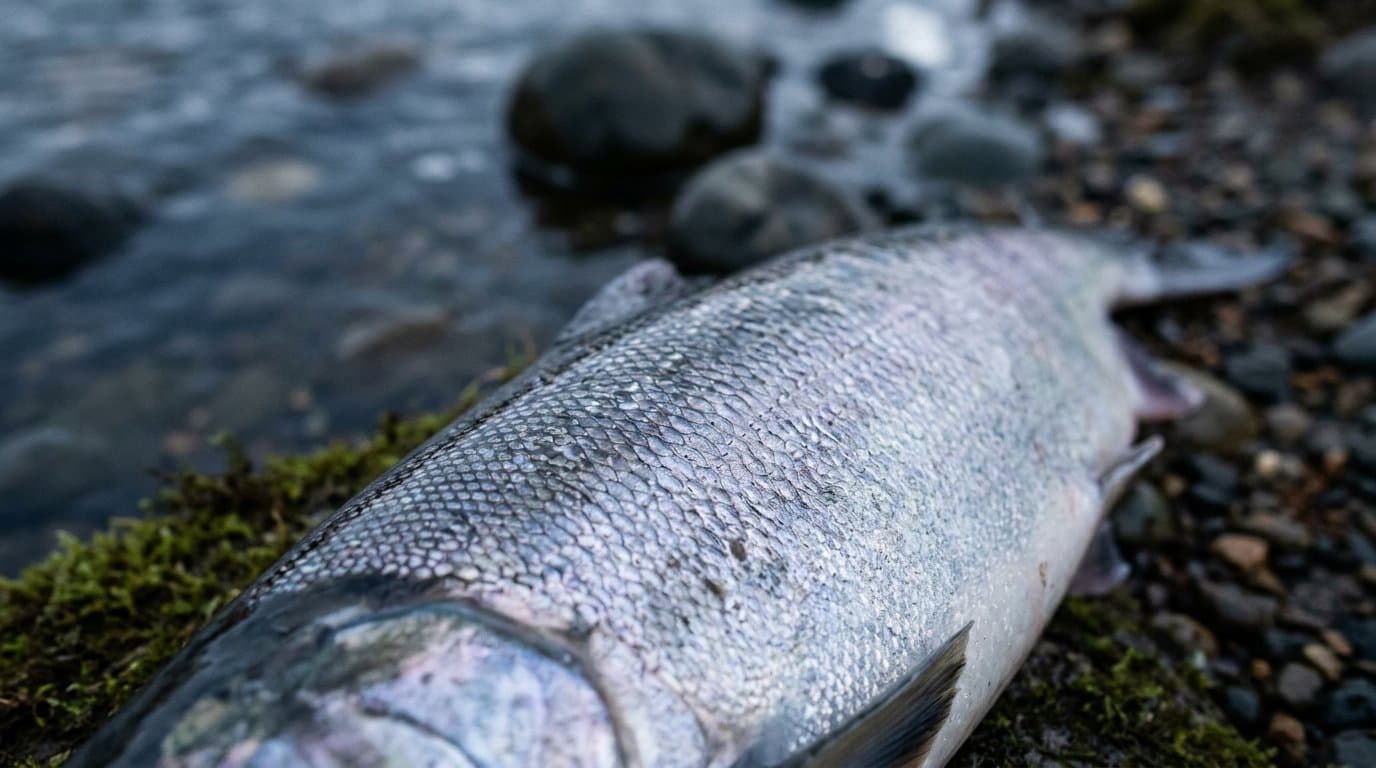
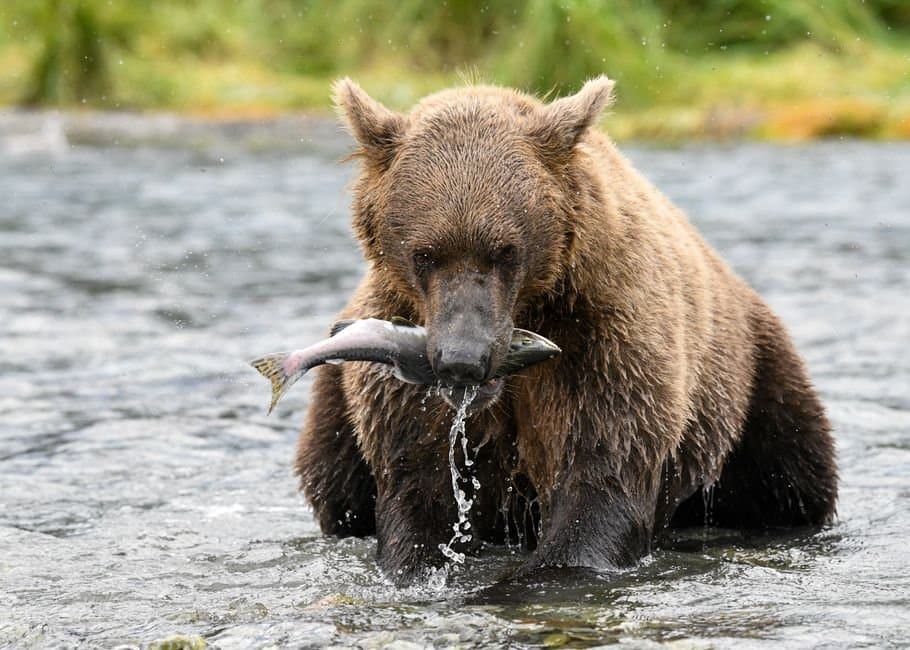
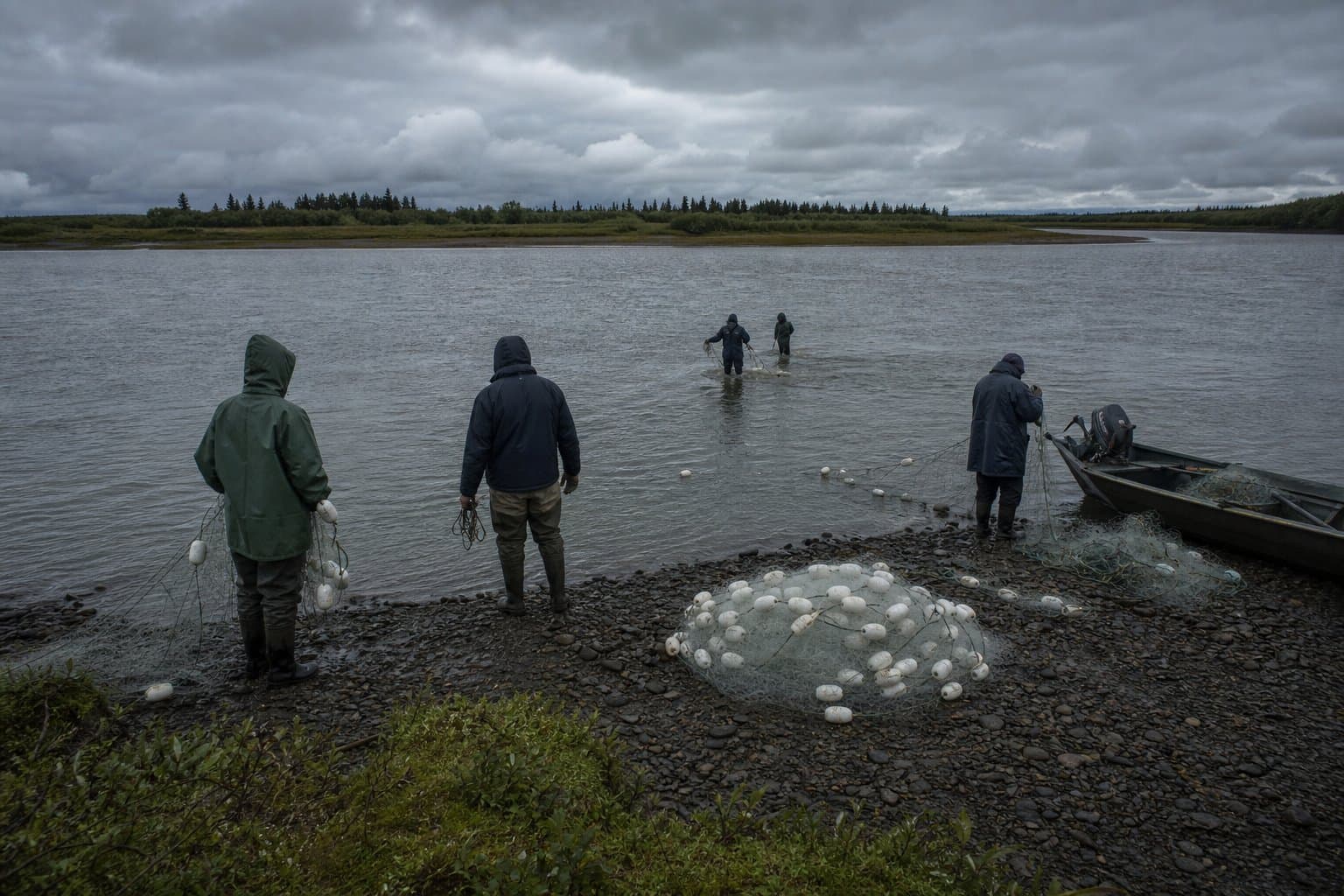
AI image
Kuskokwim River had no commercial fishery this year as bay catch stays confidential
The Alaska Department of Fish and Game offered no commercial salmon fishing on the Kuskokwim River this year, according to a preliminary season summary the department released Tuesday.
No commercial buyers or processors operated on the river. With Chinook and coho below average and subsistence harvests limited, the summary says, the state "was unable to offer commercial harvest opportunity."
The river has had no large-scale commercial processor since 2016, according to a department report. In 2025, also without a buyer, the department opened August coho periods to fishers registered to sell their own catch to their own markets. This year had no openings, the first year without a river fishery in a department harvest table that starts in 1998. Commissioner Doug Vincent-Lang's Sept. 15 letter to NOAA Fisheries says no commercial or sport harvest of river Chinook took place this year.
Kuskokwim Bay's First Fishery Since 2021
Kuskokwim Bay had its first commercial fishery since 2021. The fishery ran July 7 to July 31 and targeted sockeye, with 20 periods in District 4, near Quinhagak, and 21 in District 5, near Goodnews Bay. Department announcements list one registered processor, WildFish Marketing.
Because fewer than three processors registered, this year's catch and value are confidential. The latest published figures, from 2021, show 74 permits and about $357,000 in District 4, and 13 permits and about $136,000 in District 5.
The summary says some opportunity went to coastal community members affected by Typhoon Halong, and the Bethel Community Services Foundation bought incidentally caught Chinook and chum for food bank protein boxes.
The department delayed the opening to protect Chinook, and the first two periods had area closures. Commercial openings generally came with a subsistence closure in the same district. Aerial counts put sockeye above goal on the Kanektok, at 55,260, and the North Fork Goodnews, at 50,344. Chinook was within range on the Kanektok at 4,968 and just above range on the North Fork at 3,541.
Chinook Run Fell Short
The preliminary Chinook run estimate for the river is 117,811, below a forecast the summary gives as 128,000 to 200,000. The confidence interval runs from 105,728 to 129,893, so its upper edge reaches the forecast range.
Escapement, the fish that pass the fisheries to spawn, still met the drainagewide goal: an estimated 87,251, inside 65,000 to 120,000 and the lowest in the state's table since 2014.
Vincent-Lang's letter projects a total Chinook harvest of 30,560, against the 67,200 to 109,800 the state lists as necessary for subsistence. The 2025 harvest was 52,367. The projection is scaled from partial in-season counts; the summary says postseason subsistence harvest surveys were not done this year because of a loss of funding.
The department estimated Chinook escapement at one weir, on the Kogrukluk River, against four in 2025. That weir missed goal for all three species it estimated: 3,231 Chinook against 4,800 to 8,800; 3,992 sockeye against 4,400 to 17,000; and 11,362 chum against 15,000 to 49,000. Coho escapement was not estimated anywhere.
Vincent-Lang's letter says high water and poor survey conditions kept the department from reliable information at most weirs.
The Kuskokwim River sonar showed a split season: about 558,000 chum, more than double the 2018 to 2025 average and the highest in the table; about 498,000 sockeye, the lowest of the nine years listed; and about 164,000 coho, against an average of 267,668. An Oct. 7 U.S. Fish and Wildlife Service memo calls the sockeye run "lower than the 5-year average but still abundant to allow for fishing opportunities."
That federal agency managed lower-river subsistence fishing on the main stem from June 1 to July 13, and an emergency action closed the river to coho harvest and gillnets from Aug. 12 to Sept. 15. The memo, from Peter Fasbender, says chum harvest "was not close to meeting the amount necessary for subsistence" and that coho harvest also fell short.
The Kuskokwim, Upper Yukon and Unalakleet counts feed a three-river Chinook index, which came to 155,860, below a 250,000 threshold. The Kuskokwim makes up about three-quarters of it. Vincent-Lang's letter says that places the Bering Sea pollock fishery, whose nets also catch Chinook, under a low performance standard and a hard cap on Chinook bycatch for the following year. NOAA Fisheries lists this year's limit as 45,000 Chinook.
The Kuskokwim River Inter-Tribal Fish Commission said Tuesday that applications are open for relief from the 2022 Kuskokwim fishery disaster. Relief checks total $298,728. Commercial permit holders may apply Nov. 16 through Feb. 15, 2027. Subsistence households have until Feb. 23, 2027. Applications are online only, and the commission's post explains how to apply.
All of the department's 2026 figures are preliminary and can change. The department has not announced a date for final 2026 numbers or the 2027 forecast.
Made by our human newsroom with AI. How humans and AI work here · Grow with our newsroom
Get Alaska News in your inbox
Create your free account and get the day’s top stories around 6 each morning, in a few minutes’ read.
The day's top stories around 6 each morning. Unsubscribe in one click.
Source: Alaska Department of Fish and Game, The Kuskokwim River went without a commercial buyer or opening in 2026, and the bay's first fishery since 2021 ended with its catch kept confidential.




Comments
Sign in to leave a comment.
No comments yet. Be the first to share your thoughts.