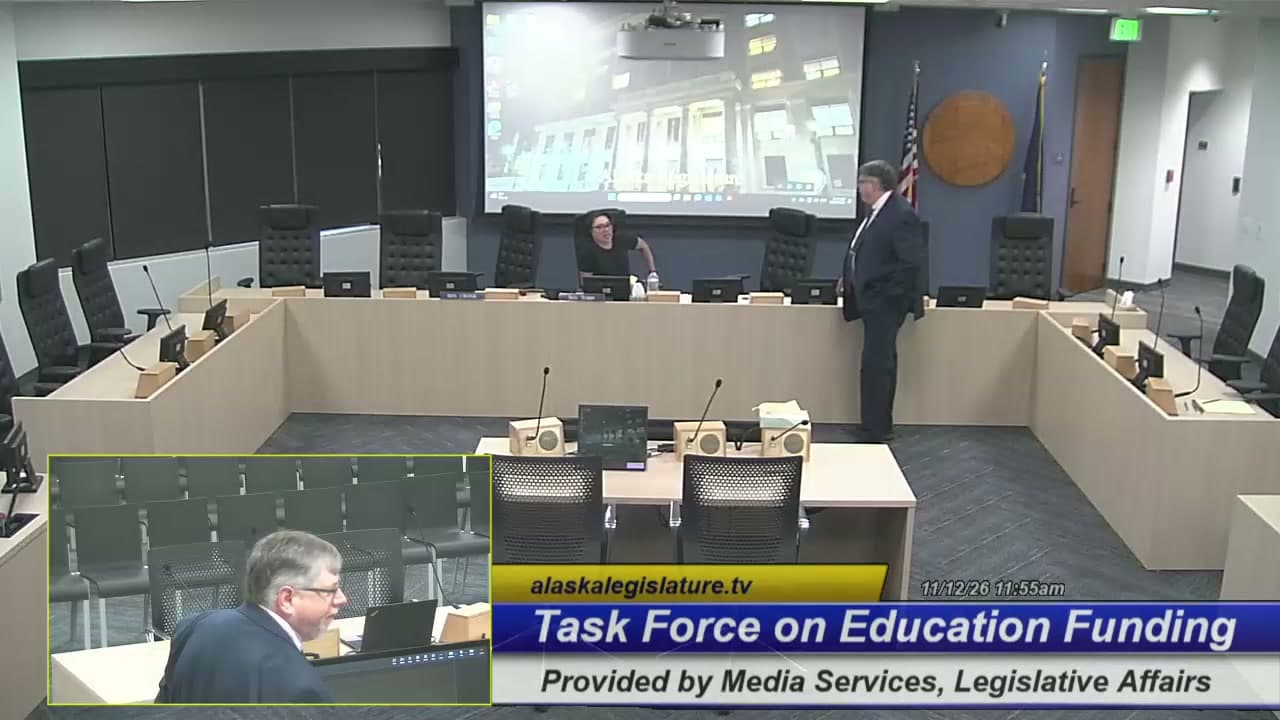
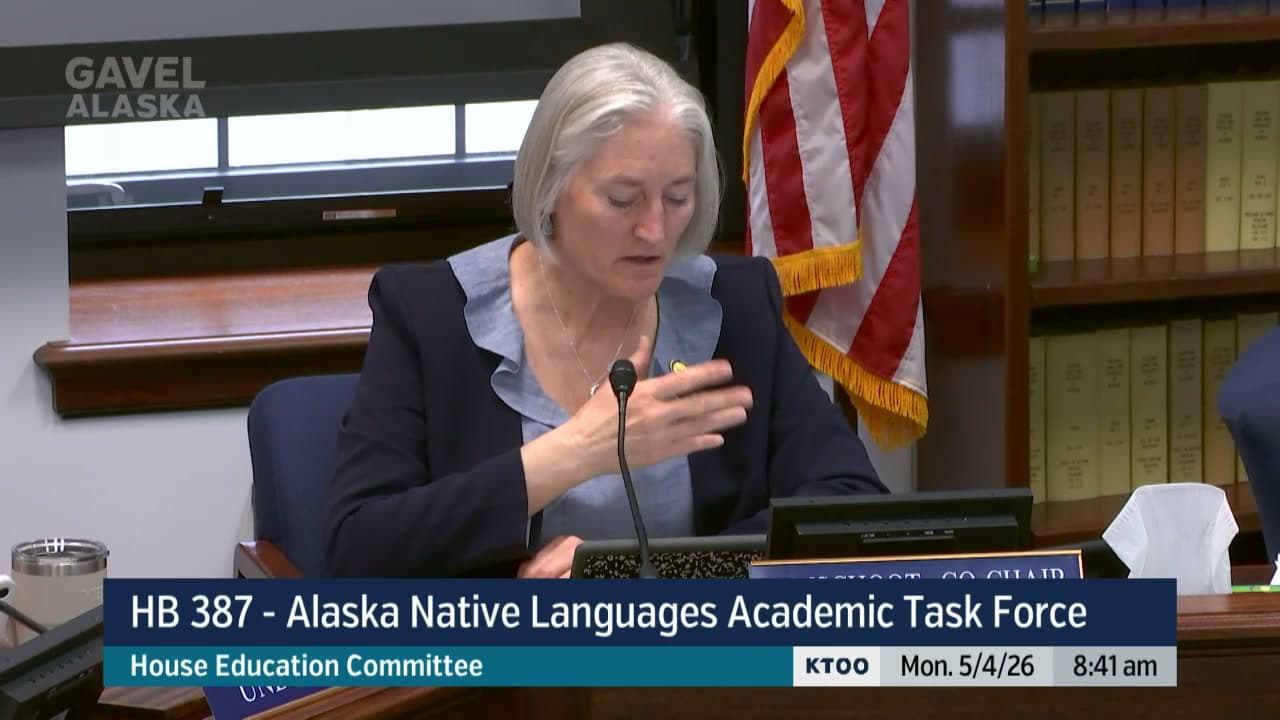
Frame from "Alaska Legislature: Special Coverage - November 12, 2026 9:00am" · Photo source
Homeschool parents urge Alaska education task force to drop draft line on correspondence programs
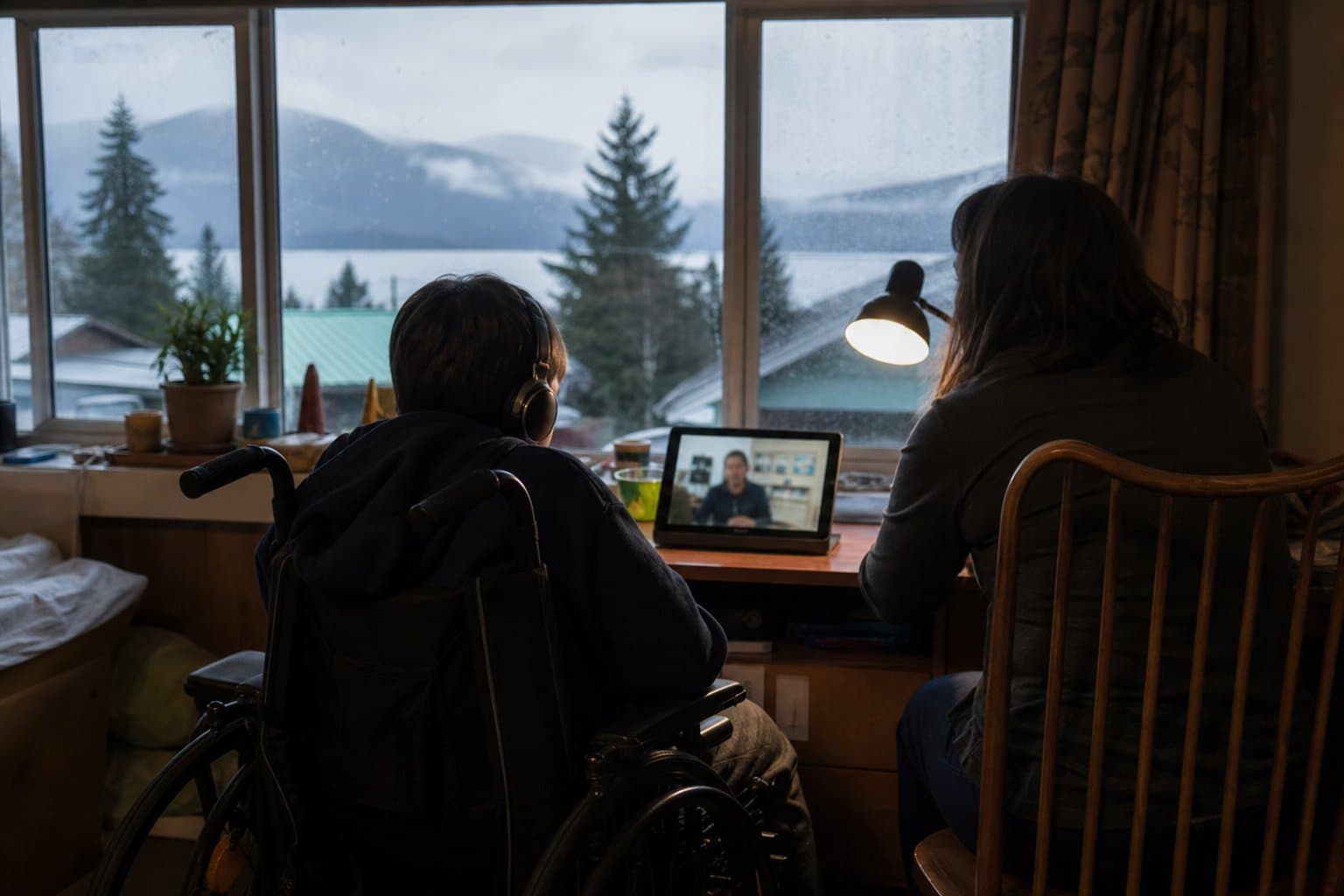
Homeschooling parents testified Thursday against a draft recommendation from the Alaska State Legislature's Task Force on Education Funding that asks school districts to investigate ways to fold public correspondence programs into a broader brick-and-mortar framework. Several testifiers said they read it as a push to move students back into classrooms.
The task force released its draft recommendations Monday and took testimony Thursday at hearings run from Anchorage. The draft also covers school funding, building maintenance and a study of what an adequate education costs.
Correspondence programs, run by school districts, give families who teach at home an approved curriculum, support and money for materials. Kendal Kruse, a Palmer mother and Mat-Su school board member, said the programs serve about 1 in 5 Alaska students. A legislative record counted 22,959 correspondence students in 2023-24.
The page 9 language recommends "that school districts investigate effective methods for incorporating public correspondence programs into a broader brick-and-mortar framework, acknowledging extensive post-pandemic research indicating that for most students, in-person learning significantly outperforms online and distance learning."
Barbara Haney, a North Pole economist, said that claim cites no studies. "This sentence on page 9 is the only stated basis for folding correspondence programs into brick-and-mortar frameworks. Please remove it," Haney said.
Kruse, who homeschools three of her five children, said supervising teachers already check that correspondence curriculum meets state standards. "The reform that I see in this document is about repealing or forcing correspondence students back into a brick-and-mortar measure," she said.
Melinda Degnan of North Pole said families homeschool "because the brick-and-mortar framework isn't what we want or need."
Not everyone agreed. A Wasilla charter school teacher said some students return from homeschooling years behind and called for yearly testing. An Anchorage educator and parent said choice programs strain neighborhood school budgets.
A 2024 state law, set to lapse in July 2025, required correspondence programs to report enrollment, allotments and test scores to the state. Statewide test results released in September showed one in five enrolled students had no AK STAR score, with correspondence testing barriers explaining part of the gap.
Kruse asked the task force to explain the line's intent if it meant something different. Co-chair Sen. Löki Tobin said the draft recommendations will inform a full report that will carry citations. Rep. Will Stapp, an East Fairbanks Republican who homeschools, said he hoped to assure parents that lawmakers do not aim to force children back into classrooms.
Written comments are open through Dec. 8. The task force says its full report is due Jan. 19, the day the legislative session opens.
What did you make of this story? (no account needed)
Made by our human newsroom with AI. How humans and AI work here · Grow with our newsroom · Transcript byWalter AlaskaNews
Get Alaska News in your inbox
Create your free account and get the day’s top stories around 6 each morning, in a few minutes’ read.
Top stories, around 6 each morning.
Stories on what you follow, on Sundays.
This article is based on a public meeting of Alaska State Legislature — Alaska Legislature: Special Coverage - November 12, 2026 9:00am ().
Watch key moments from the source meeting. Click to expand.








Comments
Sign in to leave a comment.
No comments yet. Be the first to share your thoughts.