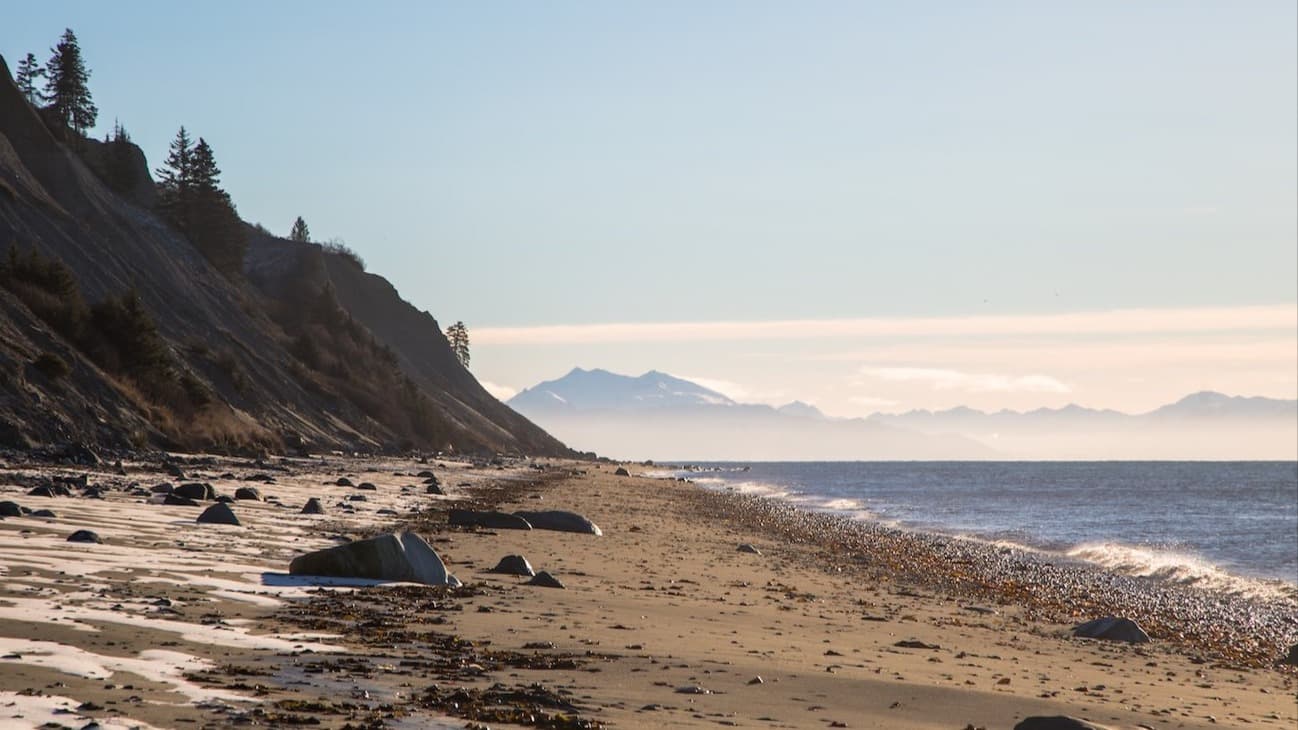
Beach along the eastside of Cook Inlet, photo by Cale Green
East side Cook Inlet setnetters must prove recent fishing to stay in the fishery
A state regulation filed Wednesday will split east side Cook Inlet setnetters into their own permit area on Jan. 1. The senator who sponsored the change says it gives the state a way to control how many permits fish those beaches, and some setnetters fear it is a step toward shrinking their fleet.
For permit holders, the clock is already running. Anyone who wants to keep fishing the east side must prove they fished there in at least one year from 2020 through 2024, or that the immediate family member they got their permit from did, according to a Sept. 1 letter from the Commercial Fisheries Entry Commission. Fish tickets are the commission's preferred proof, though a buoy tag can also be accepted. Everyone else can renew for the rest of Cook Inlet but can no longer fish the east side.
The application window opened Oct. 1. Requests must be attached to the 2027 permit renewal form and are due by 5 pm Dec. 31, or postmarked by Dec. 15 if mailed.
The east side set gillnet fishery, known as ESSN, is a shore-based fleet that fishes for sockeye off the Kenai Peninsula's beaches. Its nets also catch Kenai River king salmon, a stock in decline for more than a decade. The state closed the fishery outright in 2023 and left it nearly shut in 2024, Alaska News reported in July.
Sen. Jesse Bjorkman, who sponsored the bill creating the new area, wrote that it would give the commission "the power to effectively designate the number of set-net permits" in the fishery. His bill was folded into House Bill 117, which became law June 18 without the governor's signature.
It isn't the only change the fleet faces. In May, the Board of Fisheries replaced setnets with beach seines under the Kenai River late-run king salmon plan when more than 14,250 large kings are forecast, and required the seines to be at least 600 feet apart. But setnet permits don't cover seines. On June 4, the commission split 1-1 on an emergency rule that would have allowed them, so the rule failed.
Setnetters who wrote to lawmakers were divided. Russell Clark of Kenai, an east side permit holder whose wife and two daughters also hold permits, first supported the bill, then withdrew his support over the seine proposal. If both took effect, he wrote, "over 90% of the permit holders will be trapped in a no win situation." He based that on the proposal before the board adopted it.
Gary Hollier of Kenai, whose family holds eight permits and fishes North Kalifonsky Beach, saw it differently. The bill "is a small step, but is desperately needed to help the ESSN fishery," he wrote. Mark Ducker, an Upper Cook Inlet setnetter, urged lawmakers to let the bill die. If it was a prelude to "another ill-thought-out buyback program," he wrote, it should wait until permit owners could vote on that program. Otherwise, he warned, it would damage the value of his permit and sites.
The commission will start deciding applications Jan. 1 and issue all permits by Jan. 31. Under the law, applicants who are turned down can appeal to superior court by March 1, and the commission must give anyone appealing a provisional permit for the new area.
Source: Office of the Governor, East side Cook Inlet setnetters have until Dec. 31 to apply for permits in a new fishing area the state creates Jan. 1, after the Legislature swapped the setnet co-op bill for it.
Made by our human newsroom with AI. Reviewed by Cale Green. How humans and AI work here · Grow with our newsroom
Stay informed. Support what matters.
Free, permanent access to local news you can verify. Subscribe to support Walter AlaskaNews and go ad-free.
Related Coverage
The state ordered Cook Inlet setnetters onto gear their permits don't allow
Alaska News · 2mo ago
Cook Inlet clammers need a permit, and the east-side beaches stay empty
Alaska News · 2mo ago
Board restricts Cook Inlet drift gillnet fishery to protect coho salmon
Alaska News · 6mo ago
Third gear cut in a week leaves setnetters absorbing a weak Susitna run
Alaska News · 2mo ago
Cook Inlet drift fleet limited to Area 3 for a single 12-hour opener Thursday
Alaska News · 2mo ago
Comments
Sign in to leave a comment.
No comments yet. Be the first to share your thoughts.