AI image
Cook Inlet clammers need a permit, and the east-side beaches stay empty
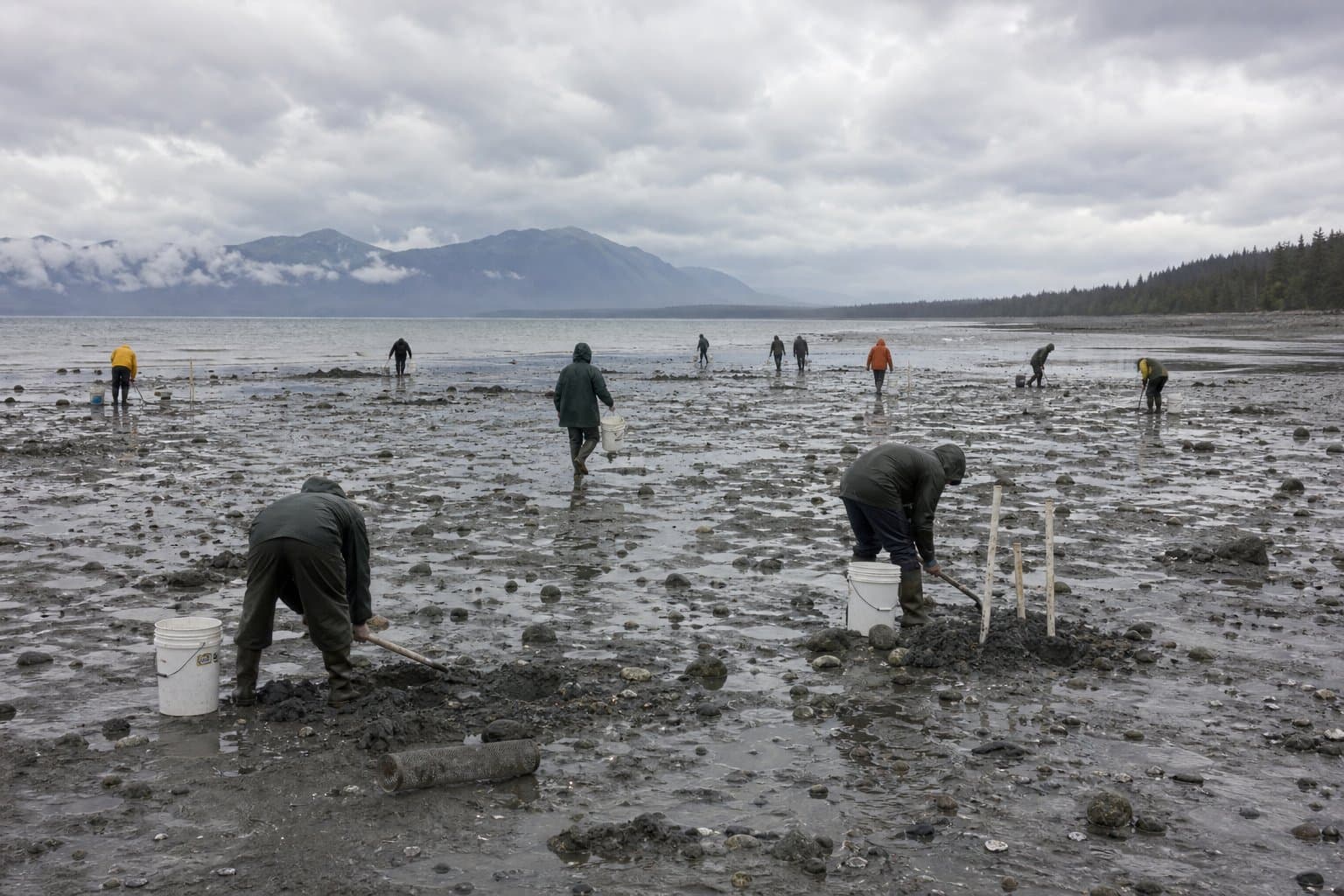
Anyone digging razor clams on Cook Inlet or the North Gulf Coast this year needs a household permit before setting foot on the beach — a new requirement that arrives as the Kenai Peninsula's most famous clam beaches sit emptier than they have ever been.
The east-side beaches from the Kenai River mouth to the Homer Spit have been closed since 2015, Clam Gulch since 2014. They stayed closed this year. State surveys this spring counted roughly 31,000 adult clams at Ninilchik and 45,000 at Clam Gulch, both more than 85 percent below the abundance the state requires before it will allow any harvest, and the lowest numbers on record. Biologists have pointed to weak recruitment of young clams and habitat loss rather than digging pressure. Diggers have had exactly one opening in a decade: four days at Ninilchik in July 2023, with a limit of the first 15 clams pulled from the sand.
Across the inlet, it's a different world. West Cook Inlet remains open at 10 gallons a day, with a matching possession limit and a rule that every clam dug must be kept — razor clams rarely survive being handled and reburied.
The permit itself was set at the March 2025 Board of Fisheries meeting, not written in response to this season. One is issued per household, everyone digging has to be listed on it, and harvest has to be reported by Dec. 31.
Based on a press release from Alaska Department of Fish and Game.
Made by our human newsroom with AI. How humans and AI work here · Grow with our newsroom
Stay informed. Support what matters.
Free, permanent access to local news you can verify. Subscribe to support Bill AlaskaNews and go ad-free.
Related Coverage
Cook Inlet Razor Clam Harvest Now Requires a Permit
Alaska News · 3mo ago
East Cook Inlet clam beaches stay closed; the west side is the option
Alaska News · 1mo ago
Razor clam permit still required on Cook Inlet as September digging season runs on
Alaska News · 1mo ago
Cook Inlet razor clam permit holders must file a harvest report or lose next year's permit
Alaska News · 2mo ago
Strong sockeye at China Poot, but clammers now need a permit before heading out
Alaska News · 3mo ago
Comments
Sign in to leave a comment.
No comments yet. Be the first to share your thoughts.