Council advisers back Bering Sea crab ceilings after the state already set its catches
The North Pacific Fishery Management Council's Advisory Panel on Wednesday recommended, without opposition, that the council adopt the Scientific and Statistical Committee's federal catch ceilings for Bristol Bay red king crab, Bering Sea Tanner crab and Eastern Bering Sea snow crab. The council is scheduled to decide Friday in Anchorage.
The Alaska Department of Fish and Game had already released 2026-27 harvest limits Tuesday ahead of the Oct. 15 openers. It set Tanner crab at 32.1 million pounds, nearly triple last season's 11.25 million pounds combined from east and west, snow crab at 5.1 million pounds, down 45% from 9.3 million, and Bristol Bay red king crab at 3.41 million pounds, up about 27%. Katie Palof of the department, who chairs the council's Crab Plan Team, said the state usually waits for the council; this time it moved once the Scientific and Statistical Committee endorsed the numbers, since the council typically follows the committee's lead.
The panel's recommendation also covers the 2026 crab Stock Assessment and Fishery Evaluation report, two-year limits for St. Matthew Island blue king crab and a one-year rollover for Western Aleutian Islands red king crab.
Industry-preferred Tanner males increased sharply both east and west of 166 degrees west longitude. Bristol Bay red king crab legal males rose, supporting an overfishing limit of 7.13 kilotons and an acceptable biological catch of 5.7 kilotons, about 15.7 million and 12.6 million pounds, under a 20% buffer, though a jump in juveniles came largely from one tow. Snow crab industry-preferred males declined, with 85 mature females counted per large male. The plan team had wanted a 50% snow crab buffer, up from 40%, but the committee kept the buffer at 40%, as did the panel. St. Matthew blue king crab, closed to directed fishing since 2016-17, remains above the overfished threshold but not rebuilt.
Among surveyed males at least 101 millimeters wide, snow-Tanner hybrids made up 15% and snow crab 14%. Because regulations define Tanner crab by two red eyes and an M-shaped mouth, most hybrids are counted as snow crab. Last season's 1-million-pound hybrid add-on yielded an estimated 678,000 pounds, mostly from outside the area the state had encouraged boats to target. This season's snow crab limit carries no such allowance.
Landry Price of the Yukon Delta Fisheries Development Association, a Community Development Quota group, made the motion and cited "the opportunities for increased harvest opportunity and economic value back to the industry." The plan team warned that hybrids counted as snow crab could mean more removals from a rebuilding stock. Palof said there isn't enough information yet to say whether hybrids are good or bad for the fishery.
Two questions remain open: whether hybrids can be separated from snow crab, and how to classify and manage them. Palof said policy work should start now so regulation keeps pace with the science.
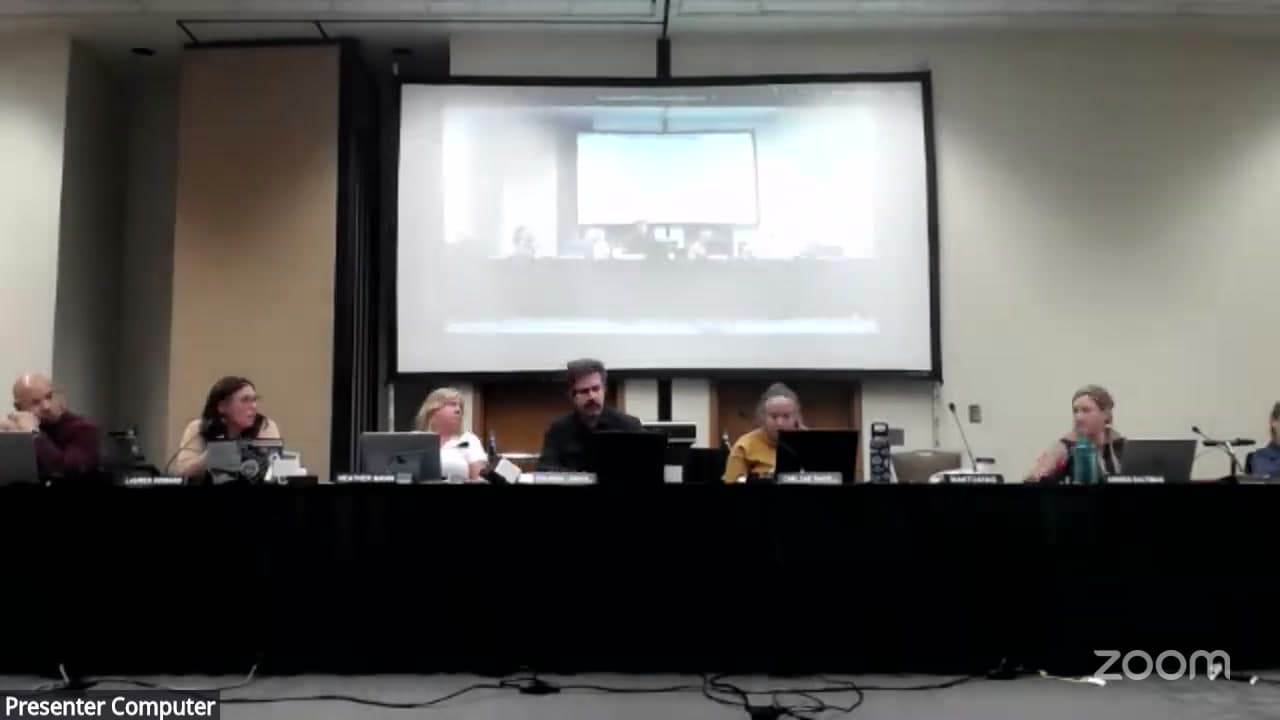
This article is based on a public meeting of NPFMC - AP Meetings — NPFMC AP: October AP Meeting, Day 1, 10.07.2026 ().
Made by our human newsroom with AI. Reviewed by Cale Green. How humans and AI work here · Grow with our newsroom Transcript byWalter AlaskaNews
Stay informed. Support what matters.
Free, permanent access to local news you can verify. Subscribe to support Bill AlaskaNews and go ad-free.
Related Coverage
State reviews Bering Sea crab catch calculations Wednesday
Alaska News · 4d ago
Bering Sea Tanner crab limit nearly triples as snow crab falls 45 percent
Alaska News · 21h ago
North Pacific Fisheries Management Council limit golden king crab catch limits
Alaska News · 3mo ago
North Pacific council's SSC keeps snow crab buffer at 40%, not 50%
Alaska News · 1d ago
Every preregistered Bering Sea crab boat is selected for observer coverage
Alaska News · 4d ago
Comments
Sign in to leave a comment.
No comments yet. Be the first to share your thoughts.