AI image
Charter plane crash at Cape Newenham radar site kills eight
Eight people died Thursday afternoon when a charter plane crashed on approach to the Cape Newenham Long Range Radar Site airstrip in western Alaska, Alaskan Command said.
Two pilots and six passengers were aboard. The aircraft, a twin-engine Cessna 441 operated by Security Aviation, had departed Ted Stevens Anchorage International Airport. Rescuers reported no survivors.
Clint Johnson, Alaska region chief of the National Transportation Safety Board, said the flight crashed while approaching Cape Newenham. The NTSB is investigating the cause.
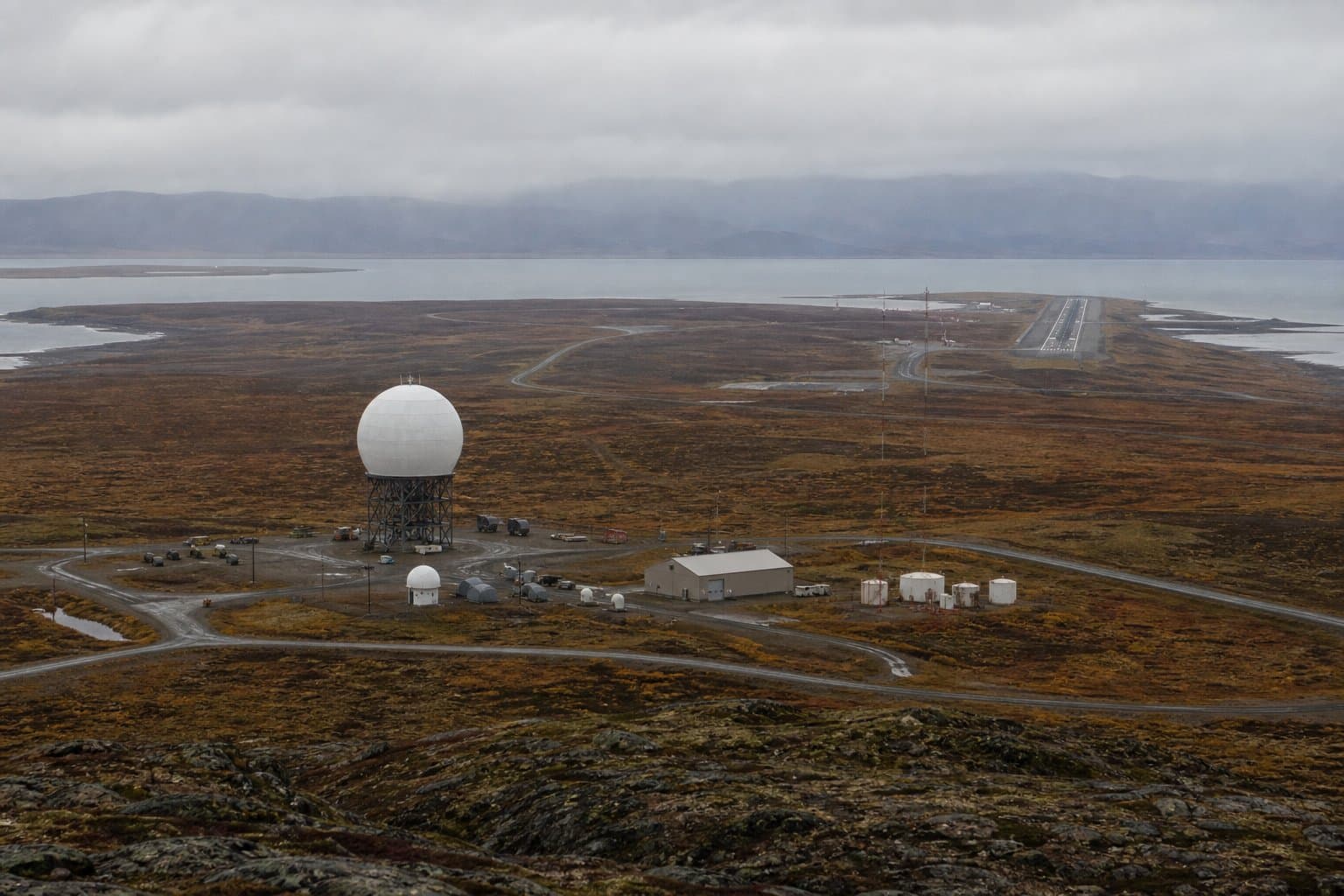
The crash site is not a public airport. Cape Newenham LRRS Airport is a military airstrip whose stated mission is to provide access to the radar station for servicing and other requirements. The installation sits on a 2,359-acre peninsula inside Togiak National Wildlife Refuge, between Kuskokwim Bay and Bristol Bay, roughly 460 miles southwest of Anchorage. It is reachable only by air or sea.
Lt. Gen. Robert Davis, commander of the Alaskan NORAD Region, Alaskan Command and Eleventh Air Force, called the crash "a devastating loss for our military family and the communities we serve" in a statement. Alaskan Command said the site is managed by the Pacific Air Forces Regional Support Center and is part of a network of remote radar sites used to track aircraft operating in Alaska's airspace and along its borders. The command has described charter transport there as necessary to national defense. Federal documentation on the airstrip describes a field with no support personnel on site, though it remains the only aviation access to the station.
Security Aviation had not issued a public statement by Friday.
The radar station dates to 1952, when it was built as one of 12 original Aircraft Control and Warning sites in Alaska's air defense system. An FPS-117 minimally attended radar was installed in 1984. The Federal Aviation Administration established Class E airspace over the site in 2001 to support instrument approach and departure procedures.
No cause has been determined.
Assembled from public records the newsroom collected.
AI-assisted. How we use AI
Stay informed. Support what matters.
Free, permanent access to local news you can verify. Subscribe to support Maggie AlaskaNews and go ad-free.
Related Coverage
NTSB report details fog, aborted landing and second attempt before fatal Cape Newenham crash
Alaska News · 20h ago
Air Force names 2nd Lt. Leah Borsich as airman killed in Cape Newenham crash
Alaska News · 1mo ago
Four killed in Piper crash in Seldovia Slough; NTSB investigating
Alaska News · 1mo ago
Three of 20 Alaska aviation accidents since July 19 were fatal
Alaska News · 2w ago
Two men die in a plane crash near Aniak, Troopers say
Alaska News · 2w ago
Comments
Sign in to leave a comment.
No comments yet. Be the first to share your thoughts.