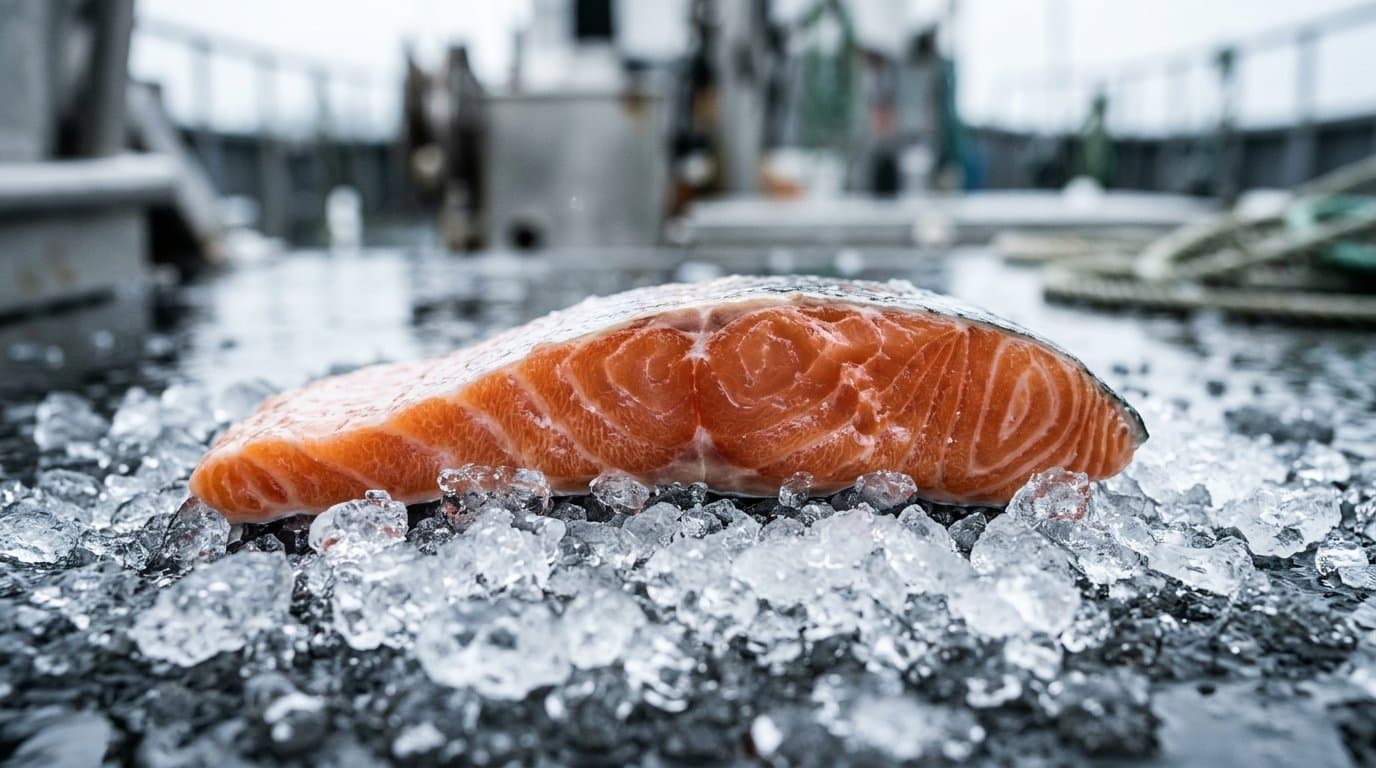
AI image
Bristol Bay sockeye and Alaska cod prices rose, but Russia and the dollar still weigh
Alaska fishermen got better prices this year for Bristol Bay sockeye salmon and Pacific cod. But cheap Russian fish, a strong dollar and Europe's new paperwork still weigh on Alaska seafood sales, according to the state's seafood marketing agency and federal economists.
The agency, the Alaska Seafood Marketing Institute, presents its outlook for those markets Friday at Pacific Marine Expo, a commercial fishing trade show in Seattle.
About 70% of Alaska seafood by value is sold abroad each year, according to the institute. Seafood is Alaska's largest private-sector employer and adds about $5.2 billion a year to the state's economy, Executive Director Jeremy Woodrow told a U.S. Senate subcommittee in June testimony.
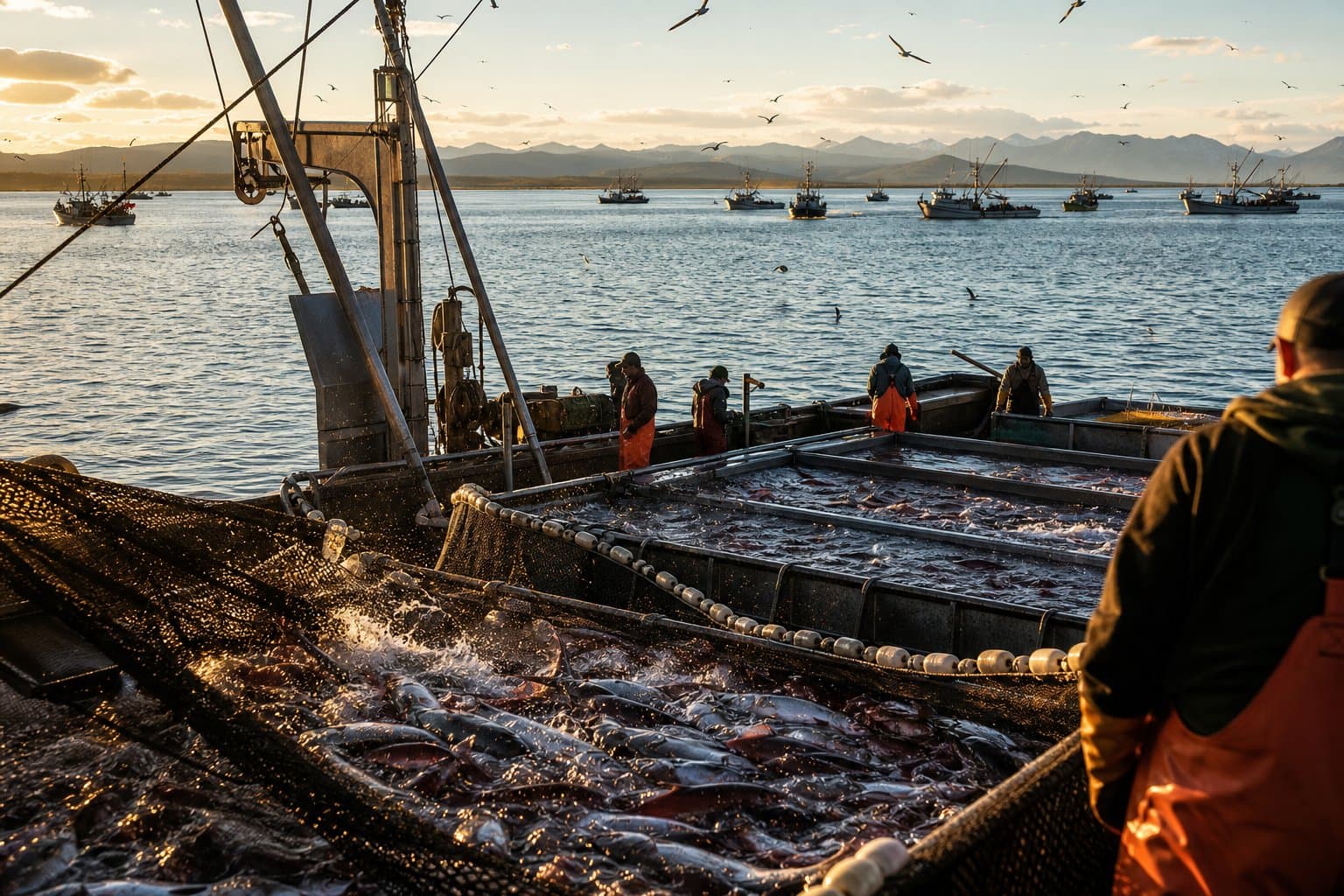
Bristol Bay sockeye sold for $1.72 a pound this summer, up from $1.03 in 2025, and the bay's salmon catch was worth 21% more than its 20-year average, preliminary state figures show. That follows a downturn in which the Alaska seafood industry lost $1.8 billion from 2022 to 2023, according to NOAA Fisheries.
Among groundfish, the catch that includes pollock, cod and sablefish, boats got more for Pacific cod and sablefish in 2025. For cod, that's partly because catch limits for Barents Sea cod, a substitute for Pacific cod, dropped sharply in back-to-back years, federal economists wrote in a brief presented Monday to advisers of the North Pacific Fishery Management Council. Pollock's dock price fell 6% in 2025, and Russia's frozen pollock exports, which stayed near record highs, likely contributed, the brief says. Dock prices so far in 2026 are higher for all three, and pollock is "beginning to rebound in price for the first time since 2022," the economists wrote.
Russia is Alaska's main competitor for pollock, cod, salmon and king crab, Woodrow testified. "Russian producers often benefit from lower production costs and less rigorous regulatory frameworks, allowing them to undercut Alaska seafood prices internationally," he said. The United States bans Russian seafood, but the European Union, Japan and the United Kingdom have taken more limited steps, he said, and Russian fish has still reached U.S. markets after processing in other countries.
The real effective exchange rate for Alaska seafood exports, a measure of how expensive they are for foreign buyers, stayed at a historic high in 2025, limiting demand and putting downward pressure on prices, the federal brief says.
The United States is Alaska's biggest market, worth more than $2 billion a year, Woodrow said. Overseas, the European Union bought about $616 million in 2024, Japan $571 million and China about $566 million. Most of what goes to China is thawed, reprocessed and shipped on to other countries, he said.
Europe, Alaska's largest direct overseas buyer, is also asking for more paperwork. Its new digital catch-tracking system, CATCH, asks for each boat's catch to be traced into finished products, which the marketing institute has called "operationally infeasible" for Alaska fleets that pool catch from many boats on tenders. In May, nearly 16,000 metric tons of Alaska fish sat in Dutch ports over the paperwork. U.S. exporters can keep using an older U.S. certificate through Nov. 30, according to NOAA Fisheries guidance last updated Oct. 30, which lists no extension past that date and says "vessel grouping allowances or administrative flexibilities used in the past are no longer accepted."
Much of the institute's work overseas runs on federal money. Federal grants paid for international marketing that made up 43% of its spending plan for the fiscal year that ended in June, its board materials show. In April, it won a $6 million U.S. Department of Agriculture export grant for this fiscal year and next. And the One Big Beautiful Bill, the tax and spending law Congress passed last year, effectively doubles funding for the department's Market Access Program starting this federal fiscal year, though the added money goes to a new program until a future farm bill moves it, according to a May memo. That program has given the institute about $4.4 million to $4.6 million a year.
At the expo, Technical Director John Burrows presents "Alaska Seafood Outlook: Market Data, Trends, and What's Shaping the Industry" on Friday, according to the expo's schedule. Woodrow joins a Thursday panel on where Alaska's growing shellfish and seaweed farming industry fits in the seafood economy. The institute's board and committees meet Dec. 1-3 in Anchorage.
What did you make of this story? (no account needed)
Made by our human newsroom with AI. Reviewed by Cale Green. How humans and AI work here · Grow with our newsroom ·
Keep Alaska News free for everyone.
No paywall, ever. Members pay so everyone can read the meetings and records Alaska News covers.
Get Alaska News in your inbox
Create your free account and get the day’s top stories around 6 each morning, in a few minutes’ read.
Top stories, around 6 each morning.
Stories on what you follow, on Sundays.
Source: Alaska Seafood Marketing Institute.











Comments
Sign in to leave a comment.
No comments yet. Be the first to share your thoughts.