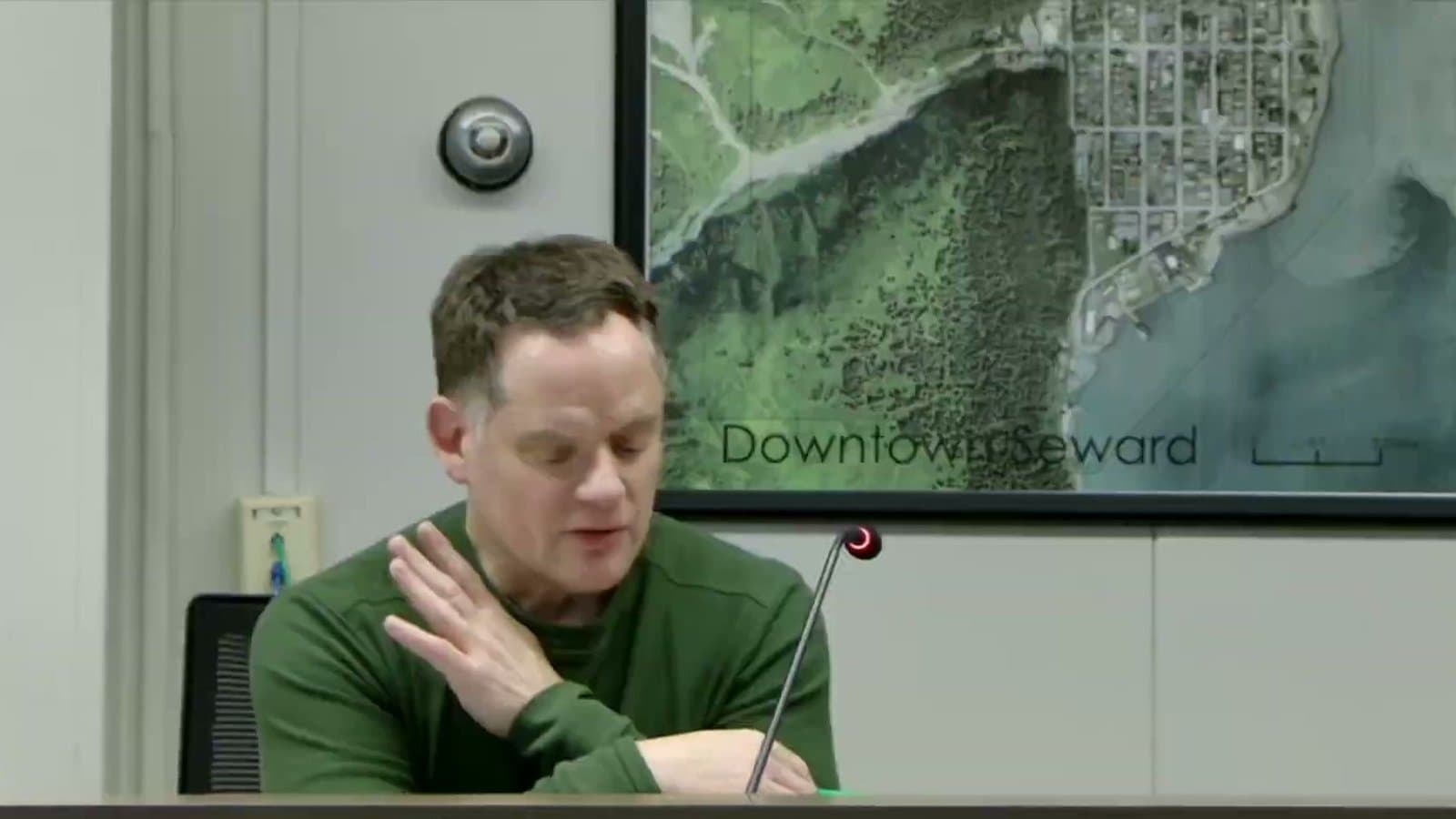
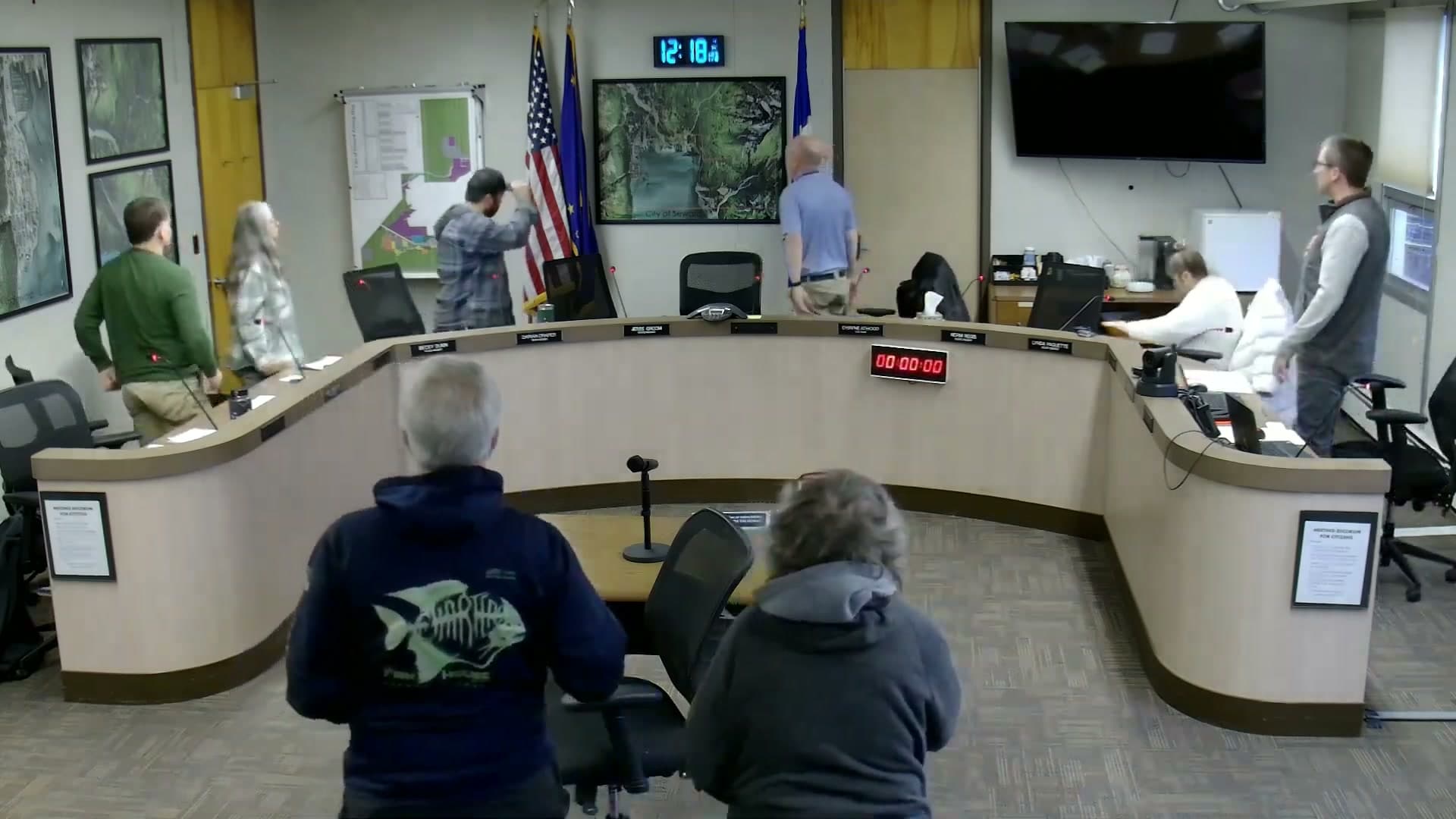
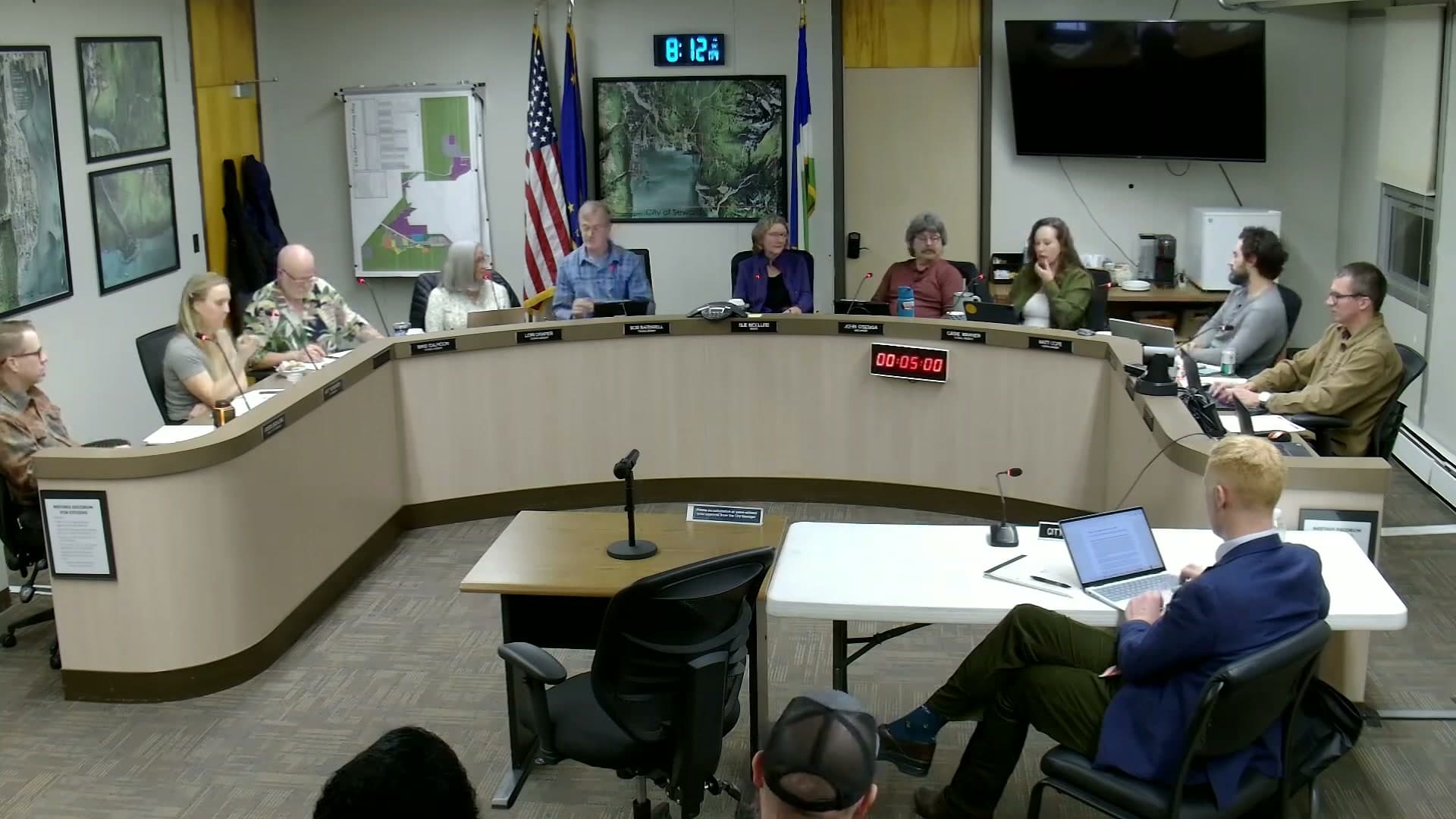
Frame from "Seward: PACAB 11/18/2026" · Photo source
Seward port board backs $50 missed-filing fee and about 14% boat lift fee increase
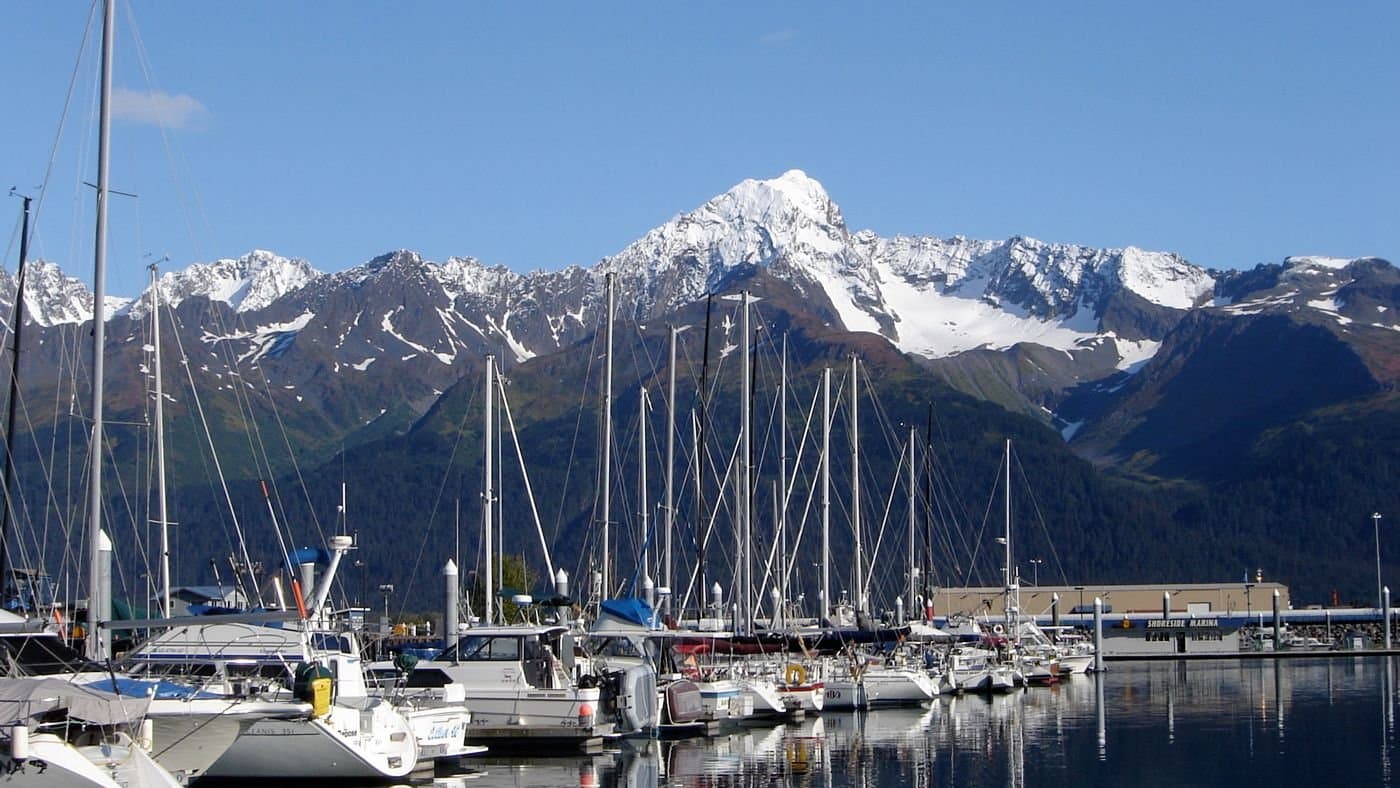
Seward's Port and Commerce Advisory Board on Wednesday backed doubling the fee for boat operators who miss a monthly passenger-fee filing, from $25 to $50. The board also backed raising fees on the city's 50-ton and 330-ton travel lifts, the machines that haul boats out of the water, by about 14%. Harbormaster Tony Sieminski said he will take the revised harbor tariff, the schedule of the harbor's rates and rules, to the Seward City Council on Dec. 14 for approval.
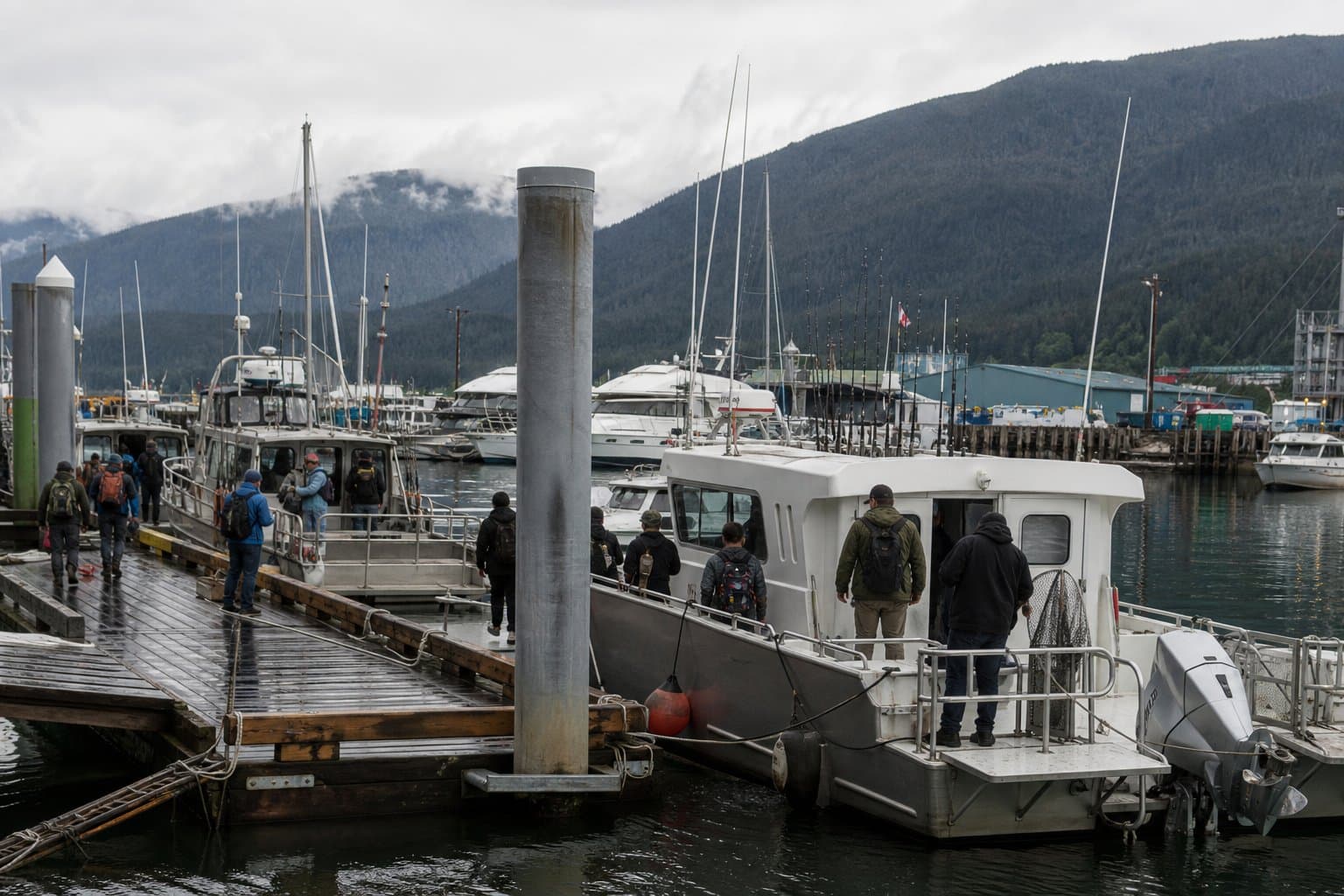
Vessel owners who haul out at the harbor pay the lift fees. Charter and other operators that carry passengers file the monthly returns and pay a $3.50 per-head passenger fee; personal pleasure boats do not. The revised tariff would extend the passenger-fee rules to rental vessels.
The walk-through followed the draft 2027 tariff released the day before. Sieminski proposed raising each lift's fees 10% plus inflation, which he put at 3.76% this year, "just due to the rising costs of maintenance on those machines." Replacing the cable on the larger lift has gone from $10,000 to $13,000, he said, and a cable change, done about every three years, cost $35,000 at last check.
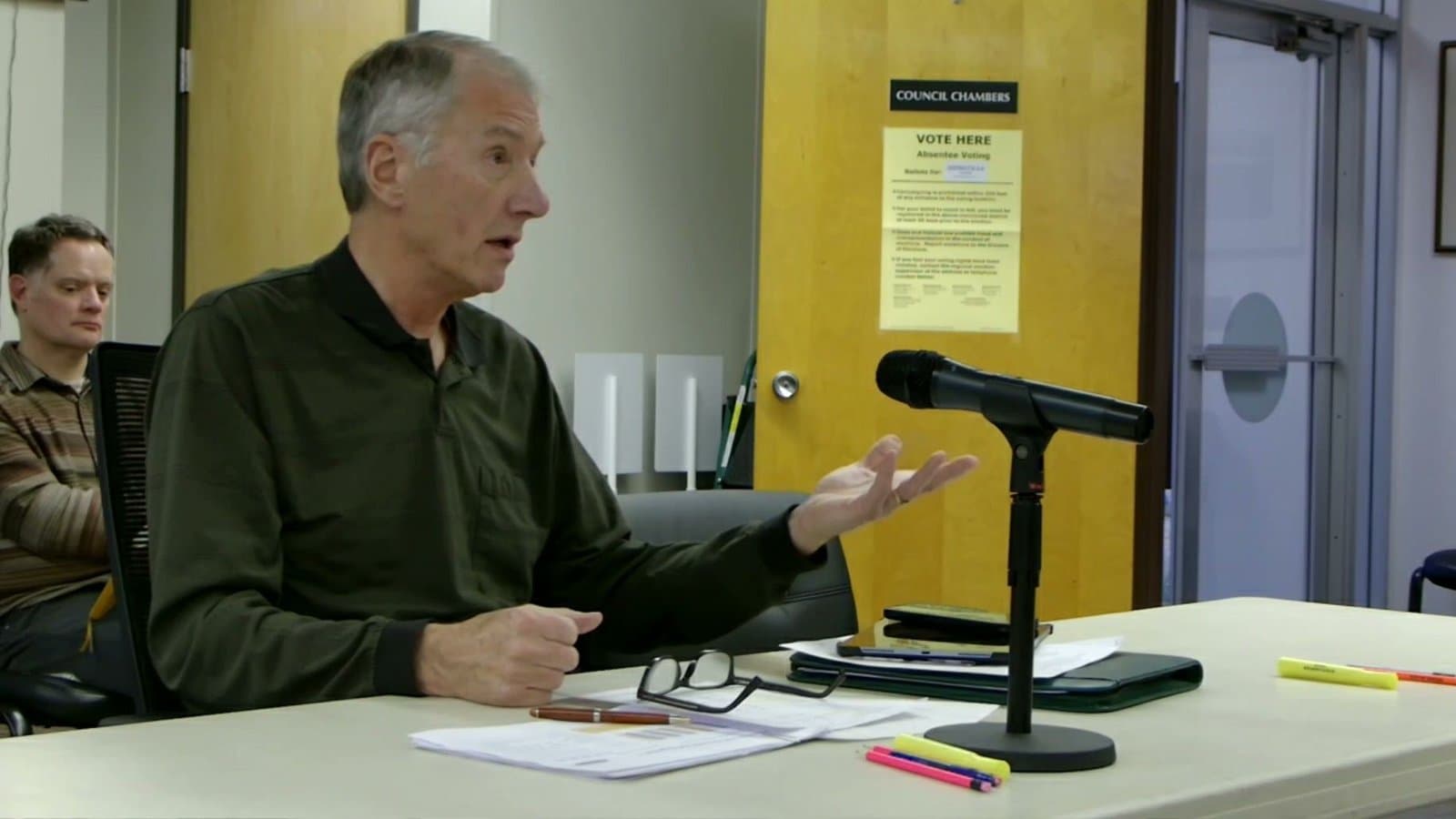
Board member Dunn asked whether the city could raise lift fees 8% now and 2% in two years. "I think 10 is a very easy number plus CPI," Sieminski said. Vice Chair Atwood, who presided, said he had no issue with the increase given the years without one.
On the filing fee, Sieminski said reminding operators to file takes staff calls and emails, at least a man-hour, and that the current fee of "$25 per vessel" felt light. Dunn suggested doubling it, and board members agreed on $50. Board member Dwayne Draper said the separate penalty of 10% of the amount owed, capped at $500 plus an interest charge, should stay as written.
The tariff also adds sections letting the harbor audit passenger returns and setting how long records must be kept. Asked how many operators fail to pay, Sieminski said, "honestly, I don't think it's a problem," and that the change gives the harbor the ability to audit. The passenger fees pay down a revenue bond, he said, making them "a serious part of our budget."
Other changes are smaller. Moorage rises with inflation, measured as a five-year running average. Wharfage on diesel and gasoline, a charge on fuel crossing the dock, is adjusted every other year under a prior council resolution and changes next year; Sieminski said he plans to propose raising it to 3 cents.
At an Oct. 26 council work session, City Manager Kat Sorensen said the harbor makes "just enough, barely, to cover their cash expenditures" but not depreciation on its expensive equipment. Two days later, she said the city wants to steer the harbor over the next few years toward "a greater self-reliance," but not yet, with Coast Guard announcements and port grants expected.
What did you make of this story? (no account needed)
Made by our human newsroom with AI. How humans and AI work here · Grow with our newsroom · Transcript byWalter AlaskaNews
Keep Alaska News free for everyone.
No paywall, ever. Members pay so everyone can read the meetings and records Alaska News covers.
Get Alaska News in your inbox
Create your free account and get the day’s top stories around 6 each morning, in a few minutes’ read.
Top stories, around 6 each morning.
Stories on what you follow, on Sundays.
This article is based on a public meeting of City of Seward — Seward: PACAB 11/18/2026 ().
Watch key moments from the source meeting. Click to expand.






Comments
Sign in to leave a comment.
No comments yet. Be the first to share your thoughts.