Board of Fisheries committee weighs how to let the public weigh in on last-minute rewrites
Board of Fisheries members say they keep hearing the same complaint from fishermen: the board rewrites proposals after the public has had its last chance to speak.
The board's Committee on Board Process, Management, and Research Needs took up the problem Friday and made no changes. Chair Märit Carlson-Van Dort, who also chairs the full board, said she will bring a more developed agenda item to the committee's next meeting, which she expects around Oct. 14. That's ahead of the board's Oct. 28–29 work session in Anchorage.
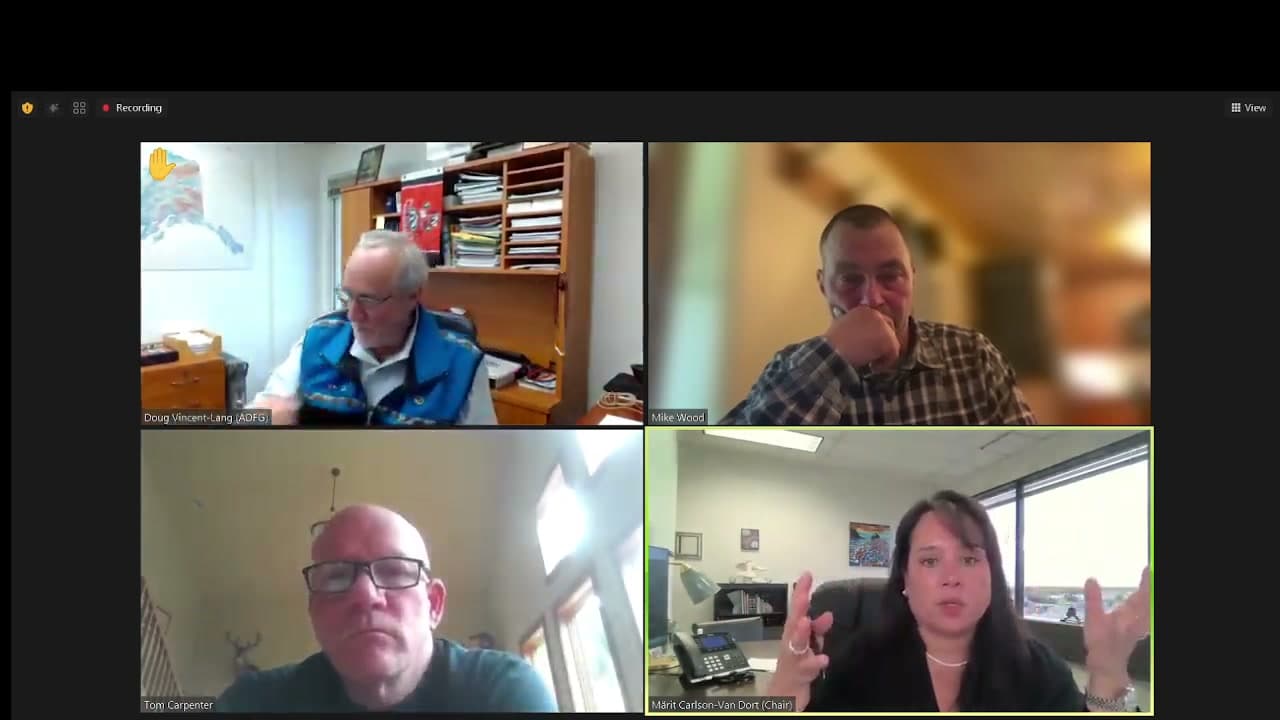
The complaint centers on Committee of the Whole, the last point where members of the public address the board directly before it deliberates. Vice Chair Tom Carpenter said the complaints he hears most are about substantive changes that surface "at the very last minute," brought up the morning of deliberations, when people don't feel they can get in front of the board. Board member Mike Wood said handing out substitute language that morning is "not the most efficient way for the public to understand what's going on."
Others at the meeting described why it's hard to fix. Meetings already run long, with people repeating their testimony in committee, and every draft of new language circulates among board members and staff and goes through review by a single staff member. Commissioner Doug Vincent-Lang said the department can't compress that legal review, so the board would have to either lengthen its meetings or cut public time earlier in the process. He said he didn't want the effort to end with less public input.
Ideas raised included reopening Committee of the Whole when a proposal changes substantially, opening a short comment period on the new language, putting off a decision until a later meeting and holding a final Committee of the Whole for the biggest proposals.
Dan Norman, who testified, said proposals the board writes itself that show up after Committee of the Whole shut the public out. He rejected a written suggestion that the board poll the public. "My fleet is limited entry, and we have limited voices," he said. Limited entry caps the number of permits in a fishery. Fewer voices, he said, don't give his fleet less standing in the process or less claim to the resource under the state constitution.
Separately, the Legislative Budget and Audit Committee voted unanimously in July to order a special audit of the board. It will examine whether the board followed its statutes, regulations and public-notice requirements from October 2023 through July 2026.
Carlson-Van Dort asked people to send written comments before October. Comments can be submitted through boardoffisheries.adfg.alaska.gov, by mail to the board in Juneau or by fax to 907-465-6094. Executive Director Art Nelson takes questions at 907-267-2292.
This article is based on a public meeting of Alaska Board of Fisheries — Alaska Board of Fisheries: Committee on Board Process, Management, and Research Needs Meeting (9/25/2026) ().
Drafted with AI. Edited by Cale Green (1 revision). Reviewed by Cale Green. Who is accountable. Transcript byWalter AlaskaNews
Stay informed. Support what matters.
Free, permanent access to local news you can verify. Subscribe to support Bill AlaskaNews and go ad-free.
Related Coverage
Fish board committee to review Traditional Knowledge report process Sept. 25
Alaska News · 1w ago
There's a narrow window to ask Alaska's fish board to take up new topics
Alaska News · 1mo ago
Fishery managers will meet on trawl seafloor contact, with no power to recommend
Alaska News · 1d ago
Board of Fish Nominees Face Questions on Public Process Erosion
Alaska News · 4mo ago
Fish and Game proposes flagging struggling salmon runs a year earlier so the public can weigh in
Alaska News · 6h ago
Comments
Sign in to leave a comment.
No comments yet. Be the first to share your thoughts.