AI image
As Cook Inlet gas runs short, Alaska moves to squeeze 38% more power from an existing dam
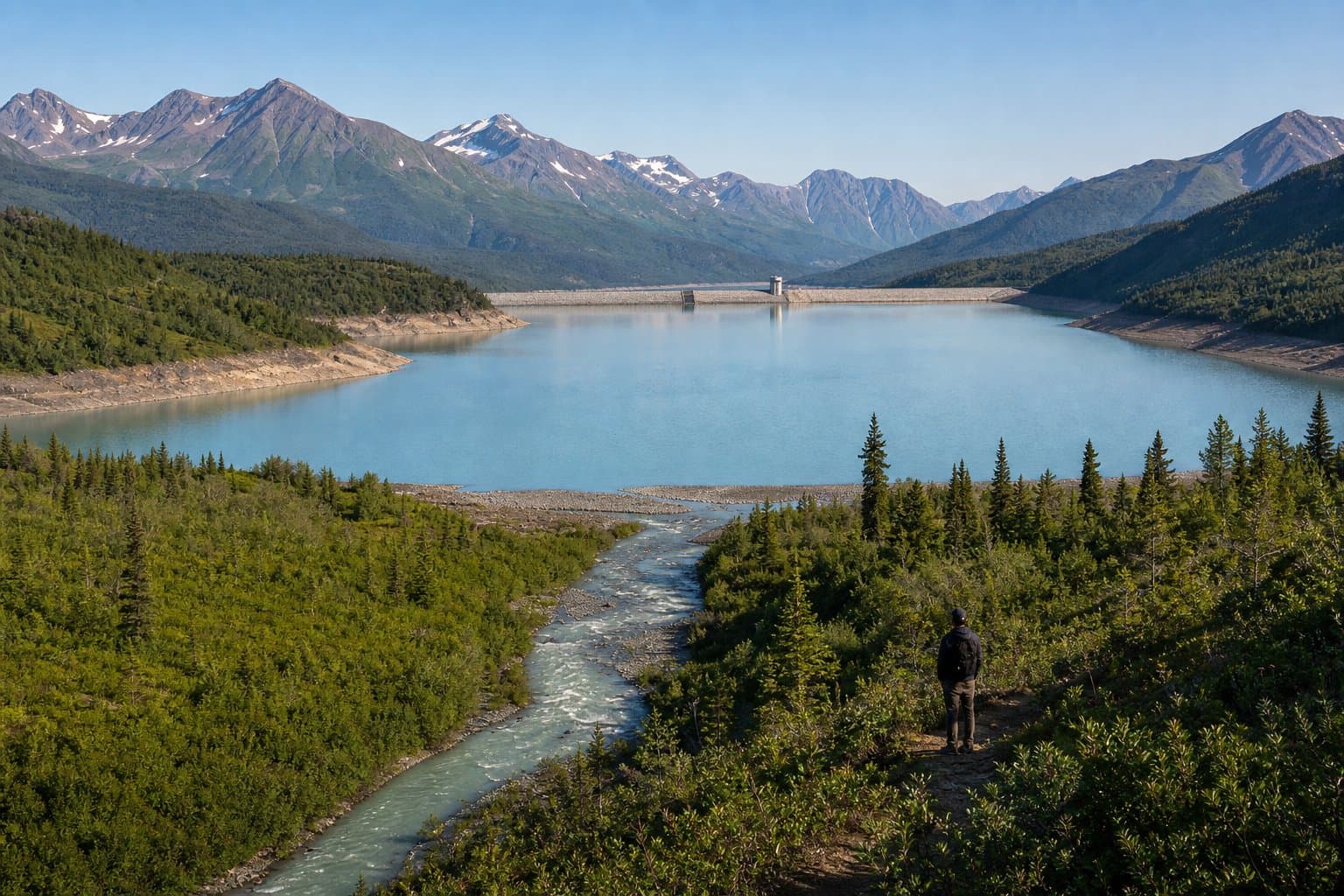
Facing a natural gas shortfall that could hit the Railbelt as soon as 2027, the Alaska Energy Authority is trying to wring far more electricity out of a dam it already owns — raising the Bradley Lake reservoir about 16 feet and piping in glacier meltwater to boost the hydro project's output by roughly 38 percent, without building a new power plant.
Federal regulators have accepted the plan for review and opened it to public comment through Aug. 28. The stakes are regional: Bradley Lake already supplies close to a tenth of the Railbelt's annual power, and every megawatt it adds is one that doesn't have to come from burning increasingly scarce and expensive Cook Inlet gas.
Production from Cook Inlet's aging fields has been declining for years, and the state has forecast that supply will fall short of demand around 2027, pushing utilities from Homer to Fairbanks toward importing liquefied natural gas by the end of the decade — a shift expected to raise costs for households across Southcentral Alaska.
Against that backdrop, AEA has pitched the Bradley expansion as gas displacement, estimating it would offset roughly 1.5 billion cubic feet of natural gas a year, or about 7.5 percent of the Railbelt's projected unmet demand by 2030. It's a rare near-term option: a way to add firm, non-gas power to the grid by upgrading infrastructure that already exists, rather than waiting years for a new plant or an LNG terminal.
The plan does three things: a new diversion dam routes meltwater from Dixon Glacier into Bradley Lake, spillway and embankment work raises the reservoir's normal operating level about 16 feet, and a small turbine captures energy from water the dam already releases. Notably, the dam's nameplate capacity barely changes — from 119.7 to 120.0 megawatts — while its average annual generation climbs by more than a third, because the extra water lets it run harder and longer.
Critics have questioned whether AEA's environmental analysis adequately accounts for how a warming climate could change Dixon Glacier's melt over the decades the license would run — the very meltwater the expansion depends on.
Source: Alaska Energy Authority, Alaska Energy Authority: Licenses; Exemptions, Applications, Amendments, etc.: Alaska Energy Authority ().
Drafted with AI. Edited by Cale Green (1 revision). No full editor review is on record. Who is accountable.
Stay informed. Support what matters.
Free, permanent access to local news you can verify. Subscribe to support Melinda Communities.News and go ad-free.
Related Coverage
A $400 million expansion of Bradley Lake hydro would power about 30,000 homes and cut Southcentral's gas use
Alaska News · 4w ago
Railbelt ratepayers will repay up to $100M for a Bradley Lake expansion built around federal tax credits
Alaska News · 1mo ago
Comments on the $400 million Bradley Lake expansion close Friday
Alaska News · 3w ago
Bradley Lake expansion has carried three price tags in four months as the comment window closes
Alaska News · 1mo ago
Chugach is pursuing four hydroelectric projects to hedge against Cook Inlet gas decline
Alaska News · 3mo ago
Comments
Sign in to leave a comment.
No comments yet. Be the first to share your thoughts.