AI image
As Anchorage cements its role as a global cargo hub, the growth is colliding with its neighbors
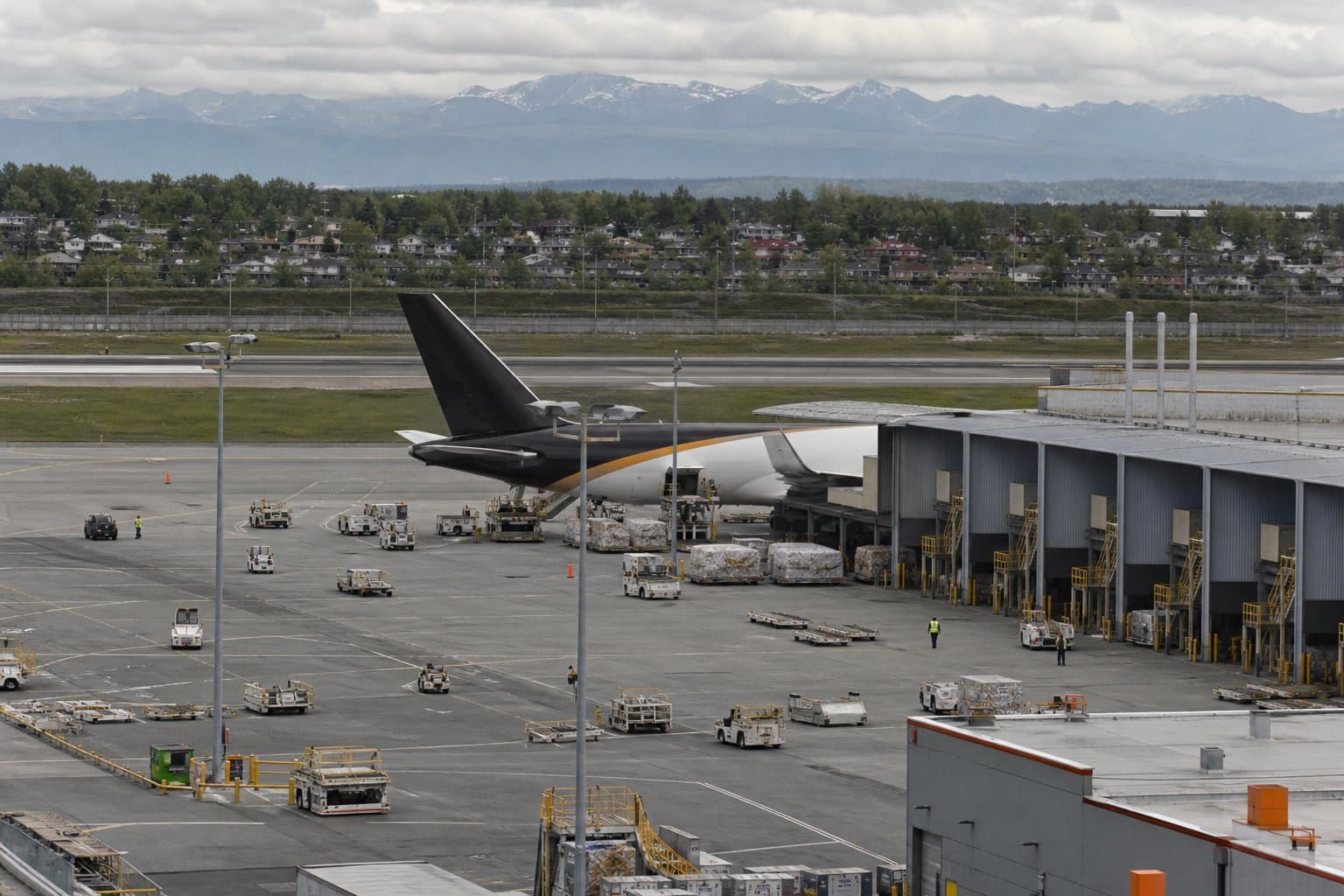
United Parcel Service's cargo footprint at Ted Stevens Anchorage International Airport — about 1,246,000 square feet, or roughly the size of 21 football fields — would rent for $224,280 a year under a lease supplement the state opened for public comment Thursday. It's a routine paperwork update on a lease running to 2032, but it lands as the airport's cargo business is booming, and as that boom runs up against the neighborhoods next door.
Anchorage handles more than 180 widebody cargo operations a day, a status built on geography — it sits within roughly nine hours of nearly all of the industrialized Northern Hemisphere. E-commerce is deepening that role. At a February focus group on the state's long-range transportation plan, airport planner Ian Moore put it this way: "The growing global e-commerce and time-sensitive deliveries are reinforcing Alaska's role, especially at ANC, as a critical global cargo hub."
Beyond the UPS lease, the state has documented three separate applications for air-cargo development on the same block — from Alaska Cargo and Cold Storage, FedEx and 6A Aviation — together seeking close to 80 acres.
That growth has drawn scrutiny from the neighborhoods around the airport, where cargo flights run at night. As industry guidance from Airports Council International-North America puts it, "traditional air cargo moves at night and potentially has higher noise impacts in residential areas than do daytime operations." After February meetings drew residents worried about the noise, the airport launched a federal noise study, and the options it's weighing now go before the study's advisory committee on Aug. 25, when the consultant team presents them for discussion.
The study may not give residents what they pushed for. Some of the operational alternatives could shift aircraft noise between neighborhoods rather than eliminate it, the study's own website notes — relief for one area could mean new exposure for another. And where the planes actually fly isn't the airport's to decide. As the study puts it, "flight pattern procedures are under the sole purview of the Federal Aviation Administration (FAA), considering operational, safety, and air traffic control procedures." What the committee recommends won't settle where planes fly, and it may not settle who hears them.
Based on a press release from Alaska DOT&PF.
Drafted with AI. Edited by Cale Green (1 revision). No full editor review is on record. Who is accountable.
Stay informed. Support what matters.
Free, permanent access to local news you can verify. Subscribe to support Alaska News and go ad-free.
Related Coverage
Alaska's freight system was built to ship oil out. Now it's about getting packages in.
Alaska News · 1mo ago
State would lease airport land at 18 cents a foot until 2076
Alaska News · 1mo ago
Anchorage airport noise study weighs which measures to recommend; public comment Aug. 25
Alaska News · 1mo ago
Atlas Air would get five more acres of cargo ramp in Anchorage
Alaska News · 2w ago
Anchorage airport noise study to present mitigation alternatives by summer
Alaska News · 4mo ago
Comments
Sign in to leave a comment.
No comments yet. Be the first to share your thoughts.